How Pim is doing now
In this blog, you can follow all the developments surrounding Pim. The most recent updates are shown at the top. | Last update: April 24, ’26
Pim’s final moments: Thursday, April 23
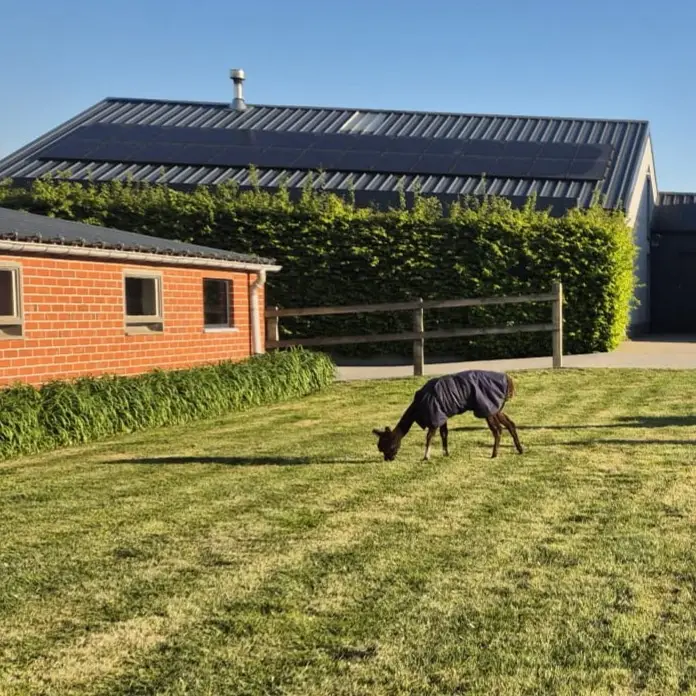
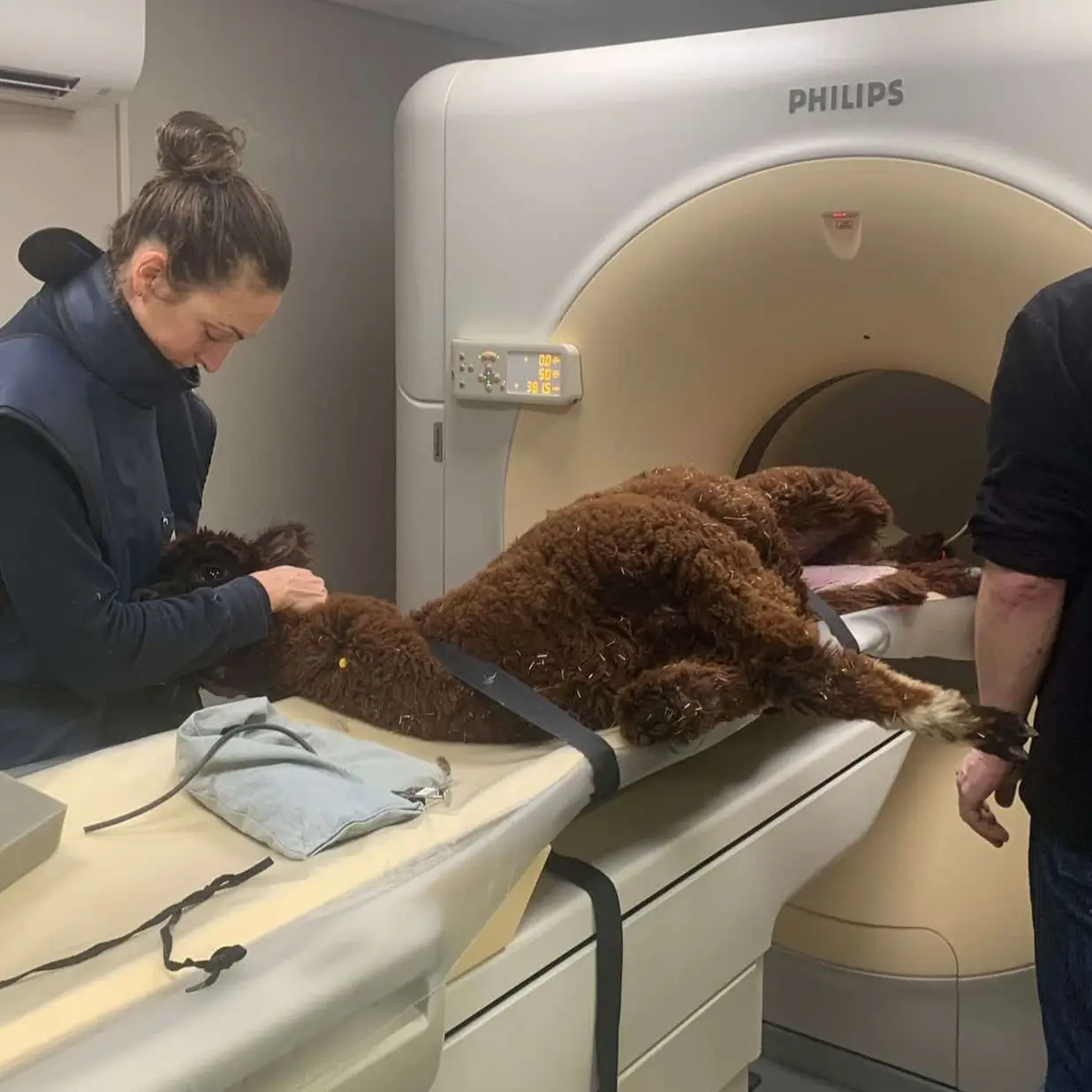
The day of medical examinations at EquiSound in Belgium. Departure from Aagtekerke: 6:00 AM. In the morning twilight, Pim cheerfully and calmly follows both llamas, Lilly and Sindaya, into the trailer. Millie accompanies Mara on this early journey. Upon arrival in Belgium, the sun is shining. Pim comfortably nibbles on the freshly mown lawn in front of the clinic. They will be his last bites.
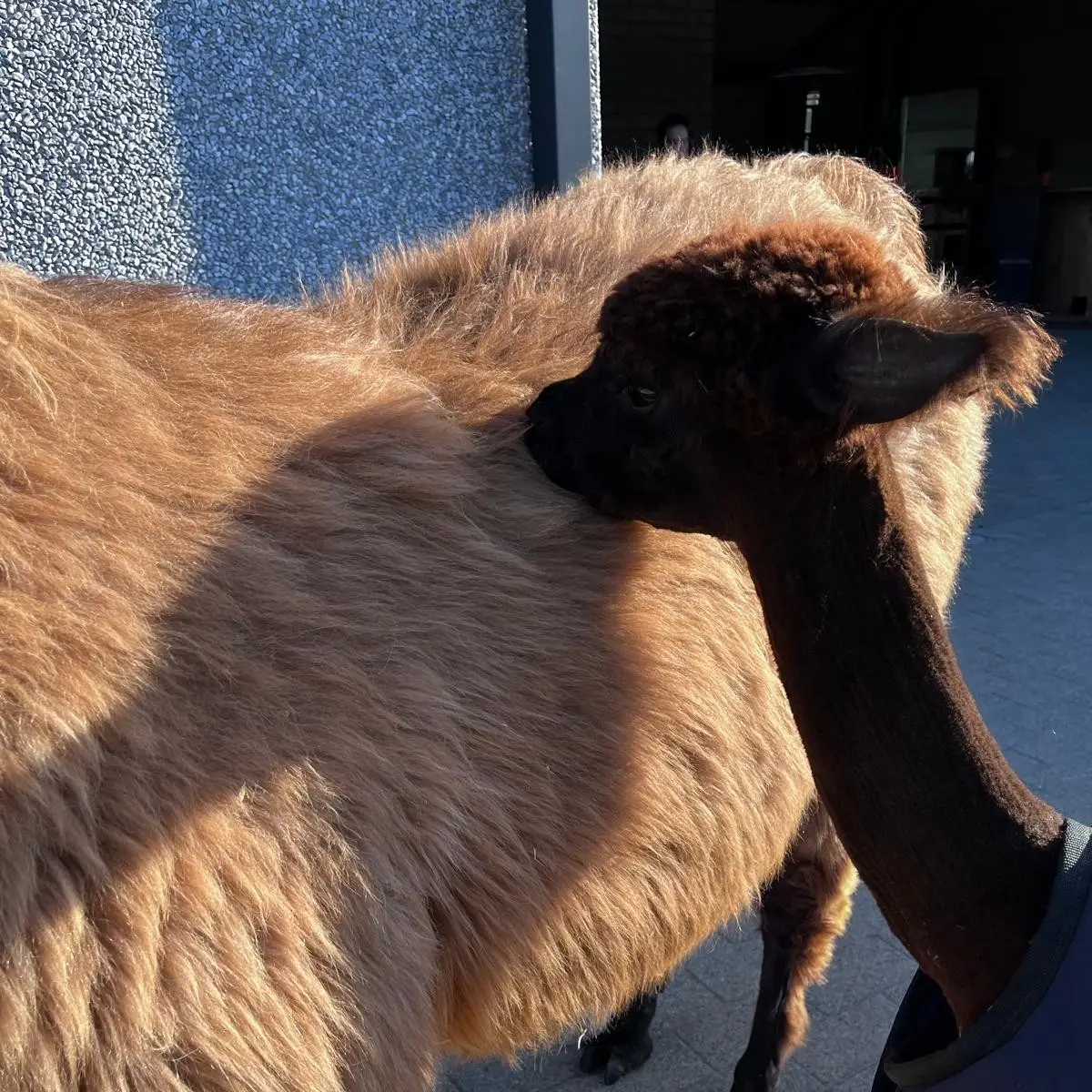
Confidently, he walks behind Lilly, stepping briefly onto the scale—a ritual he knows so well. With his nose tucked into Mara’s collar, he lets his neck be shaved, the sedation administered, and the IV line set. In her arms, he falls asleep, full of trust. For he knows the words “It will be okay. We are going to help you. I’m staying with you” better than anyone.
Extended Anesthesia
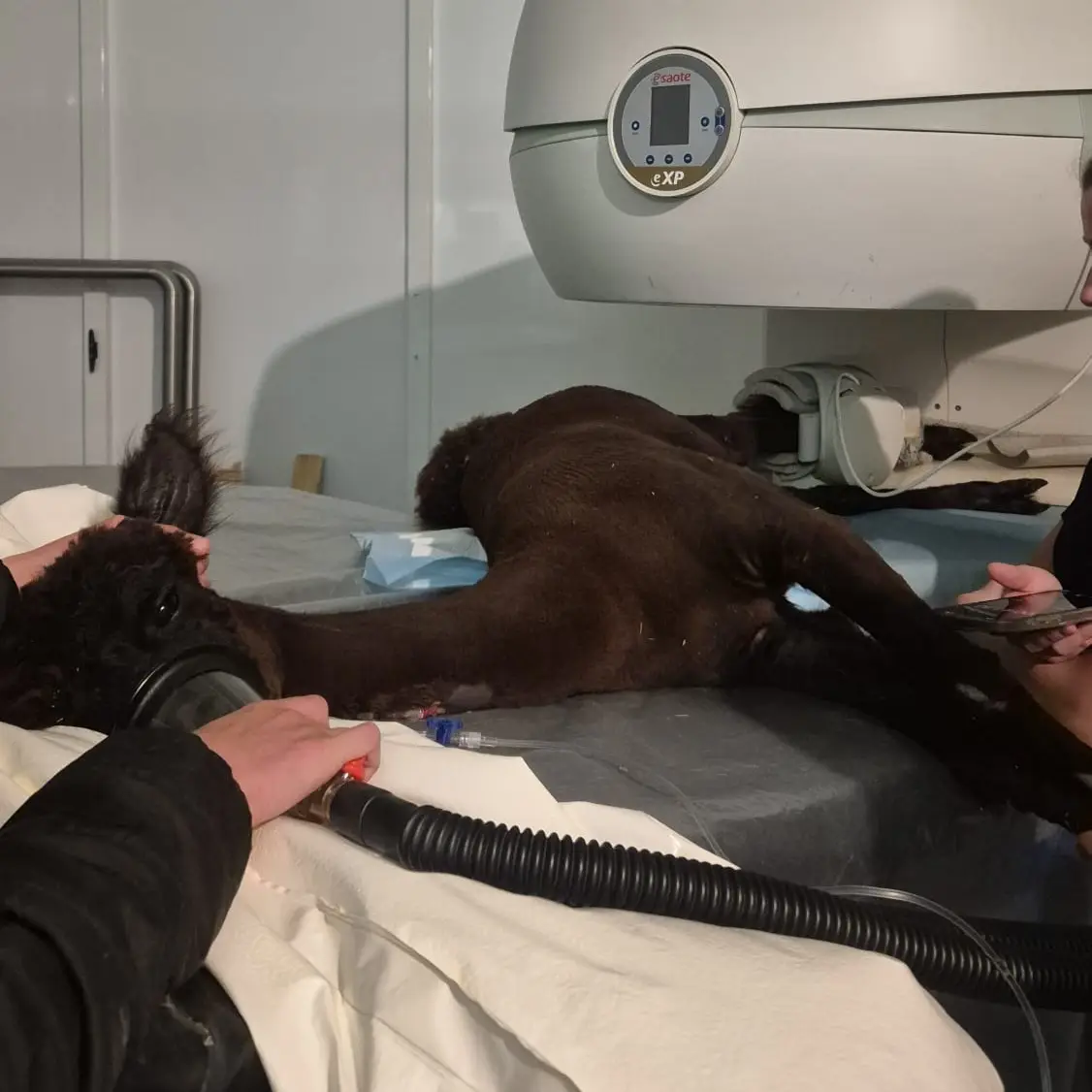
After the MRI scan, Pim slowly begins to wake up. However, to perform an ultrasound and potentially drain fluid, he needs to be put under more deeply once again. The anesthesia is extended. Holding his hind paws in her hands, Mara watches the ultrasound monitor. The moment the drainage needle is retrieved, an assisting intern says: “He isn’t breathing anymore.” CPR does not help. Within a few minutes, Pim’s paws turn cold.
On the journey back in the trailer, foster mother Lilly repeatedly presses her nose against his lifeless body. Once back at the farm, she lingers until late in the evening in the back of the pasture, around the spot where Pim always loved to lie down most. Time and again, she looks around inquiringly, and then searchingly at us.
Without Pim
We, too, find ourselves missing that daily anchor: feeding him his bottle—almost always the first task in the early morning, after lunch, late in the afternoon, and finally during Mara’s evening rounds. For 351 days, both the team’s daily structure and the rhythm of all the animals adapted to Pim’s development. Everyone was always alert and observant. Every single day, Renate and Mara updated each other on “how many bottles he had emptied.” And every morning, Mara announced the previous day’s total: yesterday 6 bottles, or 5, or 8. On rare occasions, even 9.5.
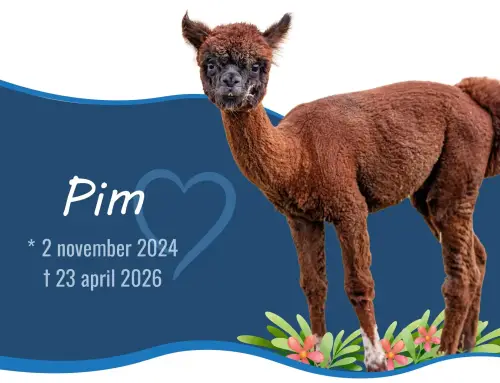
Pim will never tuck his nose into Lilly’s woolly flanks again. Never again snack from the bales of fresh hay. Never again peek playfully around a corner. Never again drink greedily from his bottle. Never again nuzzle Mara’s face. And at this moment, it is not yet clear to the team how his sudden passing can contribute to the knowledge and expertise needed to save other alpacas.
Monday, March 30
The results of the latest bacterial culture were identical to those from February 19. This still does not clarify why the joint remains so swollen and painful. Fortunately, we can visit EquiSound for an MRI scan. Originally scheduled for Thursday, April 2, the appointment was postponed to Tuesday, April 7, due to the treating veterinarian’s illness. At 10:30 AM, we will check in there with Pim, accompanied of course by Lilly.
Pim will be observed, clinically examined, and his blood test results compared with those from a few weeks ago before going under full anesthesia for the MRI scan in the afternoon.
Thanks to the injected corticosteroid and daily Prednisolone ointment, Pim is clearly in less pain. Drinking 6 to 8 bottles a day, he is “eating us out of house and home.” He now weighs 43.7 kg, and we occasionally see him break into a little gallop in the pasture! Once he reaches 45 kg, the team promised ourselves a cake 🙂
Sunday, March 22
We are still awaiting the results of the latest culture and a referral to an MRI facility. Not all MRI scanning locations welcome alpacas.
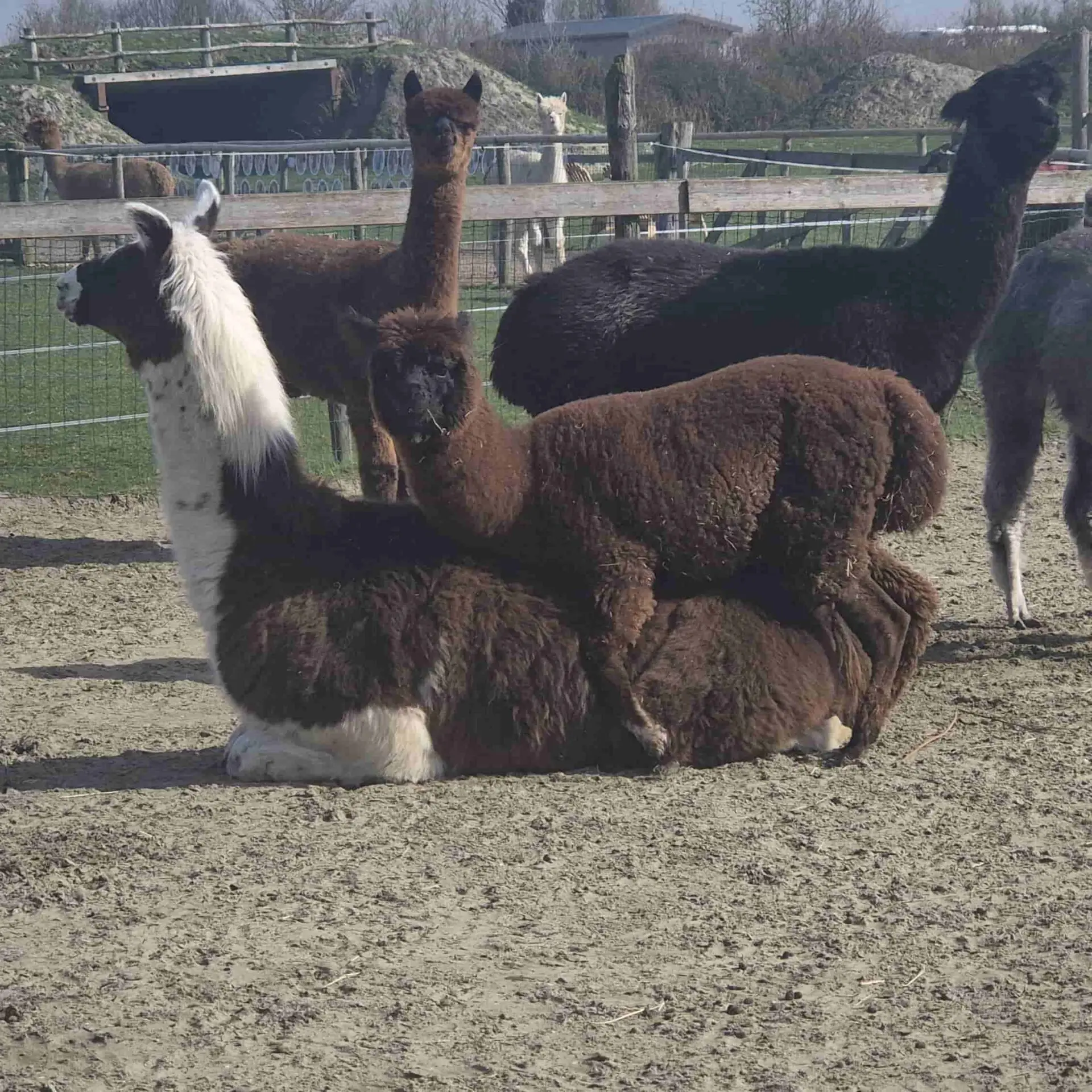
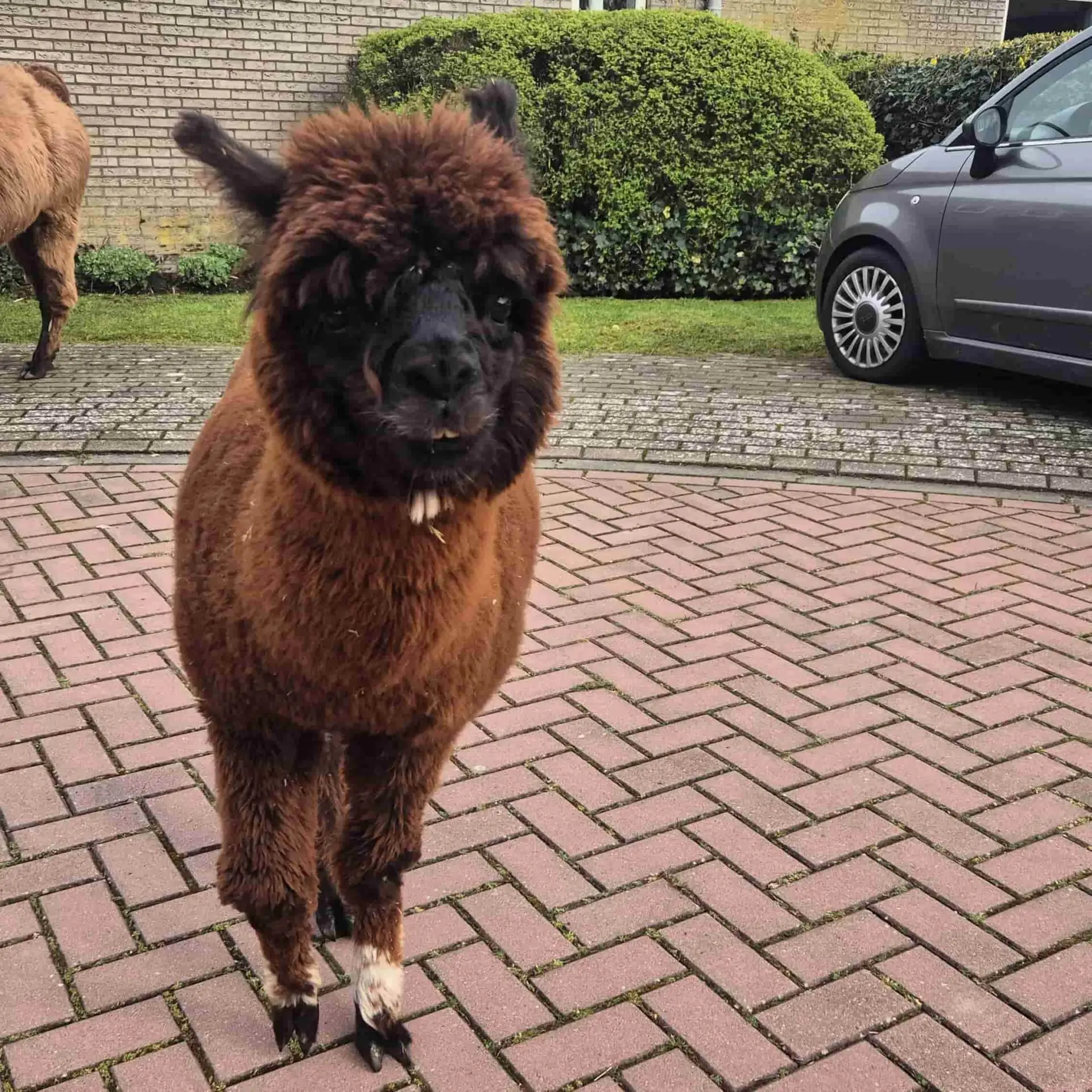
In the meantime, Pim is doing well. We apply Prednisolone gel to his hind leg daily. He is really starting to act like a true alpaca: running after Mara when she carries his bottle, attempting to mount female alpacas and llamas while making the typical orgling sound (the mating call male alpacas make), and occasionally even spitting at another animal if they get in his way!
The question remains whether he is truly improving or if this is largely due to the corticosteroids injected into the joint and the daily Prednisolone gel, both of which strongly suppress pain.
As soon as we find a suitable location for Pim’s MRI, we will schedule it as quickly as possible. To help cover the upcoming expenses, Pim’s big Easter Fundraiser starts tomorrow, March 23—partly online and partly at the farm. All proceeds will be doubled by DierenLot!
Friday, March 13
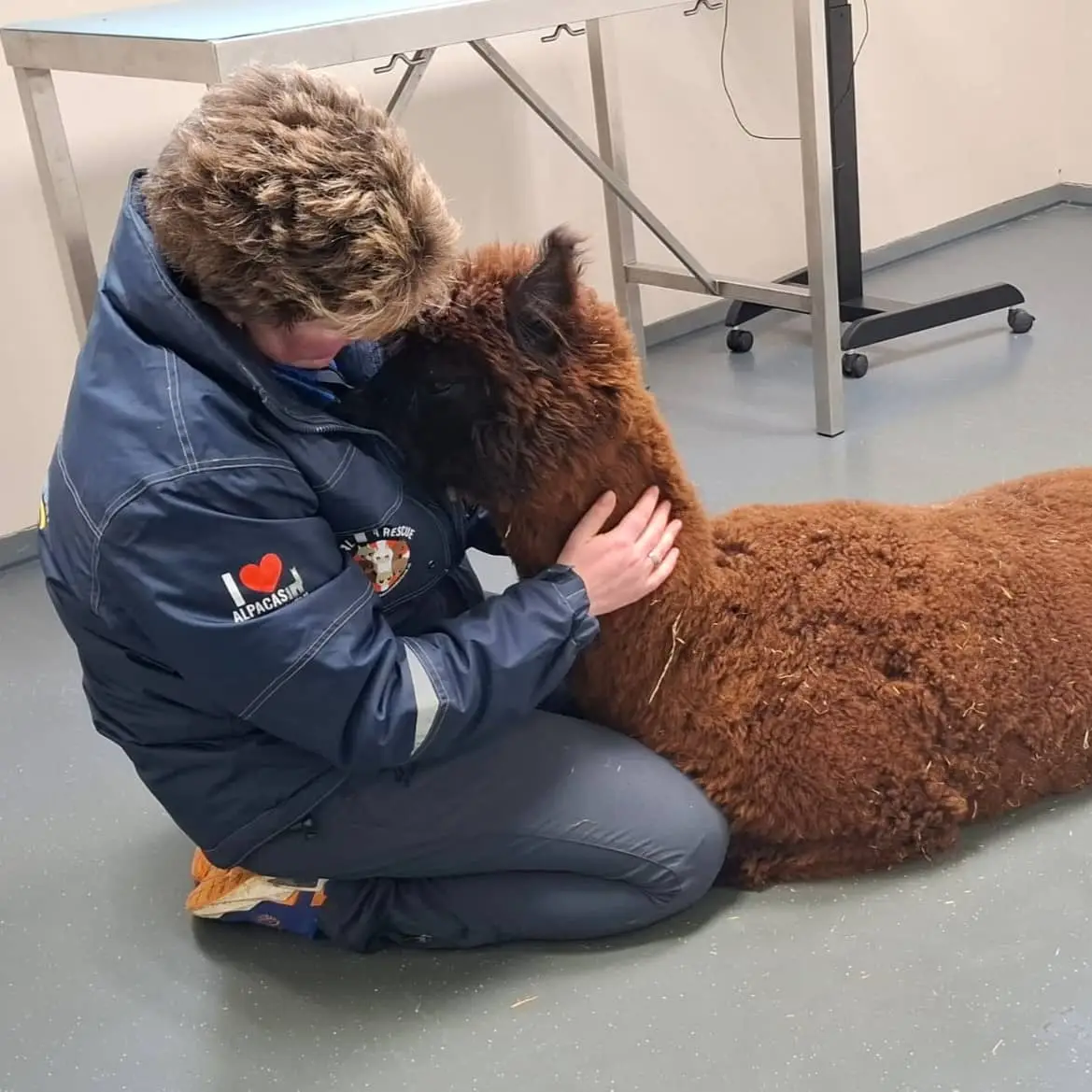
Pim visited the IJzendijke Veterinary Clinic again. There, his joint was tapped once more to collect fluid for a new culture. The joint was then flushed and injected with corticosteroids, which will suppress pain, swelling, and stiffness in and around the joint over the coming weeks.
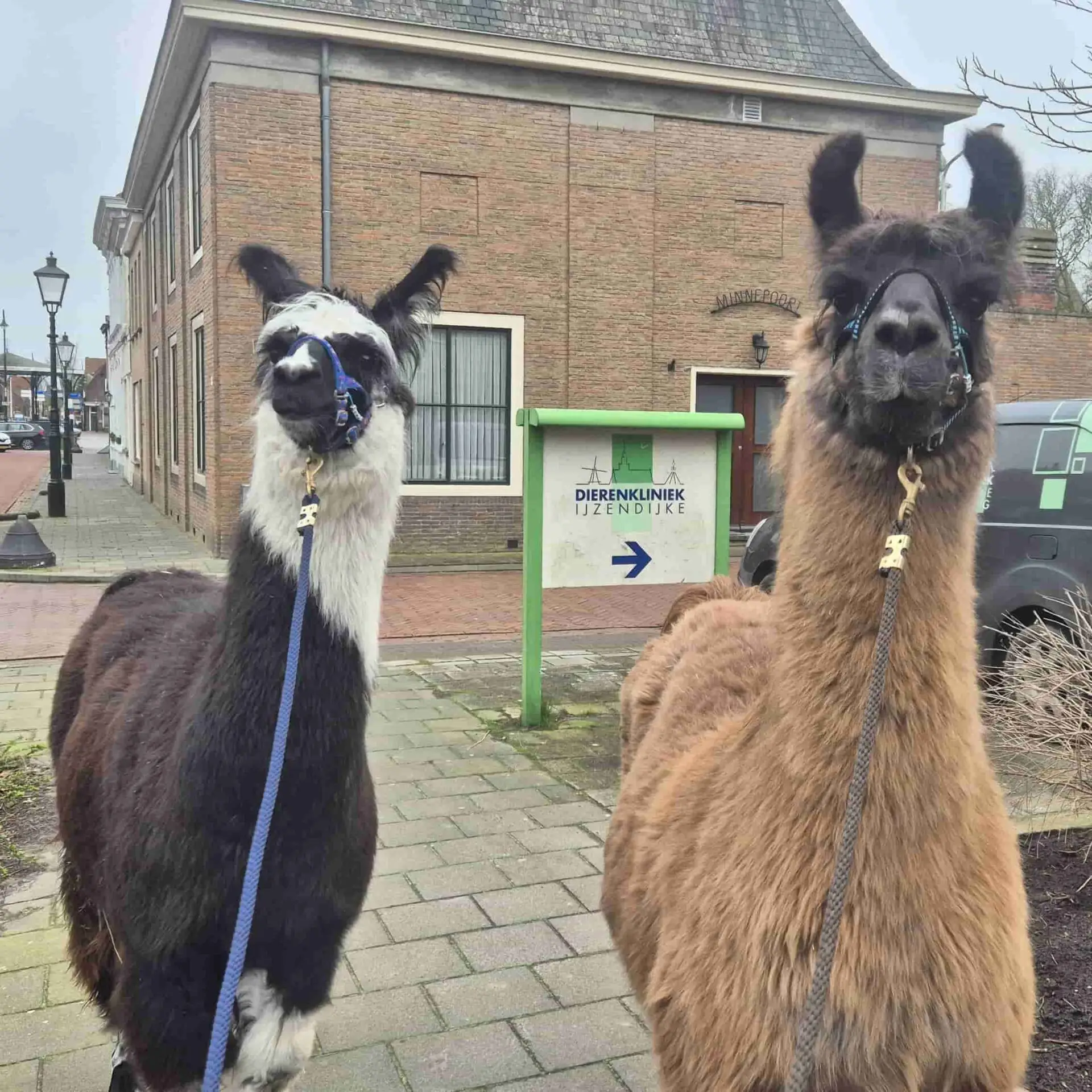
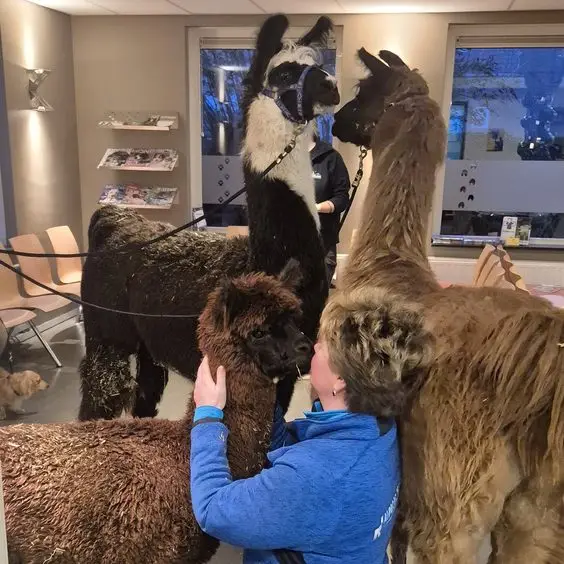
Pim, accompanied by his foster mother Lilly the llama and aunt Sindaya the llama, now knows his way around the clinic entirely. They stroll through the hallways without hesitation and know exactly where to find the fresh grass in the parking lot.
Thursday, February 19
We received the lab results from the Faculty of Veterinary Medicine at Ghent University. Researchers suspect Pim once suffered a minor injury near his hock joint. A skin bacterium entered through the break, causing low-grade inflammation.
A low-grade inflammation is barely felt by an animal and doesn’t cause immediate overt symptoms, but it can silently cause continuous, minor damage—a creeping process that eventually leads to various chronic issues. Because Pim arrived in such poor condition last year, it took time to piece together the puzzle. Providing safety, building up his strength, and nursing him back to health took priority. As he began walking with increasing difficulty despite gaining weight, we discovered the growing abscess.
Good news
Fortunately, we have good news: he can recover from this. The two visits to IJzendijke Veterinary Clinic already helped significantly. Pim visibly bounced back thanks to the joint flushing, antibiotics, and other medications. He greedily laps up six bottles of milk a day. Following the lab results, he started a new, stronger 4-week course of antibiotics with injections every 72 hours. We will finish this treatment while closely monitoring him, then return to IJzendijke to collect another fluid sample to culture in Ghent.
We remain hopeful. And Pim? He thoroughly enjoys all the care and attention! He is becoming affectionate, growing, gaining strength, and standing more firmly on his legs. We see him curiously exploring, occasionally even slipping through an open gate to investigate neighboring pastures.
Wednesday, February 4
The cultured joint fluid revealed a high cell count, indicating active inflammation. A bacterium was also identified: Staphylococcus, typically a skin bacterium that has proven resistant to standard antibiotics. Similar joint infections in foal horses or calves are usually resolved with two treatments, but not in Pim’s case. It is possible his tendons and tendon sheaths are so overworked and involved in the inflammation that a vicious cycle has developed, keeping the infection active.
Pim’s case is being submitted to the Ruminant Clinic at Ghent University’s Faculty of Veterinary Medicine, where specialists will review his situation and provide recommendations soon. Meanwhile, Pim is showing his best side: making tiny frolicking jumps, eagerly drinking six full bottles a day, frequently munching on hay, and gaining nearly two more kilos. However, we still notice moments of stiffness and pain where he avoids putting weight on his leg, and the swelling on his joint remains.
We are deeply touched by all the support for Pim—from donations and cards to emails and kind comments on social media. It brings us comfort to know so many are rooting for him. We are keeping our fingers crossed for good news soon.
Friday, January 30
At 8:00 AM, Pim checked in at IJzendijke for his next joint flushing. The specialist from Utrecht provided a detailed report on the CT scan: not only the bone and cartilage of the joint appear to be affected by the inflammation, but surrounding tendons seem involved as well (or this may represent scar tissue from self-healing tendons, which isn’t entirely clear yet). The results of the fluid culture are expected next week, which will determine our next steps. Immediately after treatment, Pim was overjoyed to see Lilly again and trotted curiously around the parking lot.
Wednesday, January 28
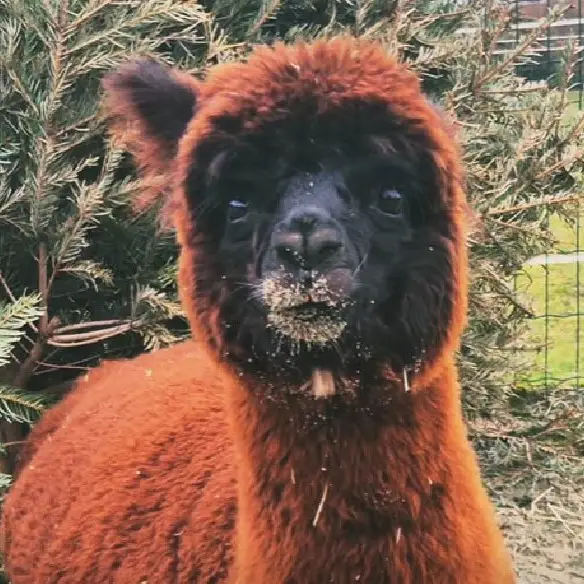
At 8:00 AM, foster mother Lilly and aunt Sindaya walked through the doors of IJzendijke Veterinary Clinic, with Pim following right behind. In the waiting room, he stepped onto the scale: 38 kilos—go Pim! We waited together until the sedation took effect and Pim became sleepy. While we walked Lilly and Sindaya nearby, the veterinary team took X-rays and initiated treatment.
It turned out to be a long and intensive morning: X-rays, a CT scan, drainage and flushing of the hock joint, and local administration of medication and antibiotics. The CT scan results were sent to a specialist in Utrecht for review, and the inflammatory fluid was set for culturing to identify the bacteria and determine effective treatments. Back at the farm, Pim made the best of it: drinking 4 full bottles that evening, showing off a silly buck-jump, and standing quietly while we removed his bandage.
A tense period
The joint will need to be flushed every few days at the veterinary clinic—potentially for several weeks. Together with the CT scan, this brings significant additional costs, far exceeding our initial estimate of around €953. Further treatment options depend on upcoming results. We hope to get Pim back on his feet, though the initial prognosis on Wednesday was guarded.
Background
He has already been through so much. Since entering our care in the spring of 2025, we have continuously monitored and examined him. Fortunately, he has no brain damage, but alpaca specialist Thijs Flahou from Belgium confirmed last Friday that Pim is severely delayed in his development. This is likely due to a rough start in life: inadequate colostrum (first milk), an unstable environment, and premature separation from his mother, resulting in a weakened immune system that makes him particularly vulnerable to infections.
Severe inflammation
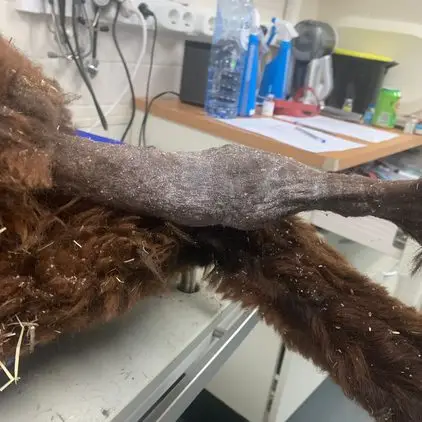
Dr. Flahou noted that Pim is completely blind in his right eye and that the abscess on his hind leg represents an infection in the hock joint. To prevent it from worsening, we must act quickly. Fortunately, we were able to get an appointment at IJzendijke Veterinary Clinic the next day. A rigorous procedure awaits him under full anesthesia: X-rays, joint drainage, fluid culturing, localized joint treatment, and a long, heavy course of antibiotics.
Help us help them
Visit the Alpaca Rescue Center or book an alpaca or llama activity. By doing so, you directly support animals in need at our rescue shelter while enjoying an unforgettable day out yourself!