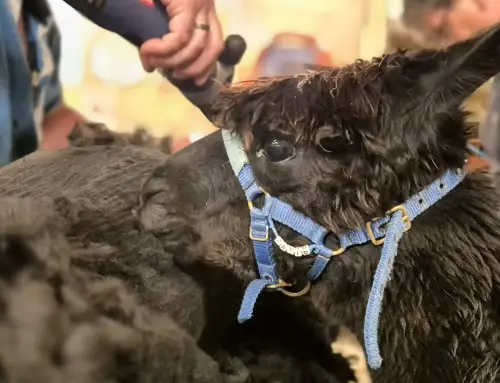
Behind the Scenes
A high tea among the alpacas is a special experience. Taking them out to get a breath of fresh sea air can certainly be called exciting. But what do the animals do between events? What goes on around the farm yard? What challenges do the caretakers face? A series on daily occurrences and questions.
Jacoline Vlaander
17. Service
Keeping alpacas seems so simple at first glance. They graze peacefully in pastures looking fluffy and charming, trot cheerful behind one another, and watch curiously whenever you haul hay bales around. Naturally, you don’t leave them out in wet fields year-round like sheep; you provide a proper walk-in shelter with fresh flax and straw daily to protect them from rain and bitter winds. That shelter is just as vital as intensive, daily hands-on care, extra nutrition, vitamins, and regular health checks—including fecal testing.
If you want to understand how your animals are truly faring, you also need to delve into their behavior and herd dynamics: “They are sensitive and deeply social,” Mara shares. “Friendly interaction with humans, caregivers, and owners is essential, alongside a consistent approach. That breeds calm and trust. When you build a bond like that and observe them every single day, you can tell at a glance whether everything is fine or if something is wrong.”
Knowledge and experience
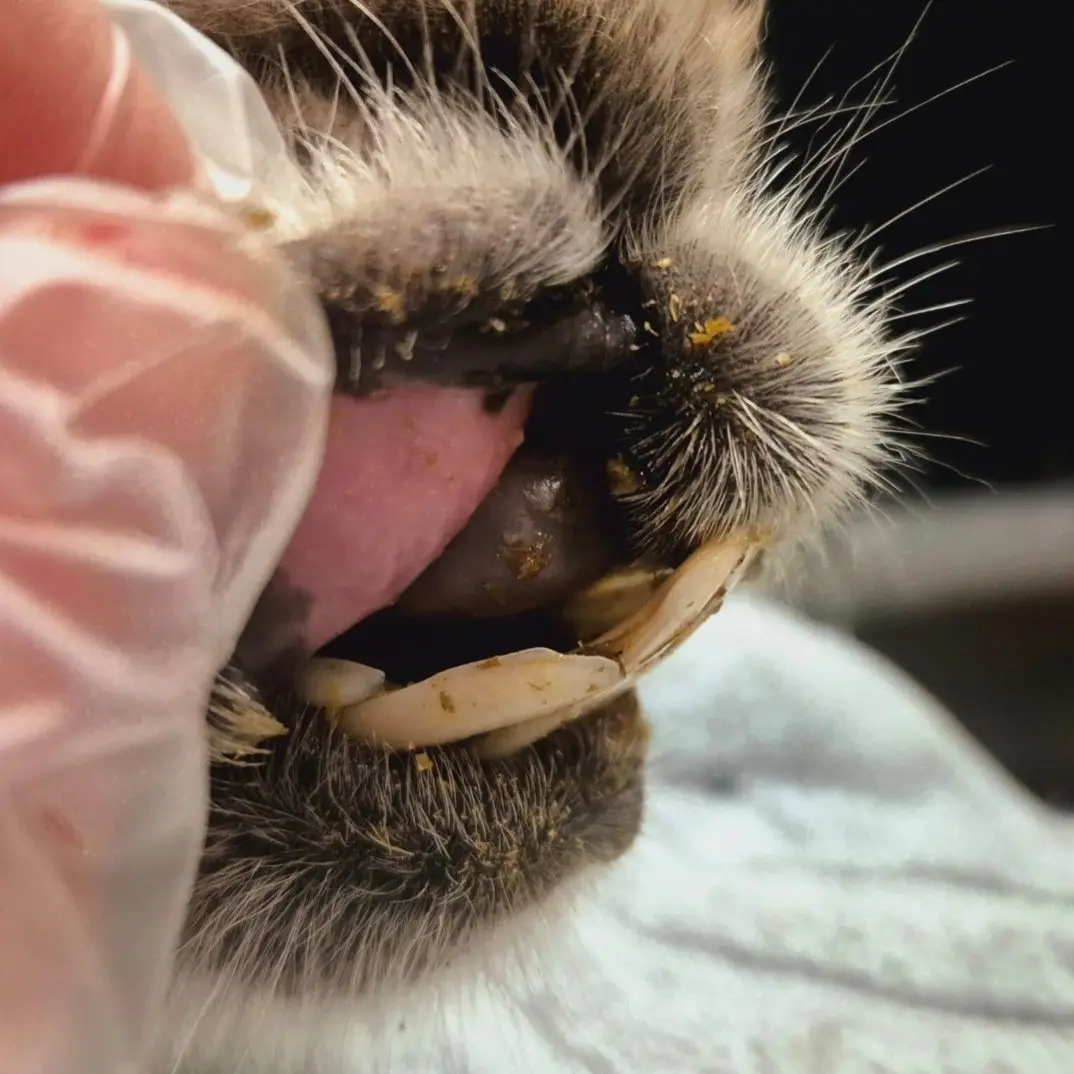
Through Alpaca Rescue Centrum Nederland, Mara, Jacco, and their team are eager to share their extensive knowledge and experience with fellow alpaca owners and prospective keepers: “The physical aspects of care can be tough—especially if you don’t know what to do or how best to approach your animals. For example, how do you monitor their weight properly? How do you spot early signs of mange? Do you know what equipment is required to regularly trim nails and grind overgrown teeth? And where do you find a professional shearer who won’t rush through the job, but will shear respectfully and calmly as a matter of course?”
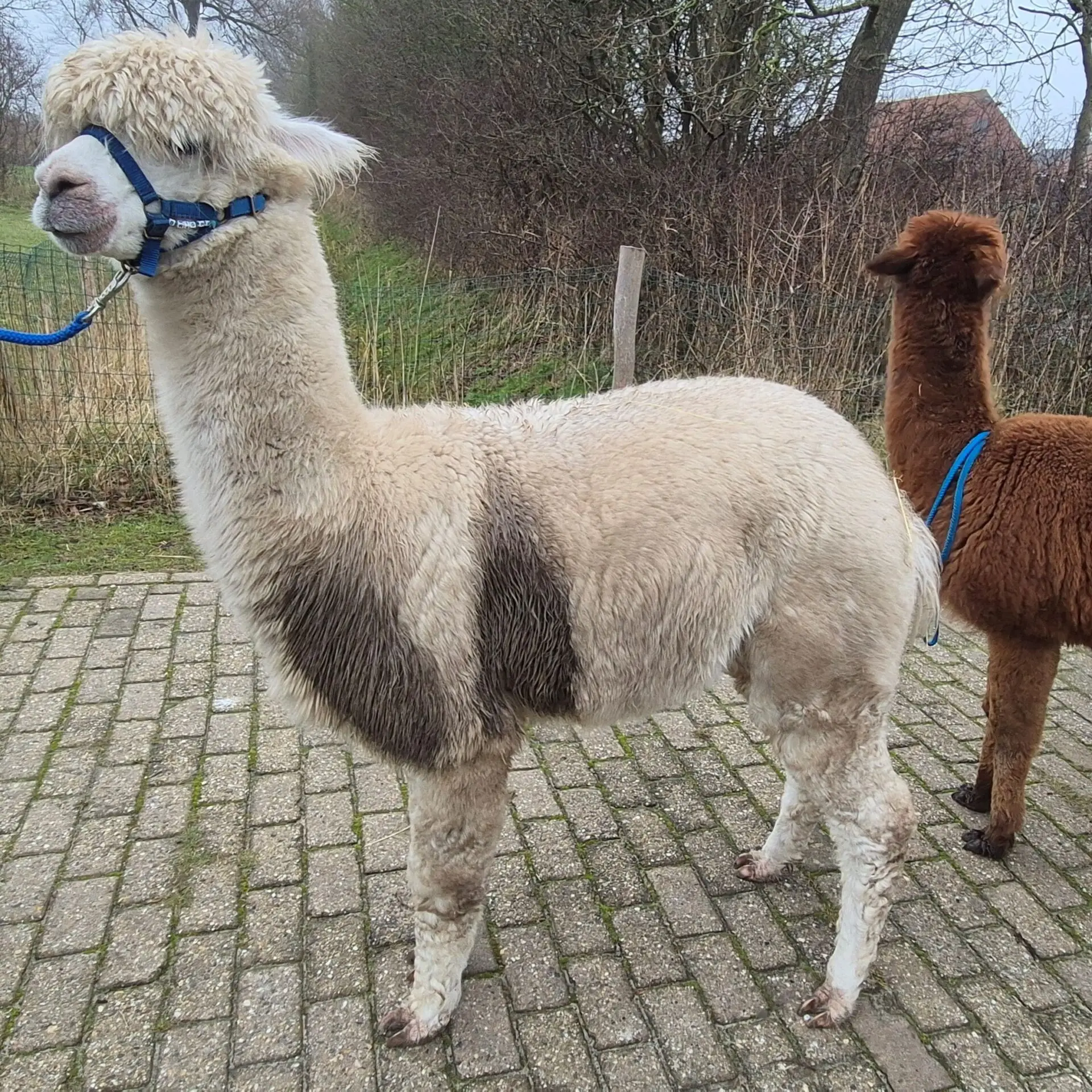
All too often, they witness the aftermath of well-intentioned clumsiness, enthusiastic lack of experience, and impulsive ignorance: “Ultimately, many of the issues that arise from those situations end up on our doorstep—sometimes at a late stage. By then, the animals are in terrible shape and the owners are at their wits’ end. So, in the best interest of everyone involved, we are expanding our services to prevent these problems as much as possible.”
Comprehensive health check (APK) for your alpacas
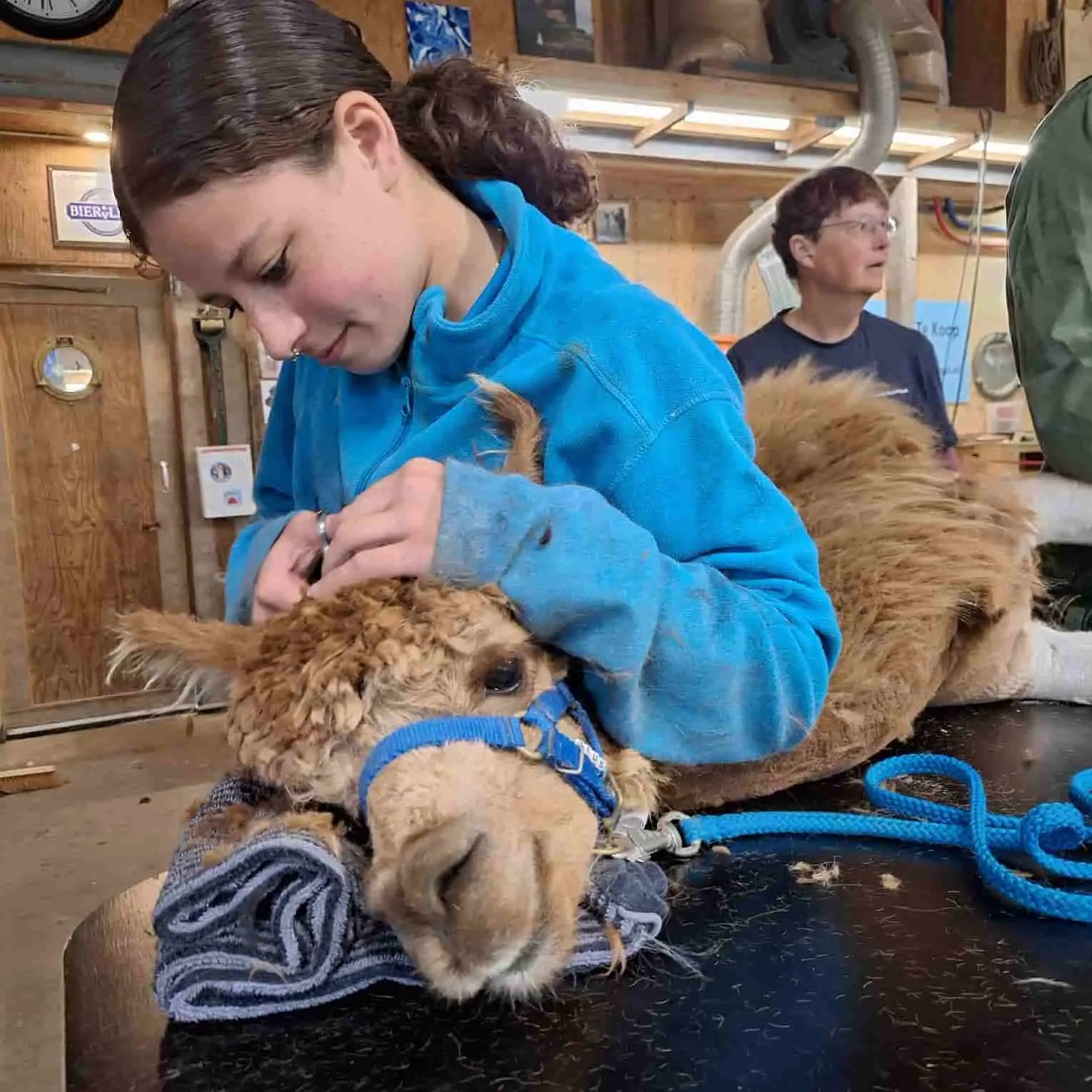
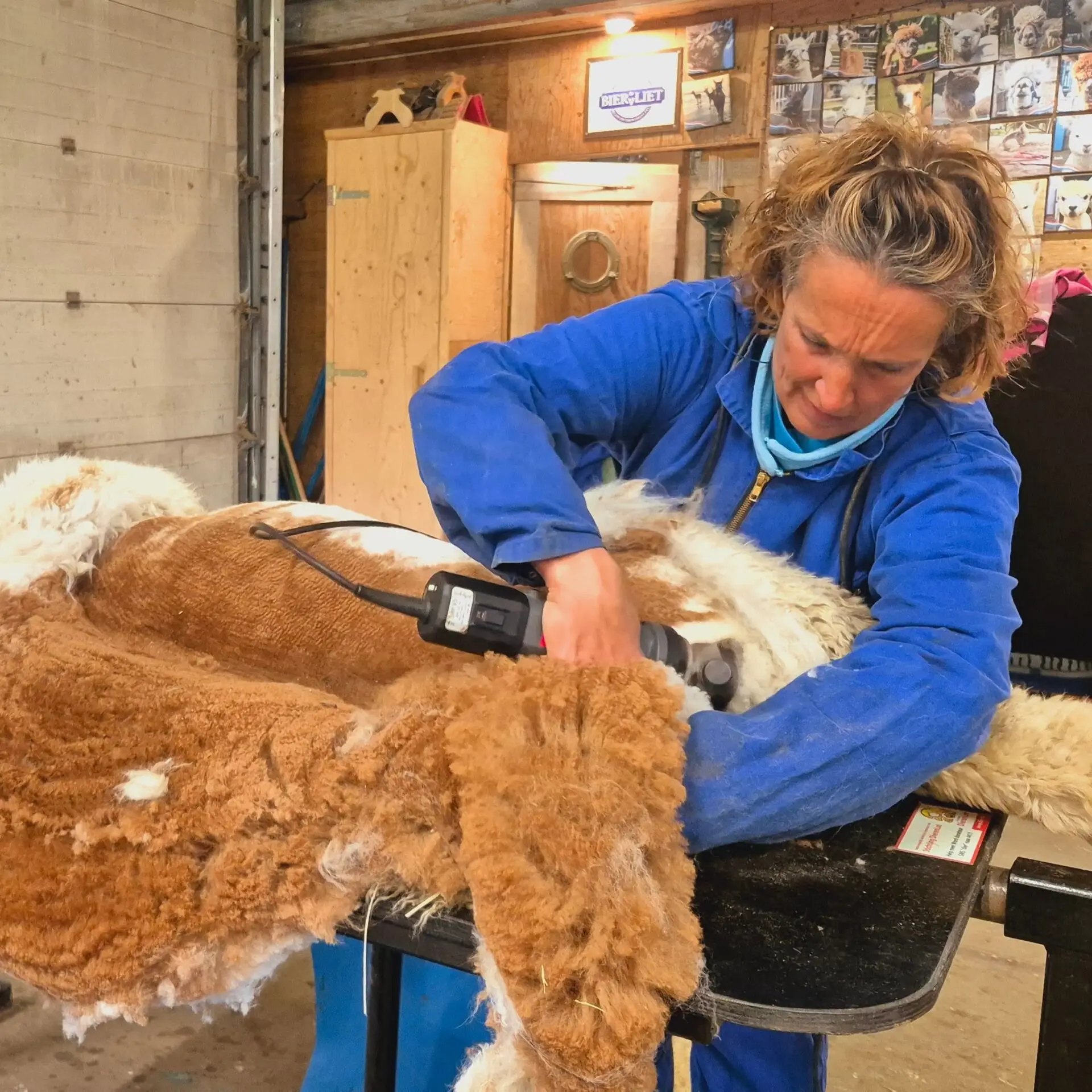
Since celebrating their fifth anniversary in 2025, Alpaca Rescue Centrum Nederland offers several structured care packages: “With our annual maintenance contract, you arrange a comprehensive health check (APK) for your alpacas. We visit owners on-location twice a year, bringing our own shearing table to conduct a thorough medical inspection. We trim nails, topknots, and tail tufts, grind teeth, and check the skin for wounds, lumps, mange, or other abnormalities. We weigh each animal, run fecal tests for parasites, and provide tailored nutritional advice.”
The annual shearing session is included in this contract, though it can also be booked as a standalone shearing package: “In both cases, we pick up the animals during shearing season. Depending on travel time and scheduling, they stay at our boarding facility for one to two days while we shear them and complete their health checks. The advantage of the full maintenance contract is that we see both animals and owners three times a year, allowing us to get to know each other, catch potential issues early, and save both time and money on treatments.”
Stress-free mange boarding
Do you suspect your animals have mange? Or are you certain of it, but the management of the outbreak is becoming overwhelming? The stress-free mange boarding package provides a solution: “Under this arrangement, owners can board their animals with us for 10 to 20 weeks. Following a thorough entry inspection, we draft a balanced treatment plan. This serves as an initial guideline, as every animal responds differently to treatment, medication, nutrition, and supplements—and the severity of infection varies.”
Human and animal training
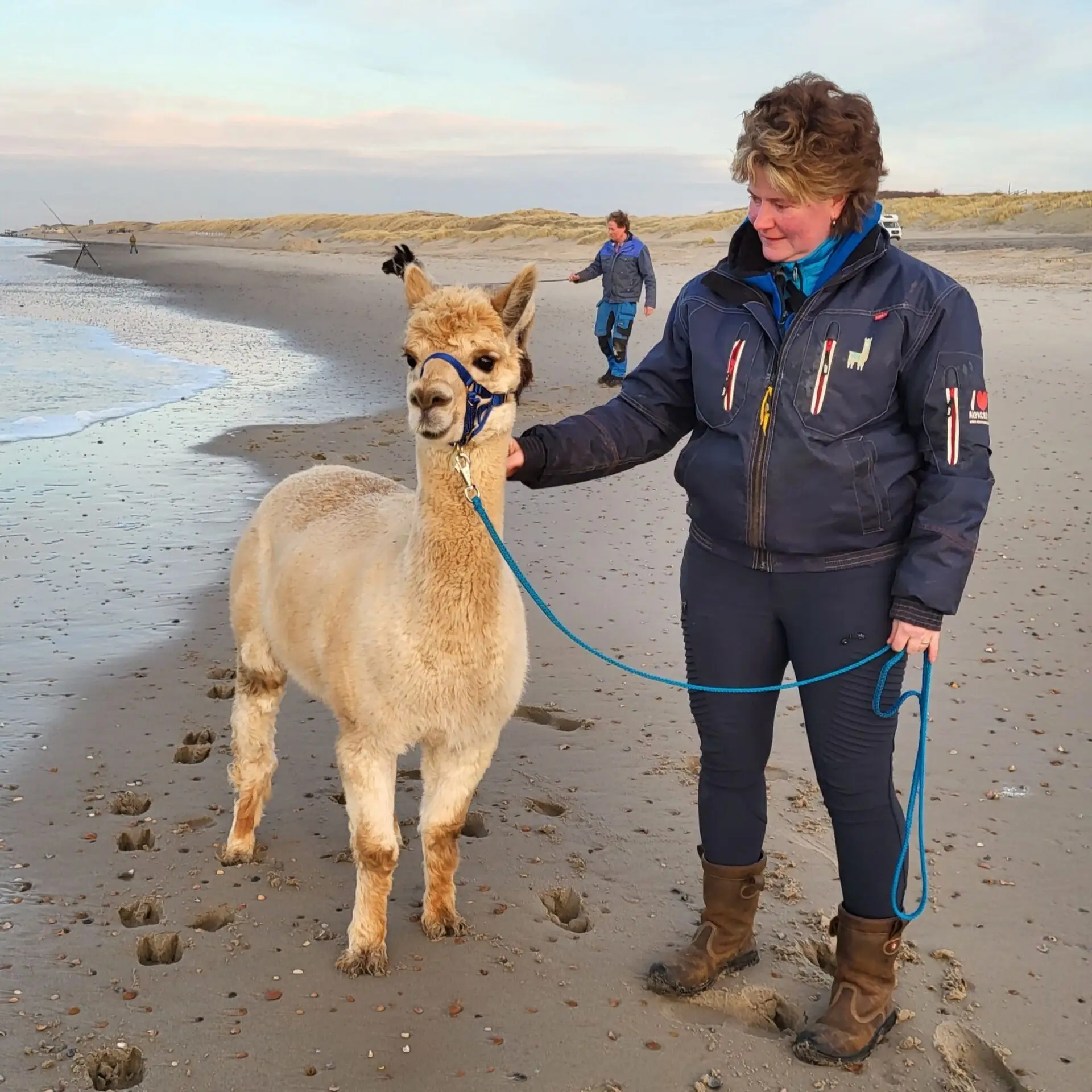
Are your alpacas healthy, but reluctant to let you approach them calmly? Do they refuse to listen or struggle on a lead? The training program for humans and animals offers clear guidance: “We work with the animals on halter training and walking on a lead line, building confidence on unfamiliar terrain, stepping in and out of trailers smoothly, and—crucially—remaining calm during physical health checks, daily grooming, and vet examinations.”
However, owners must put in the work as well: “We practice breathing techniques, focus exercises, and visualization. You become hyper-aware of your body language and the energy you project. We teach you how to properly halter, lead, walk, run, and halt with your alpacas. You’ll also practice gently handling the head, lifting lips to inspect teeth, checking ears and eyes, and feeling along the back, belly, groin, legs, nails, and footpads.”
The more trust you build together, the faster you learn from one another. Lower stress during daily checks and care yields positive results for both animals and keepers: “We love encouraging stronger bonds with your alpacas. When they enjoy a high quality of life, you’ll share years of joy together.”
Want to learn more about this new service? Check out our website! www.alpacaszeelandia.nl/integrale-oplossingen
Next episode:
What can we accomplish with the donated blood analyzer machine?
Alpacas Zeelandia team
Alpacas Zeelandia team