Behind the Scenes
A high tea among the alpacas is a special experience. Taking them out to get a breath of fresh sea air can certainly be called exciting. But what do the animals do between events? What goes on around the farm yard? What challenges do the caretakers face? A series on daily occurrences and questions.
Jacoline Vlaander
07. Why must an alpaca be shorn every year?
Just like sheep, alpacas must be shorn once a year. April and May are usually the most suitable months: the worst of the cold is gone, and you beat the summer heat. In the months that follow, their fleece can grow back nicely; by the time the leaves begin to fall, the animals are wrapped in their own thick, woolly coats once again.
The annual shearing session is not an unnecessary luxury—it prevents heat stress. Alpacas do not shed, and they cannot easily shed excess body heat. If they remain in full fleece when temperatures rise toward 20°C (68°F), they can overheat and go into shock, leading to severe organ damage.
Shearing marathon
In early May, the shearing marathon begins in the barn, equipped with two shearing tables. Because Jacco is still at sea, Mara contacts Elbert de Weerd, an alpaca shearer from Nijbroek. She agrees to pay him by the day rather than per animal as is customary: “We want the process to be calm and careful,” she says. “That avoids panic and injuries. For healthy and stable animals, that’s ideal; for traumatized animals, there’s simply no other way.”
Staff and volunteers agree—after consulting their families—to work four long days, including three evenings. It is a tight schedule right before Ascension Day, especially since daily farm operations must continue: mucking out stalls, scooping manure in the pastures, checking in campsite guests, baking morning rolls, and handling phone calls, emails, and bookings. Not to mention preparing coffee, tea, lunch, and dinner for the shearing crew!
Teamwork
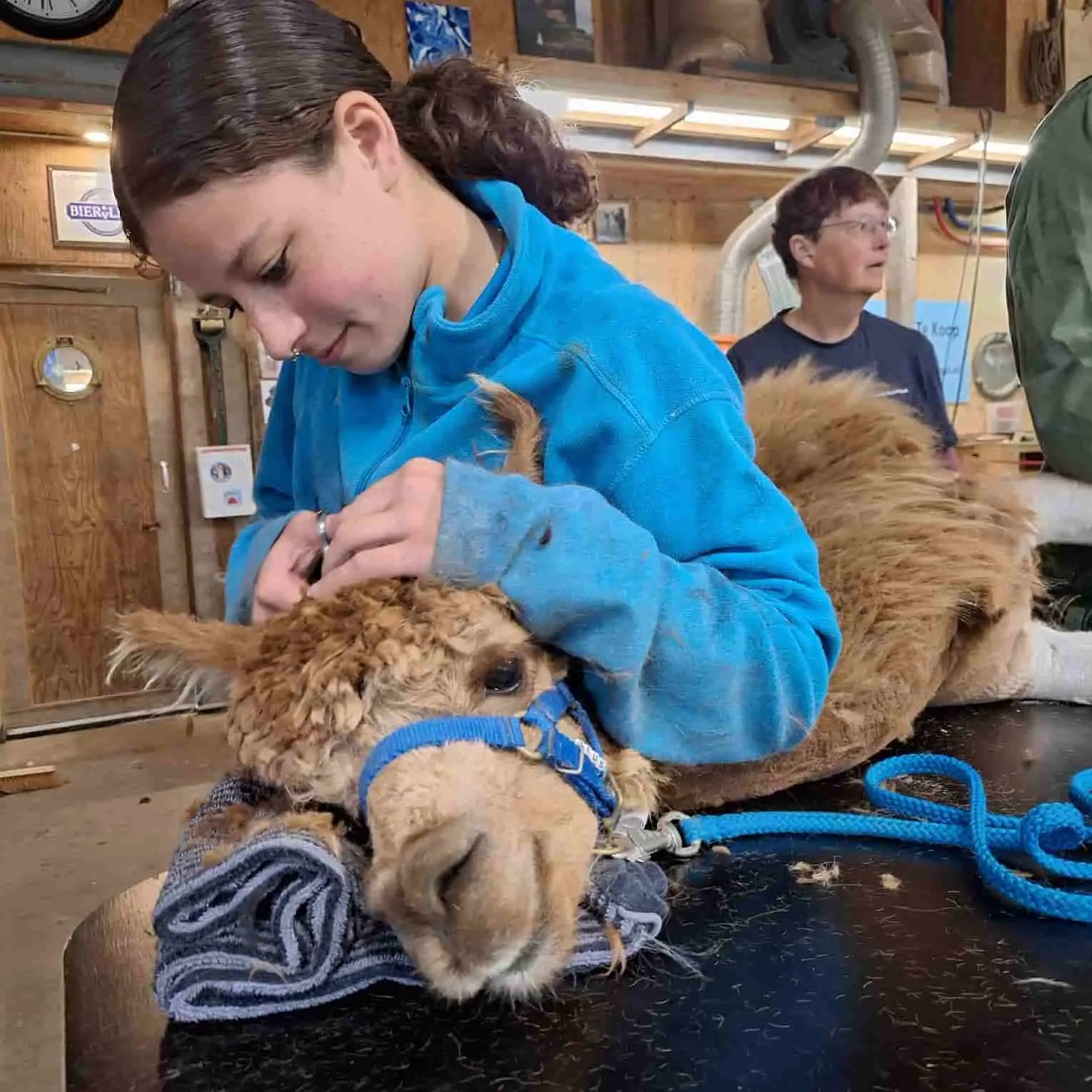
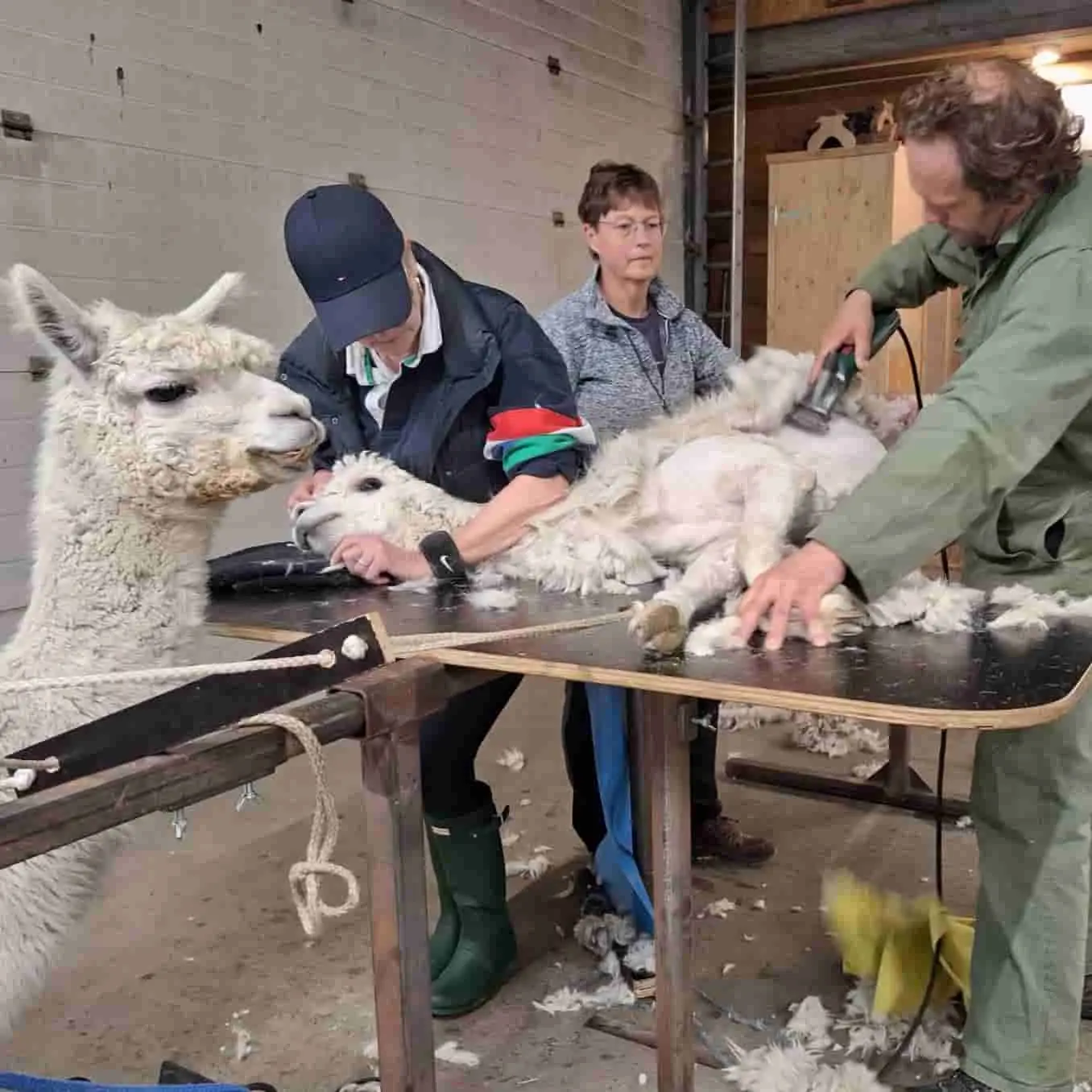
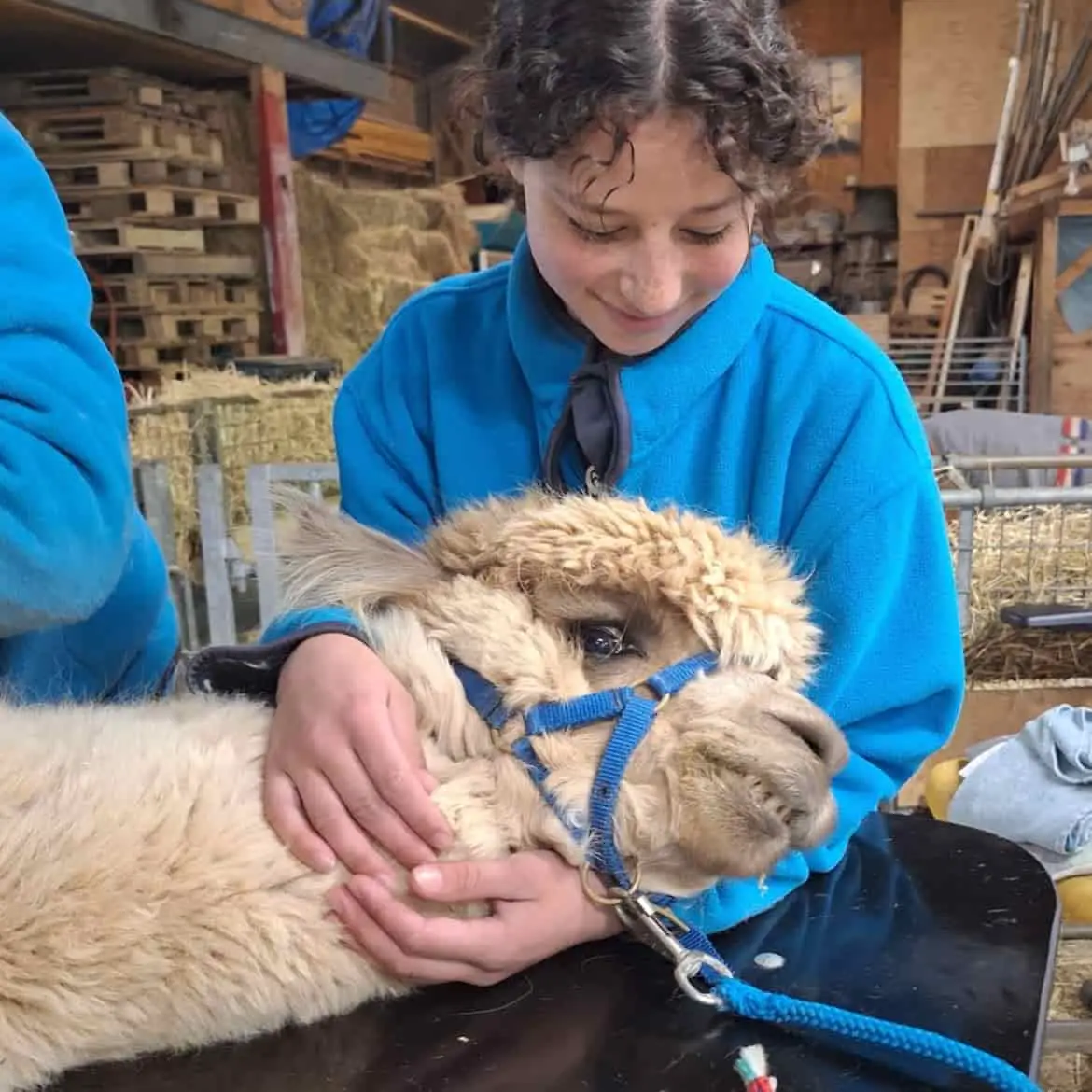
They split into two teams: “Alongside Elbert, five people help continuously,” Mara explains. “One team guides the animals, leading them sideways to the shearing table, which stands vertically. They pull the support sling under the belly and tilt both the animal and table together until the tabletop locks horizontally with the animal lying on its side. Then they gently secure the extended front and hind legs. During shearing, someone from our team always stands by the head to offer reassurance. Often, one of their herd mates wanders nearby as well.”
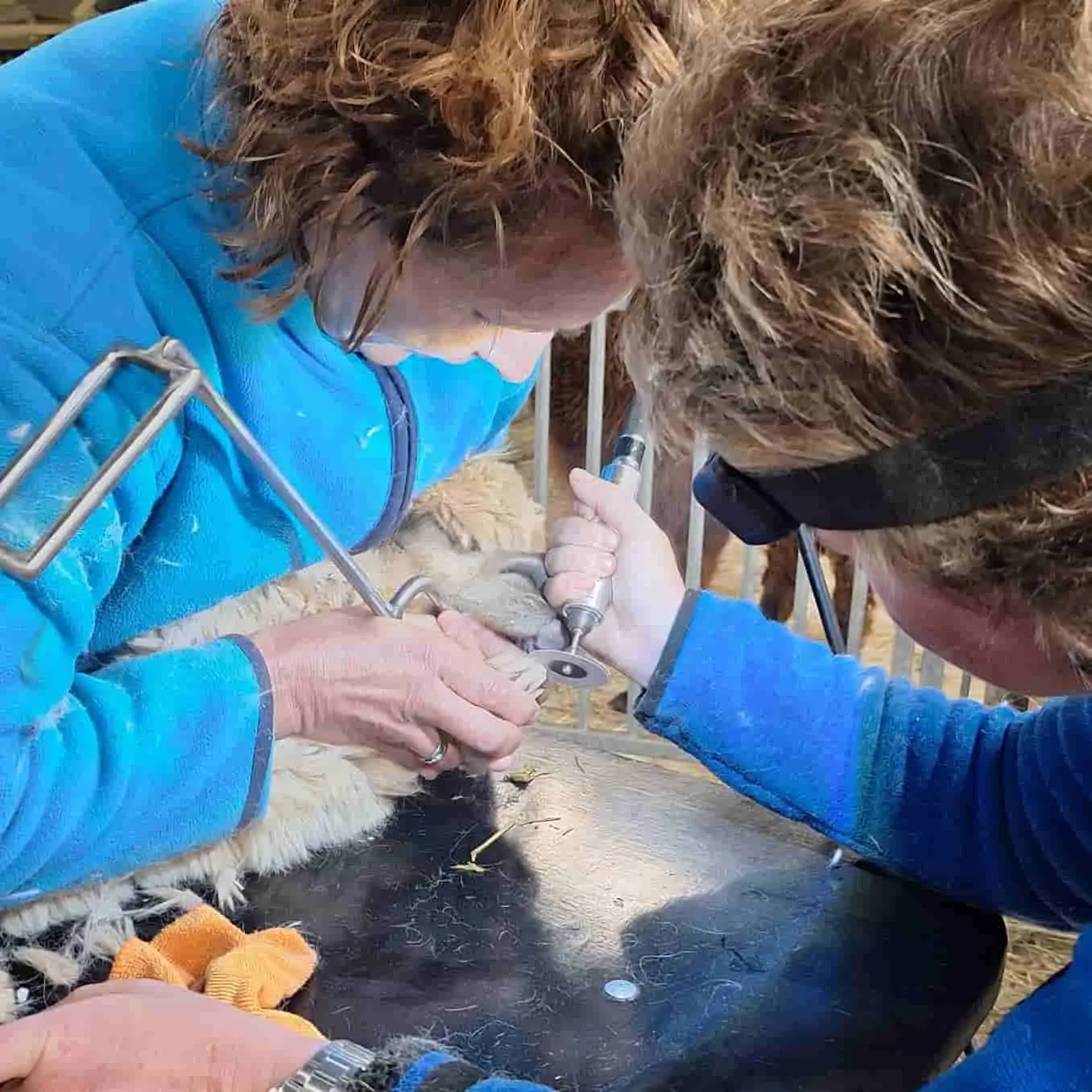
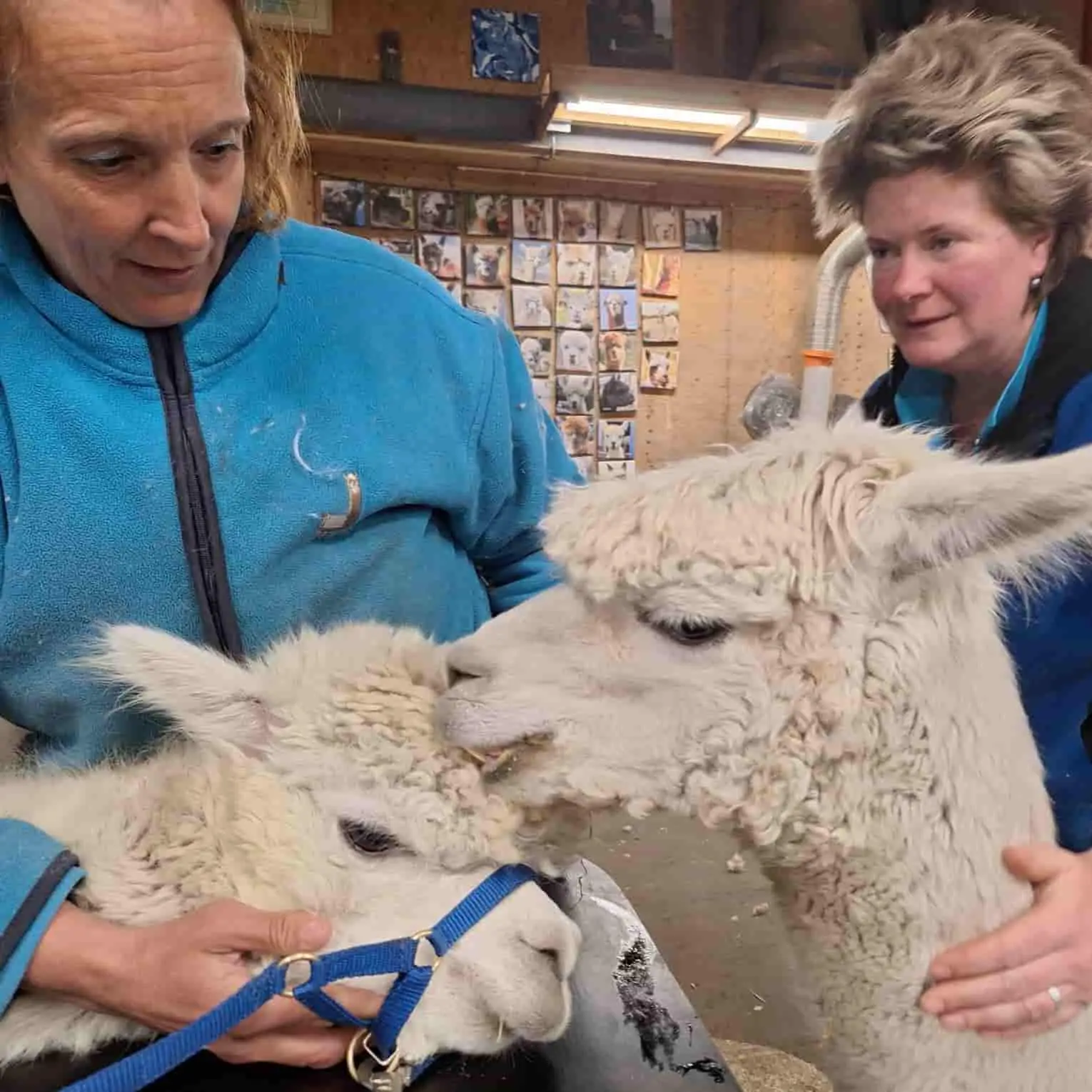
Meanwhile, the second team focuses on the secured alpaca: inspecting skin for small wounds and disinfecting them, grinding teeth, trimming nails, and shaping topknots. Another person collects the fleece, separates prime wool from dirty tufts, bags it, labels it with the animal’s name, and sweeps the floor. The barn serves as a waiting room; those awaiting their turn look on, humming attentively with wide eyes.
Personal record
The teams rotate efficiently between the two tables: “While Elbert shears on table one, we guide the next animal to table two. Once one side of the first alpaca is done, he steps over to the alpaca ready on table two while we turn the alpaca on table one over for him.”
They work continuously for hours. Elbert breaks his personal record: he has never worked with two shearing tables before, nor with so many assistants, and he has never shorn 72 alpacas in just 3.5 days! In the evenings, sore muscles and all, he crawls into his tent with his wife and children feeling thoroughly satisfied: “They are calm animals. You don’t have to chase or drag them to the tables. They are halter-trained and walk along willingly. Afterward, they don’t jump away screaming either. You can tell you give them genuine care and attention here.” He also notes that the wool is greasy and thick: “Perhaps from swimming in the sea?”
Metamorphosis
Despite the chilly and wet spring, the animals had grown lethargic over recent weeks, Mara notes: “Some alpacas were top-heavy. It looks grand and photogenic, and of course it’s lovely to hug them and sink deep into their woolly coat. Now, that experience is completely different. They appear small and fragile, feeling supple yet firm as their muscles and bones show clearly. With Bloem, you can now clearly see how she carries her cria.”
After the metamorphosis, it becomes clear how much 5 kilos of fleece shapes their appearance and recognition. Who is who? Now that their characteristic coats are gone, even the animals look at each other a bit uncertainly at first, standing at a distance—until relaxed tail wags and perked ears show they recognize their buddies again. Then come the lively bounds of joy and running together, light and fast.
Next episode:
An introduction to our llamas.
Alpacas Zeelandia team
Alpacas Zeelandia team