Behind the Scenes
A high tea among the alpacas is a special experience. Taking them out to get a breath of fresh sea air can certainly be called exciting. But what do the animals do between events? What goes on around the farm yard? What challenges do the caretakers face? A series on daily occurrences and questions.
Jacoline Vlaander
08. Llamas
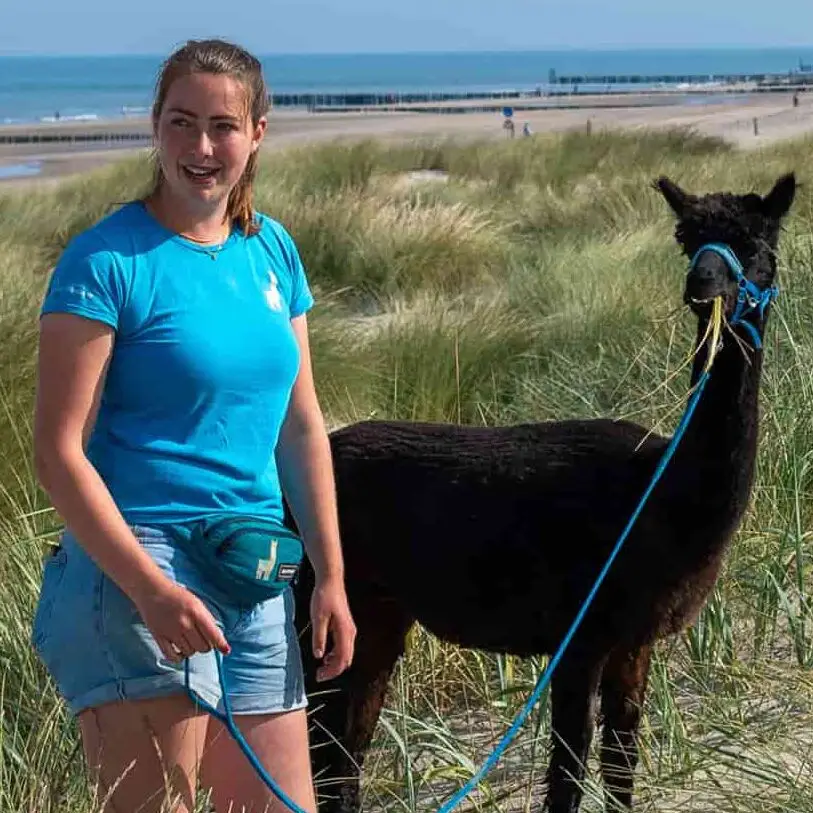
Of course, alpacas enjoy going for walks; a change of scenery is refreshing. However, Jacco and Mara quickly discovered that after 8 kilometers, their healthy alpacas preferred grazing in the roadside grass and rolling in the sand over taking another step. Furthermore, an alpaca’s back is not built to carry tents, sleeping bags, camping stoves, and water bottles. On the multi-day trekking trips Jacco and Mara dreamed of taking with guests, everyone would have had to carry all their own gear.
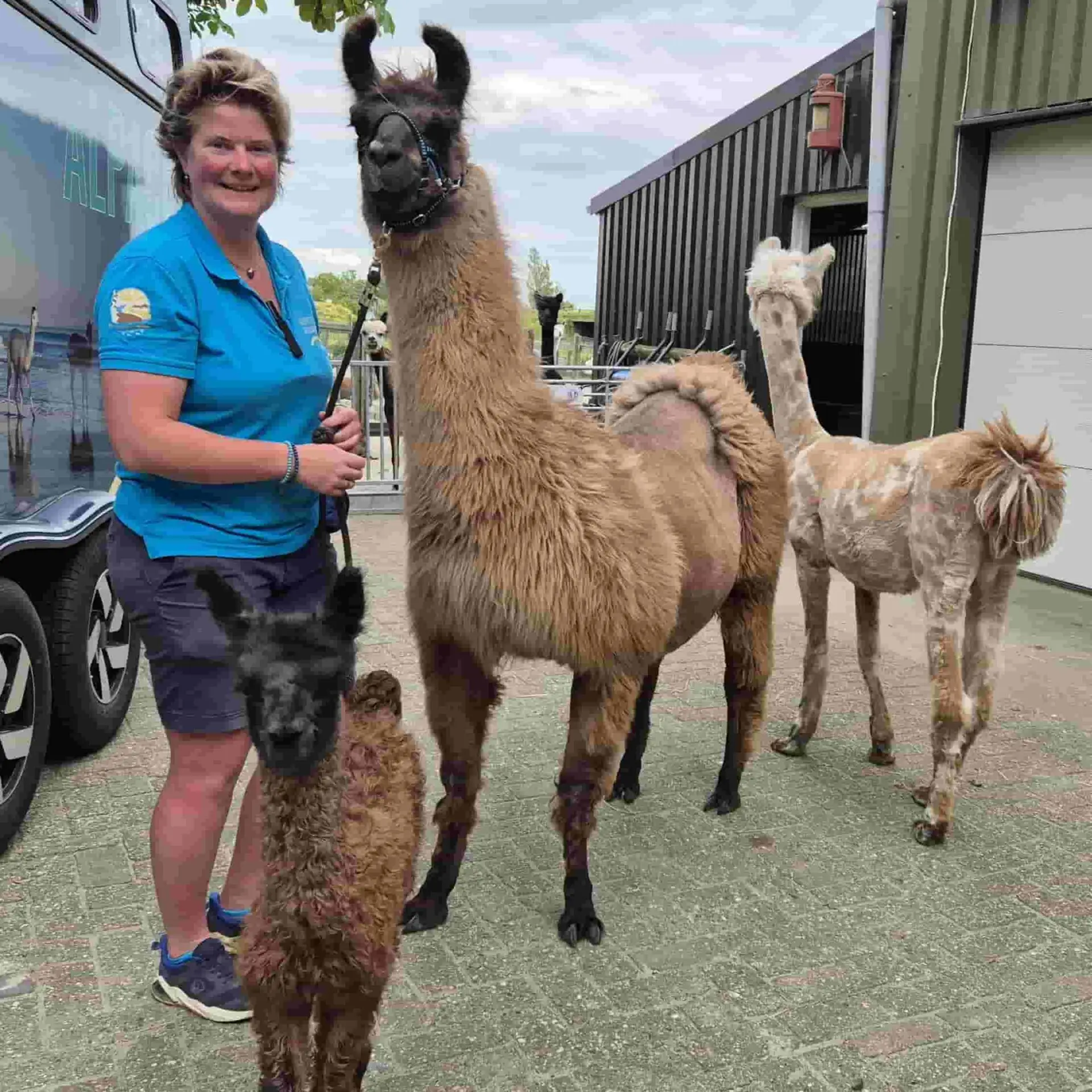
Llamas have historically served as pack animals. Calm, large, and strong, with a shoulder height of over one meter, they can weigh between 130 and 200 kg. Standing tall on long legs, they possess tremendous endurance: “They genuinely enjoy working,” Mara explains. “They walk proudly alongside you, turning their curved banana-shaped ears toward you, looking at you intently, and tuning into your energy. Just like alpacas, they belong to the camelid family. They are social creatures that thrive in herds, eating hay, grasses, wild plants, flower buds, and leaves.”
Background
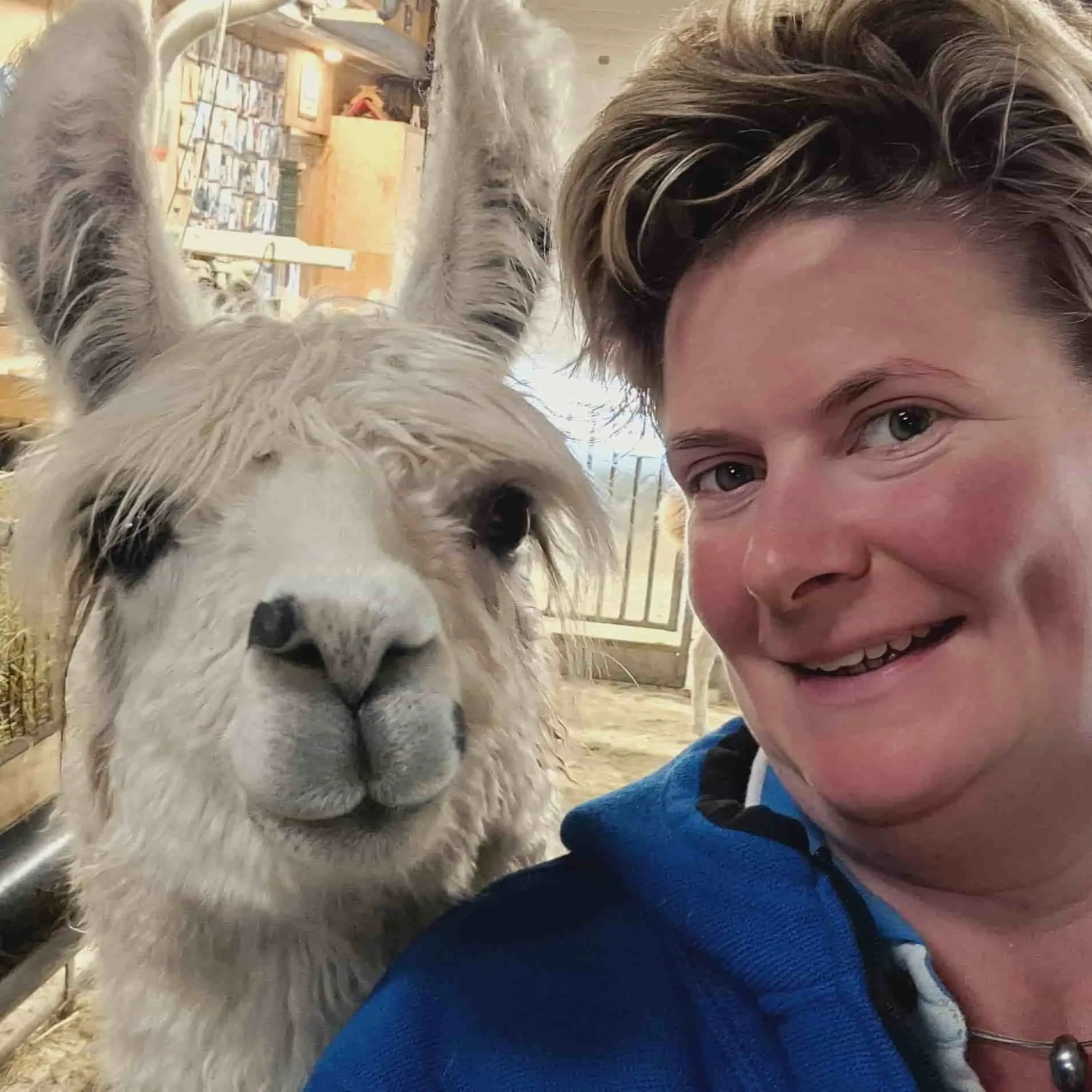
Jacco, Mara, and the team gained their first experience with rescue llamas through Harrie, Andes, and Morle, who arrived at the shelter as adults: “Genetics, history, and training dictate behavior. Of course, you can make adjustments and teach them new things—they are incredibly sensitive and intelligent. But when it came to selecting our own llamas, we visited a breeder who specifically breeds for docility and a social temperament.”
It turned into an extraordinary trip in September. In South Tyrol, Italy, among the foothills of the Alps, over 200 alpacas and llamas graze across mountain slopes and valleys: “A magnificent sight,” Mara reflects. “So much space for so many animals. They are beautiful and strong, outdoors day and night in the thin mountain air, finding shelter among trees, thickets, hay bales, and rocks. When the breeder called them, all those heads popped up, and they approached us completely relaxed.”
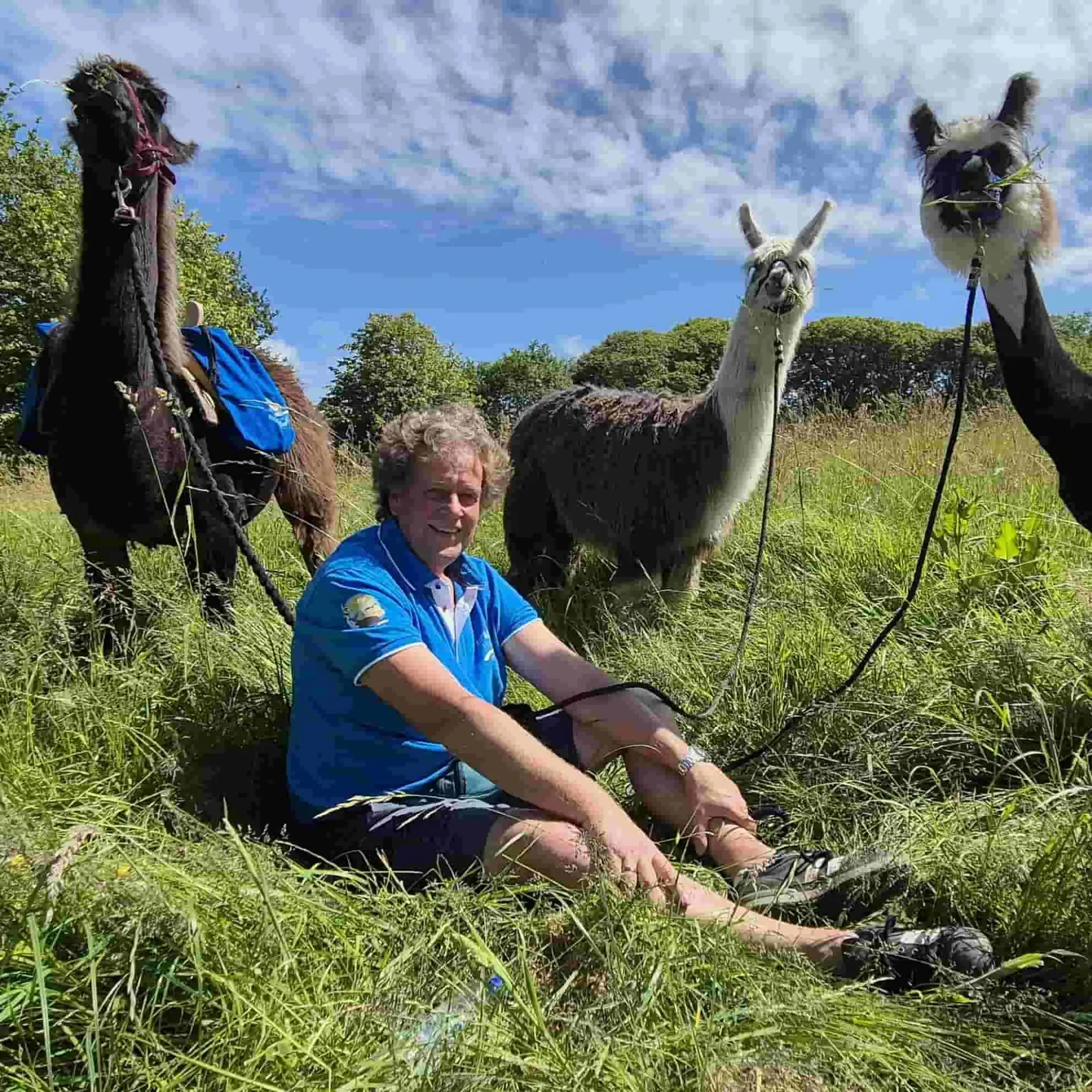
Alpine pasture from a bag
For the twelve llamas arriving in Aagtekerke via a large trailer in January 2024, the transition was massive. The weather offered no favors either: gray, cold, and wet. The pastures turned into mud swamps and remained so well into spring, severely limiting living space for all the animals. Retreating into two separate groups inside the barn—males with males, females with females—the llamas spent days staring listlessly into the distance, each losing several kilos during those initial weeks.
“Fortunately, after about a month, they began to relax,” Mara shares. “They adapted to our daily rhythm and integrated into the herd. Between rain showers, they could head outside and join us on trips to the sea. We supplemented their diet with Agrobs—alpine muesli from Bavaria—and still do. They’ve been gaining weight ever since.”
Playing and romping
The female llamas play alongside the alpaca females, while the males tear up the big pasture—charging up and down hills, roughhousing with each other and the alpaca geldings. They galop in wide loops past the campsite, down the trail to De Schuilstal, and around the pond. Their joy is evident in their floating bounds. All twelve allow themselves to be handled and cared for: “When they sniff your face, they smell like Swiss grated cheese.”
Plans for overnight llama trekking trips have been postponed by Mara and Jacco for now. Due to the heavy rain and challenging season, Jacco has continued working at sea: “As a result, we haven’t been able to train enough with the animals yet. Building up mileage and getting them to walk calmly in single file requires practice—not just through the dunes and across the beach, but alongside busy roads as well.”
Deliveries
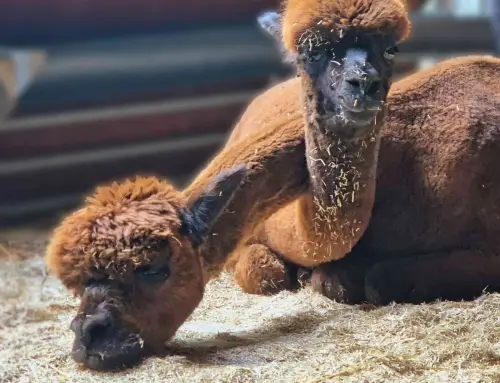
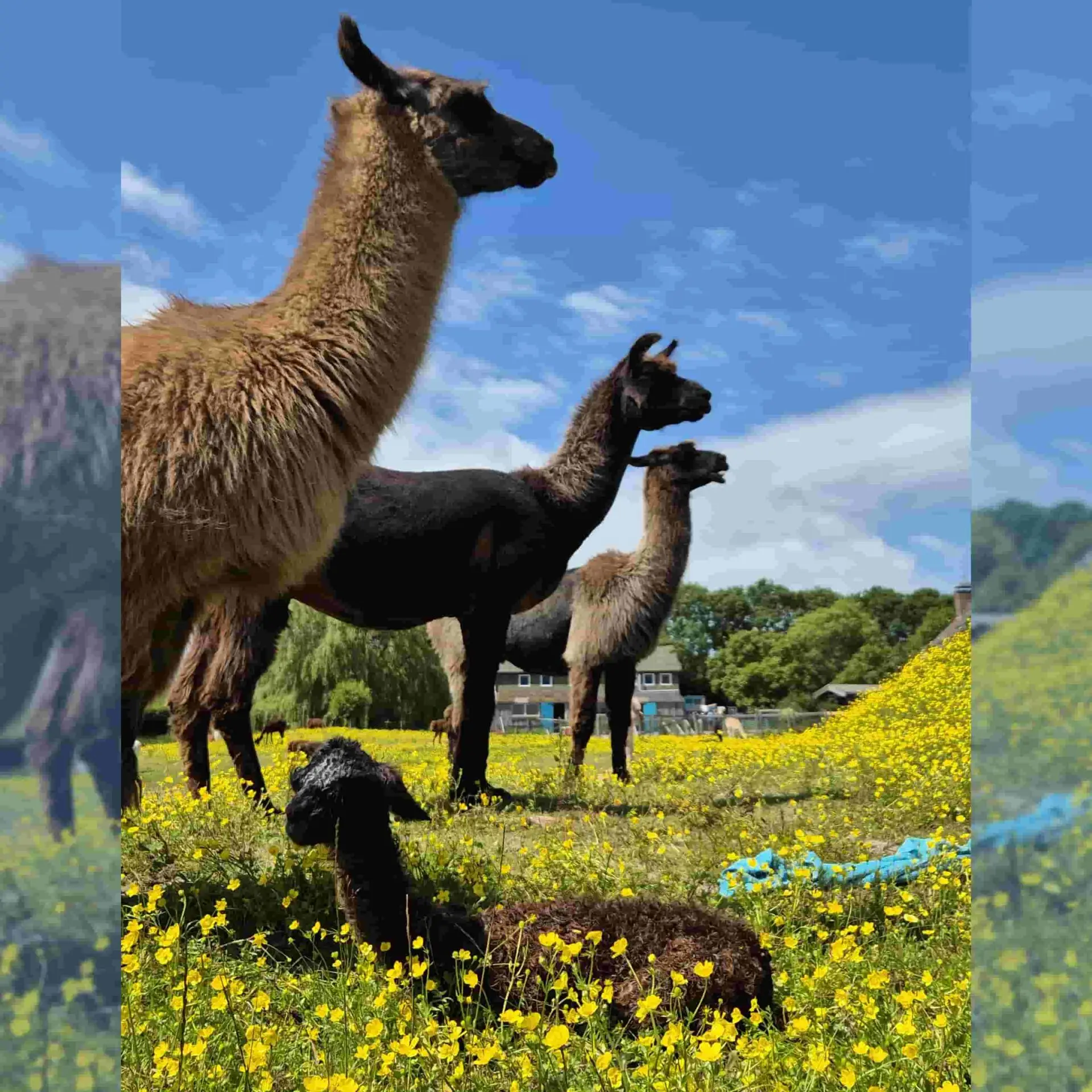
Furthermore, several llamas were pregnant, while others were still too young for such endurance trips. In June, Lily (2011)—mother to one-year-old Limbada—gave birth to a son: Lorenzo. Two days later, alpaca Bloem (birth year unknown) also gave birth to a son: Brenn. “It is so funny to observe the similarities and differences,” Mara laughs. “Lorenzo is 2.5 times larger than Brenn, weighing 22 kg at birth, whereas Brenn weighed 10 kg. Both are brown and have formed a tight bond. If they lose sight of each other in the crowd, you see them look around searching for one another.”
Lorenzo is remarkably gentle with Brenn. Sometimes they sleep side by side in the pasture during the day, completely exhausted from all their running and playing while their mothers look on from a distance—just like llama Calinda (2014), who is heavily pregnant and will undoubtedly give birth on a sunny afternoon in the near future.
Next episode:
A emotional rollercoaster surrounding a cria born with a unique medical condition.
Alpacas Zeelandia team
Alpacas Zeelandia team