Behind the Scenes
A high tea among the alpacas is a special experience. Taking them out to get a breath of fresh sea air can certainly be called exciting. But what do the animals do between events? What goes on around the farm yard? What challenges do the caretakers face? A series on daily occurrences and questions.
Jacoline Vlaander
06. Dung
You can learn a lot from poop. Shape, structure, color, and smell reveal a great deal about overall health. The Gastrointestinal Foundation (Maag Lever Darm Stichting) even advises waiting a moment before flushing to sprint out of the bathroom: take a careful look behind you first. Inhale the aroma of your lifestyle and internal workings, because how your digestion, gut flora, and immune system are faring can be read right off what floats steaming in the bowl.
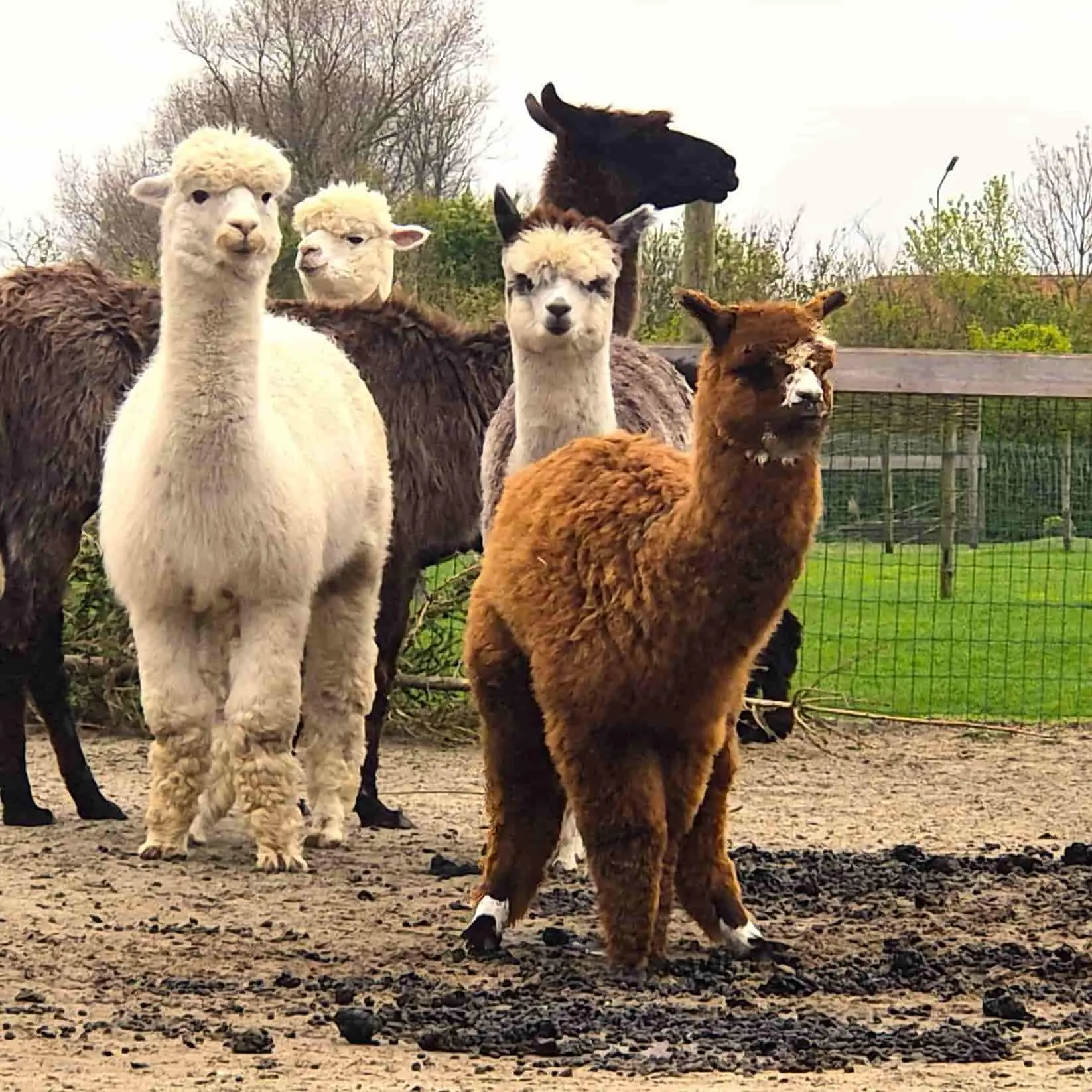
Alpaca and llama droppings also give away many secrets. Careful observation is key: “It’s fun to get to know your animals through their droppings,” Mara says. “If I see oblong pellets somewhere, I know: Alpha (2016) was here. Arenda (2017) scatters a fan of round little pellets, and with Yuno (2014) it’s usually soft. Sometimes you only spot green splatters everywhere—then they might have spent just a little too long in the pasture the day before. If dry feed was too dry or they didn’t drink enough, everything bounces meters across the yard.”
Monthly fecal testing
For proper care, you have to look beyond just the outer shape. Alpaca owners know it well: you cannot do without periodic fecal testing. “Parasite eggs enter the grass via the dung of infected alpacas,” Mara explains. “The larvae from those eggs are ingested while grazing. They migrate through organ tissues, grow into adult worms, and mate in the intestines—resulting in terrible illnesses. So we stay on top of it.”
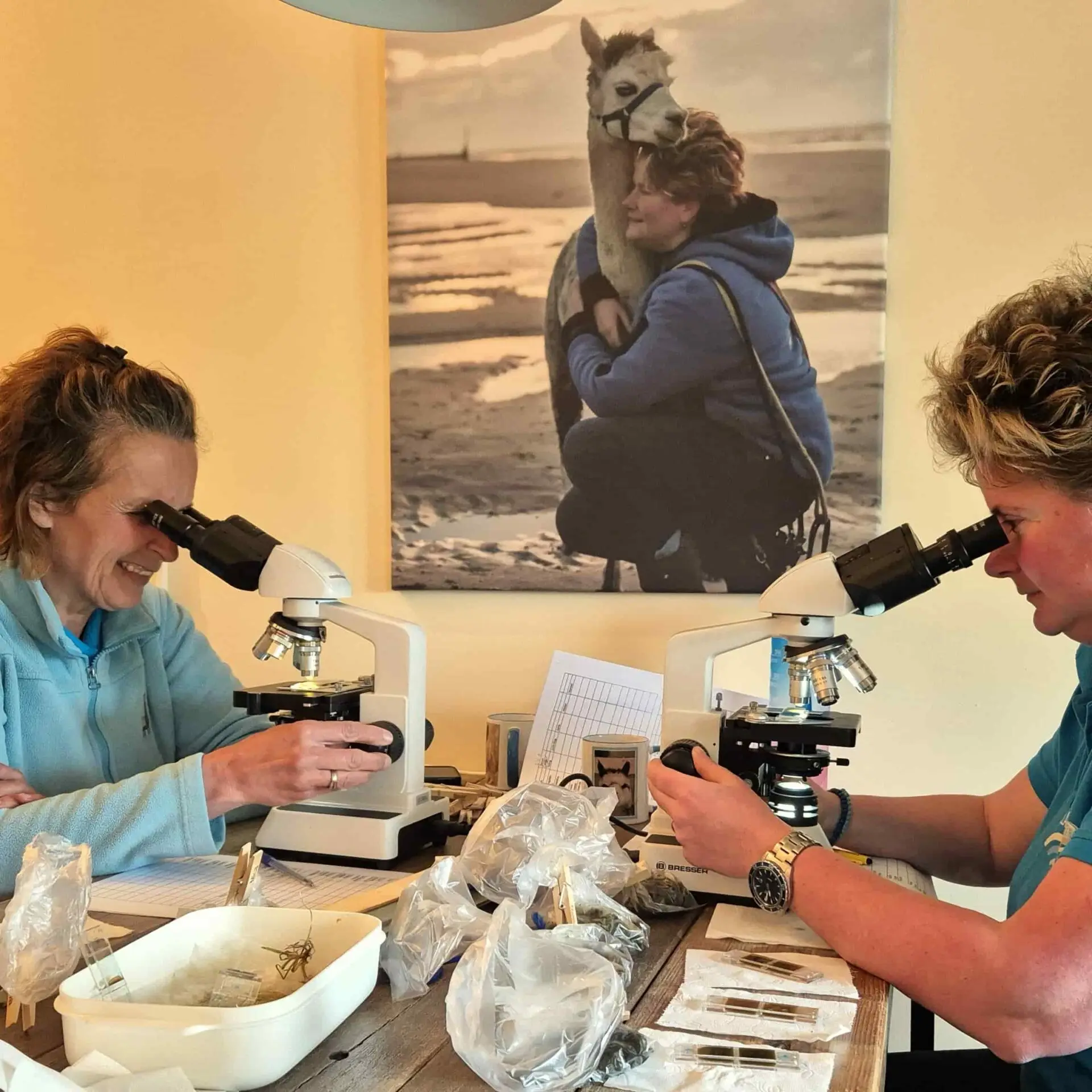
Under the microscope, worms, parasites, and even eggs are clearly visible: “This is how we monitor all the alpacas and llamas. We record our findings in an online database. We aim to keep healthy animals healthy. For fatigued or weakened animals, we identify what’s wrong, knowing precisely which medications to administer and in what doses. For this targeted group, we inspect their dung again fourteen days later: is the treatment working, and is the count of micro-organisms dropping?”
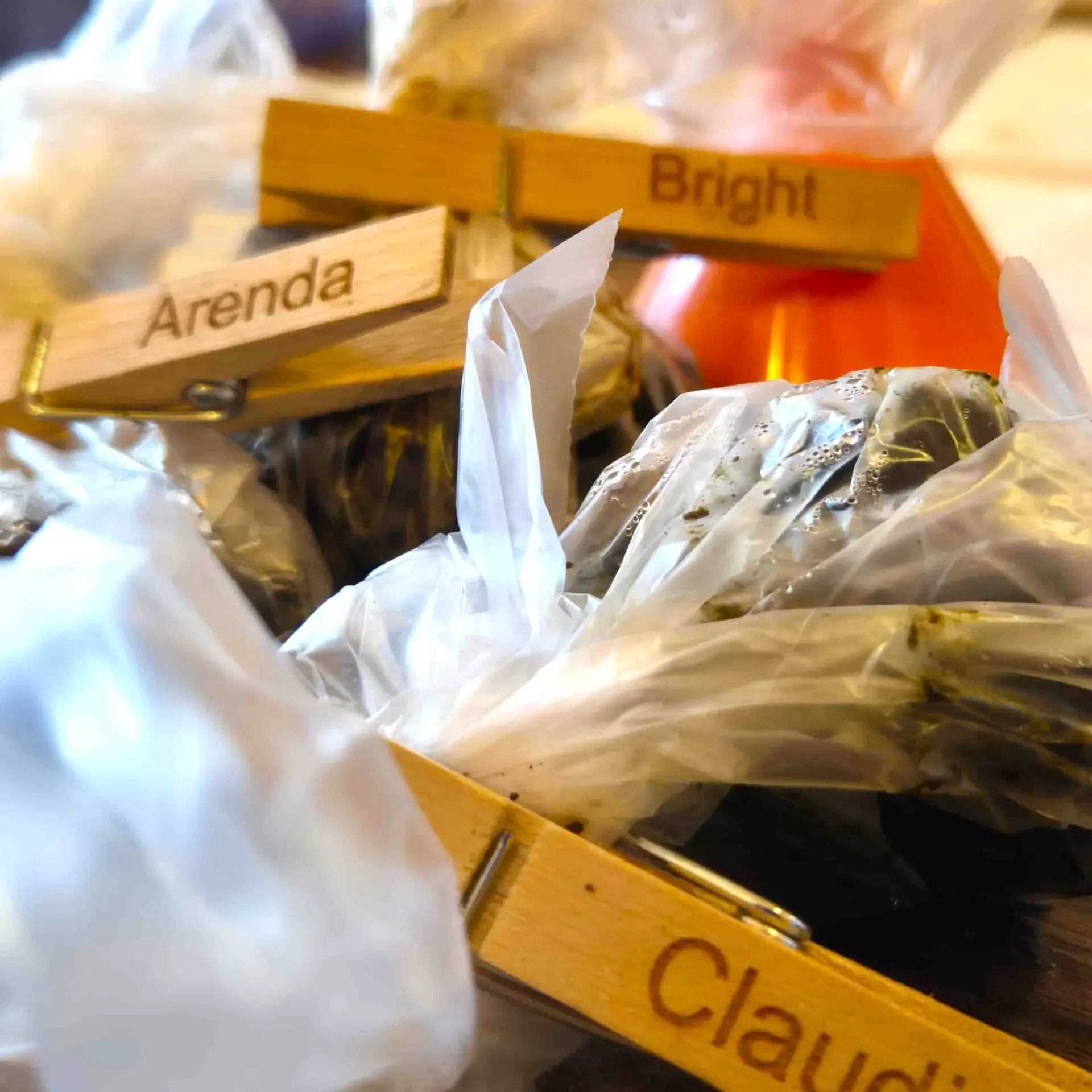
Collecting droppings in the days leading up to fecal testing becomes an eager ritual. Staff and volunteers stroll through paddocks and pastures with plastic bags and labeled clothespins in hand. No one loses sight of alpacas or llamas sniffing dung spots, dreamily turning in circles, or squatting slightly with raised tails. Then it’s a quick scoop to pick up the warm pellets. Each animal’s sample goes into a bag, secured with a named clothespin, and straight into the crisper drawer of the medication fridge. They check off names on the hanging list of 86 animals whose droppings have been confiscated. Fresh dung remains viable for 7 days when refrigerated.
Preparing the poop
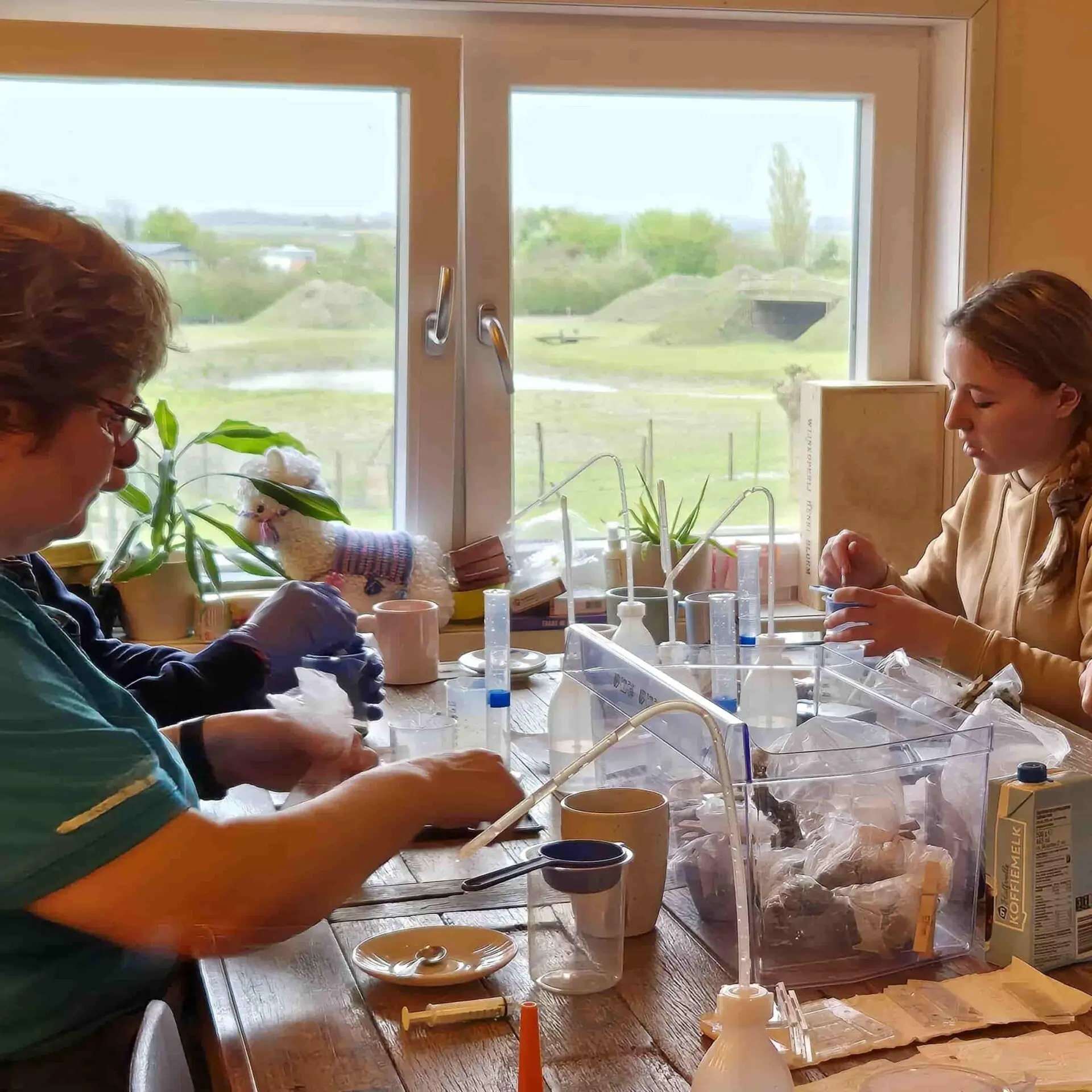
On a Thursday morning in April, volunteers Millie, Herman, Eefje, Annekarlijn, Annie, Nicky, and Diana gather around the wooden table in the breakroom. In the center sits the container filled with collected bags. Amid scales, beakers, and counting chambers, animated conversations fill the room.
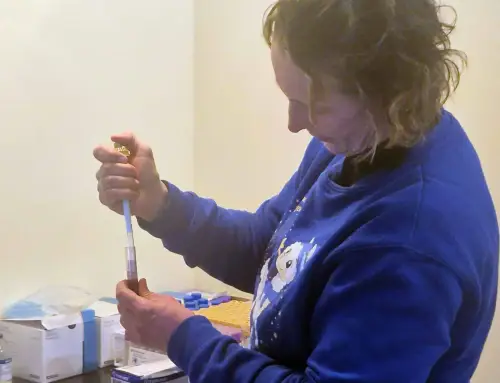
Within a few hours, they prepare all the samples. Routinely, they weigh out 4 grams of dung, add 26 milliliters of saline solution, pour the slurry into a sieve over a beaker, and press it dry with a spoon. Using a syringe, they extract 1.5 milliliters of liquid from the top layer—where eggs float—and fill both sides of a McMaster counting chamber. Next, they bring the counting chamber along with the animal’s name to the office for the final analysis, clean the tools, and move on to the next set of samples.
Mara and Renate peer through the microscope for hours, tracking scores and individual animals while searching medical reference books for appropriate medications and dosages to target the observed parasites. Despite the wet spring, the overall picture across the herds is calm: “A light presence of Nematodirus here and there,” Mara notes. “In crias, this causes delayed growth and watery droppings. In a few animals, we detected coccidia, which attack intestinal cells. Although we haven’t seen specific symptoms like lethargy, reduced appetite, weight loss, or dark brown, foul-smelling diarrhea yet, we will keep an extra watchful eye on them—they can die from it.”
New arrivals
In newly arrived animals, the rate of infection is often high: “Especially if they came from dirty barns or flooded pastures. Once here, natural resistance builds up over time and symptoms become milder. Sometimes we skip a chemical treatment and check again two weeks later. If necessary, we treat them then, but often we see the parasite vanish within 28 days on its own.”
During the first months of the year, out of necessity, the alpacas and llamas spend considerable time in the drained paddocks. Nibbling on collected Christmas trees turns out to be not only tasty and fun, but it also reduces parasite infections: “We administer less synthetic medication as a result—all thanks to recycling those pine trees.”
Next episode:
The annual shearing marathon: who is who after this complete transformation?
Alpacas Zeelandia team
Alpacas Zeelandia team