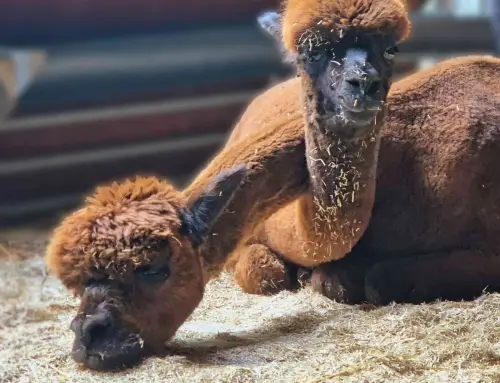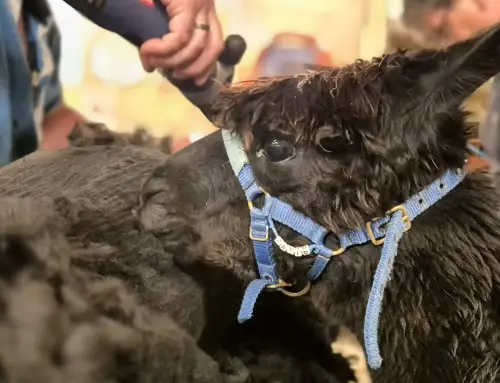
Behind the Scenes
A high tea among the alpacas is a special experience. Taking them out to get a breath of fresh sea air can certainly be called exciting. But what do the animals do between events? What goes on around the farm yard? What challenges do the caretakers face? A series on daily occurrences and questions.
Jacoline Vlaander
16. Zoë
In January 2025, following a report, Mara and Jacco rescue two severely neglected alpacas. Zoë (2022) and Puck (2023) have apparently been living in the garden of a holiday home on Walcheren for a long time, surviving on nothing but water and hay. Proper care, knowledge, and expertise were completely lacking, and there was virtually no supervision.
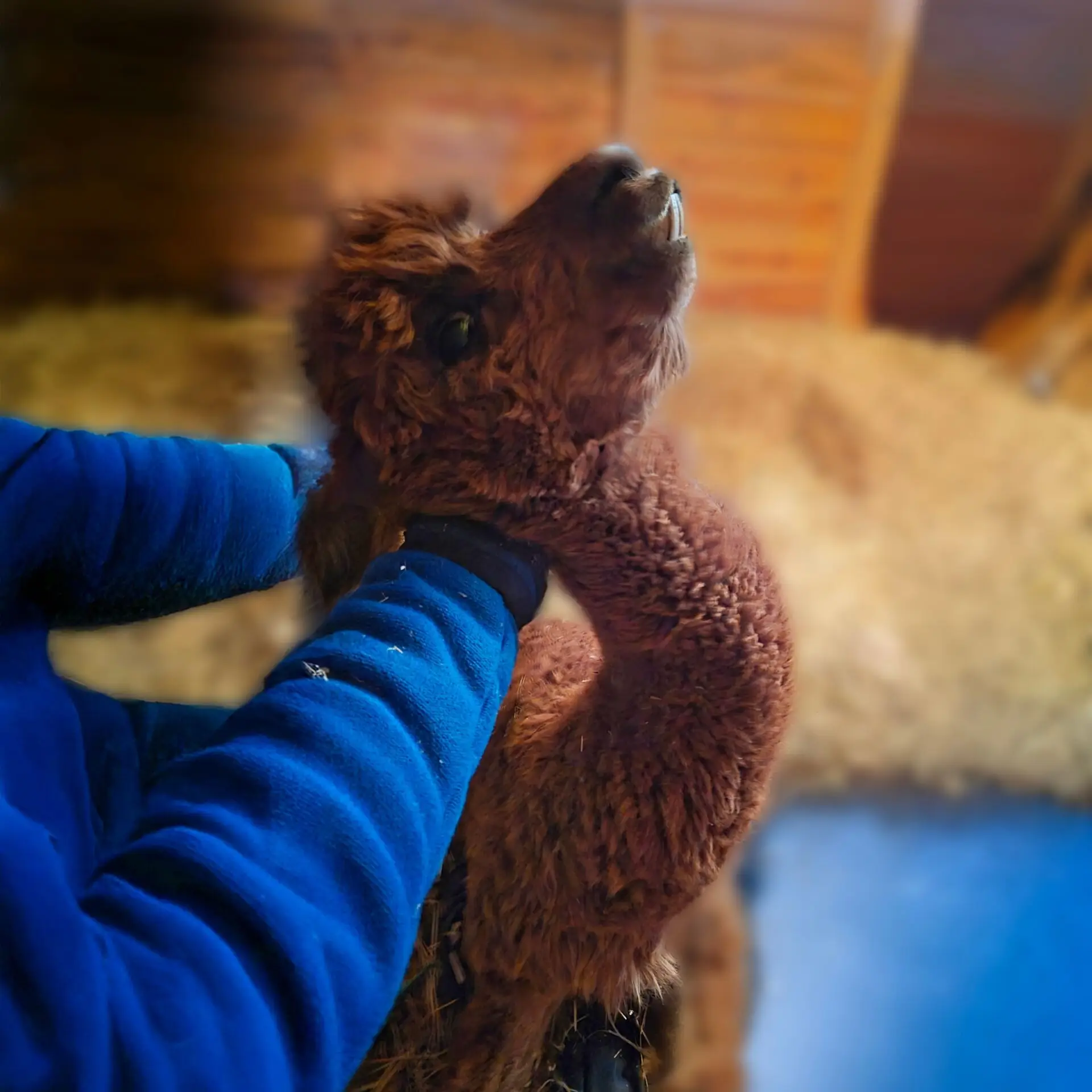
Puck, small and dark brown, is dangerously underweight, weakened, and ill. Weighing just 30 kg when she should weigh at least 50 kg, she lies curled up in a corner of the field shelter. Her knee joints are bloody, as though she has been dragged roughly or attacked. She can no longer stand, lift her head, stretch her neck, or eat on her own. She smells heavily of mange, infection, and rot. In the trailer, she lies shivering and exhausted in Mara’s arms, yet she still tries to turn her little head to see who is stroking her so gently.
Neglected ear infection
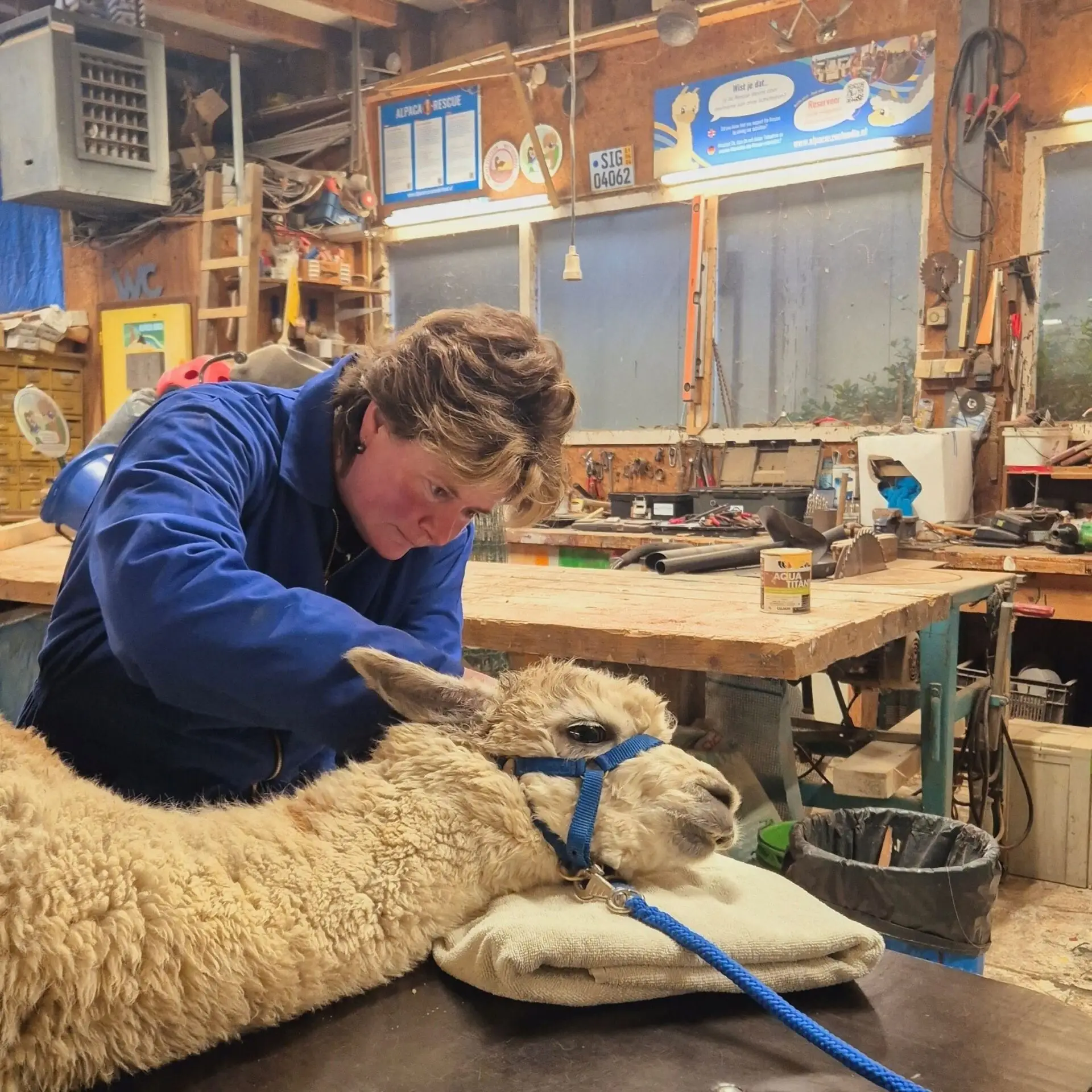
Zoë, white with light brown patches, is also infected with mange. Additionally, she suffers from overgrown teeth and nails, alongside a severely neglected ear infection. Her ears droop, caked deep inside the ear canal with foul-smelling crusts and pus. She weighs a mere 37 kg, whereas given her age and frame, she should weigh well over 55 kg.
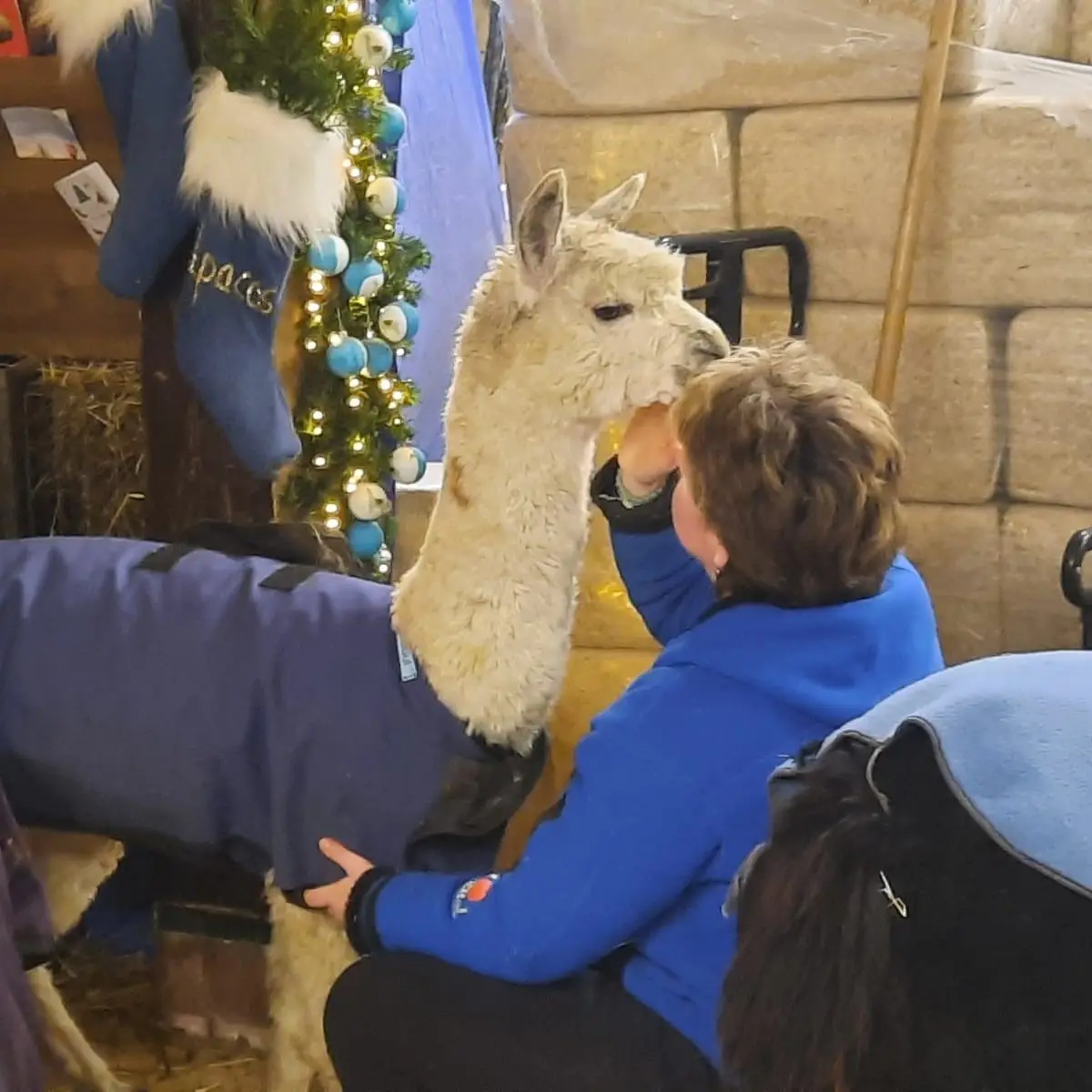
However, there is hope—she can still stand and walk. On the farmyard, she looks around curiously, visibly impressed by the llamas. She takes a particular liking to Cavada (2023), daughter of Calinda (2014), staying as close to her as possible as if seeking protection. She also displays a healthy appetite: “We gave her extra feed in very controlled portions,” Mara explains, “a small amount several times a day so her stomach and digestive system could keep up with the changes.” Administering medication and supplements goes hand in hand with tracking her weight gain; every single ounce gained increases her chances of survival.
Final hours
Little Puck experiences a few special final hours. Fragile, she lies on a heating blanket in Mara’s lap in a quiet corner of the barn, surrounded by the rescue mares and crias. Mara and Jacco sit with her for hours late into the night: “We supported her with medication, fluids, and liquid nutrition. For a brief moment, there were hopeful signs—when she passed a pellet and dipped her nose into a bowl of food on her own.” But Puck is simply too weak. Her breathing becomes shallow, and early in the morning on January 15, she passes away.
“Animals have no choice,” Mara reflects. “They are entirely at the mercy of the human who buys them. They cannot alter their situation, cannot get food if none is placed before them, cannot find a dry pasture when there is only mud, and cannot ask for help when they are sick. They just stand there, collapsing on their legs, waiting for the end. As humans, we are responsible and legally obligated to meet the basic requirements for a humane, dignified existence.”
Heading to the sea
Fortunately, Zoë makes steady progress. She gains several kilos over the following weeks and grows visibly stronger. Though she still tires quickly—seeking out Cavada to flop down beside—she also trots cheerfully toward the pasture with the herd. On a warm day, she even gets to join a trip to the beach. While clearly nervous at first, she notices how much the others enjoy it and begins making joyful bounds of her own.
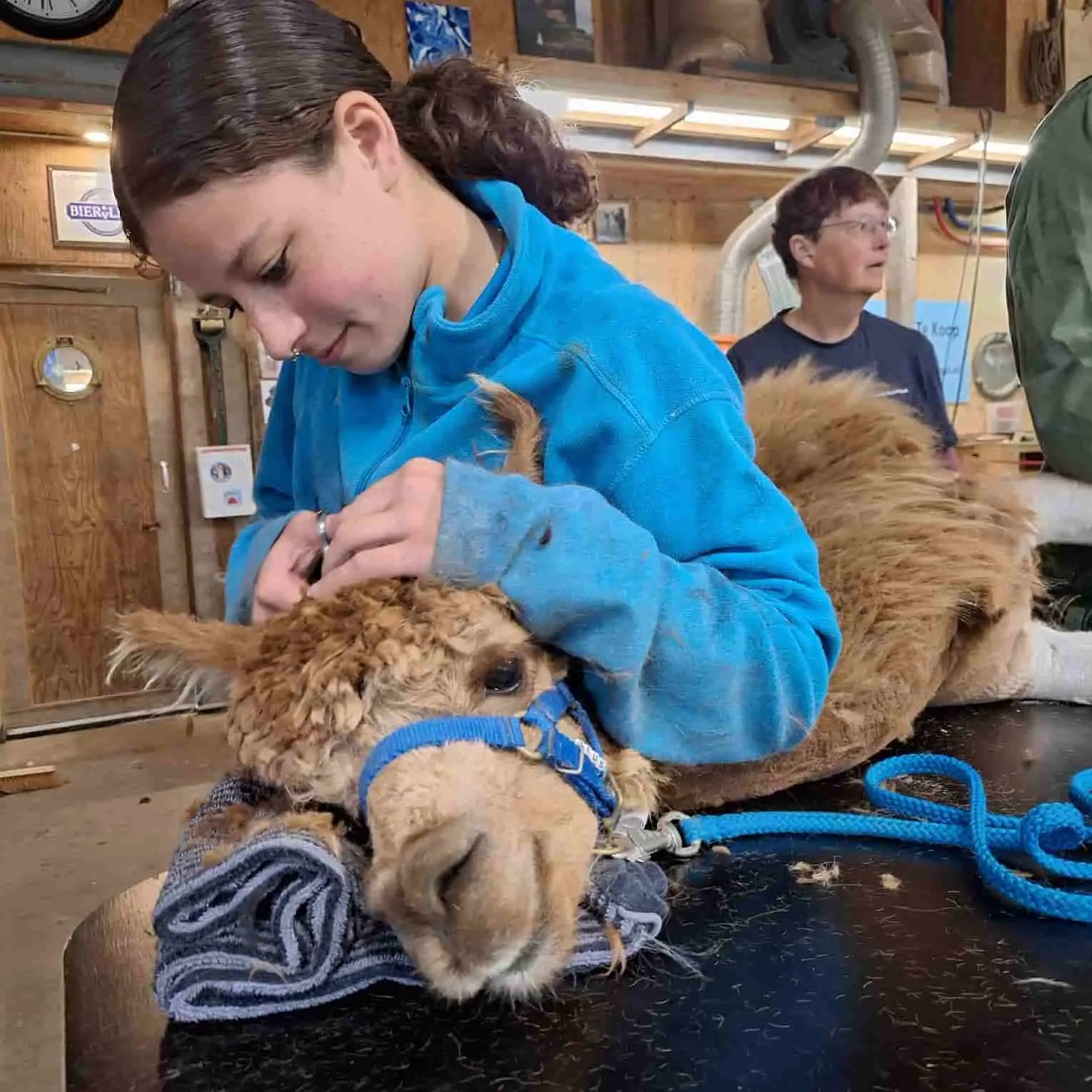
“We traveled a long road with her last spring,” Mara says, “with weekly mange treatments. Whenever she lay on the shearing table, one of us would carefully take on the task of clearing out her ears—a job requiring gloves and a face mask because the stench made us nauseous.” Balanced nutrition and vitamins were increased bit by bit, accompanied by weekly weigh-ins to track progress and hours of observation to document all treatments, results, and minor setbacks.
Full of trust
The outcome of these relentless efforts exceeds all expectations: “What stood out most was that Zoë endured everything with complete trust. She was attentive and cooperative, as if she understood that all these treatments were necessary. Eventually, her ears became completely clean and smooth inside; she moves them flexibly and perks them up proudly. The pain is forgotten, and Zoë smells like herself again.”
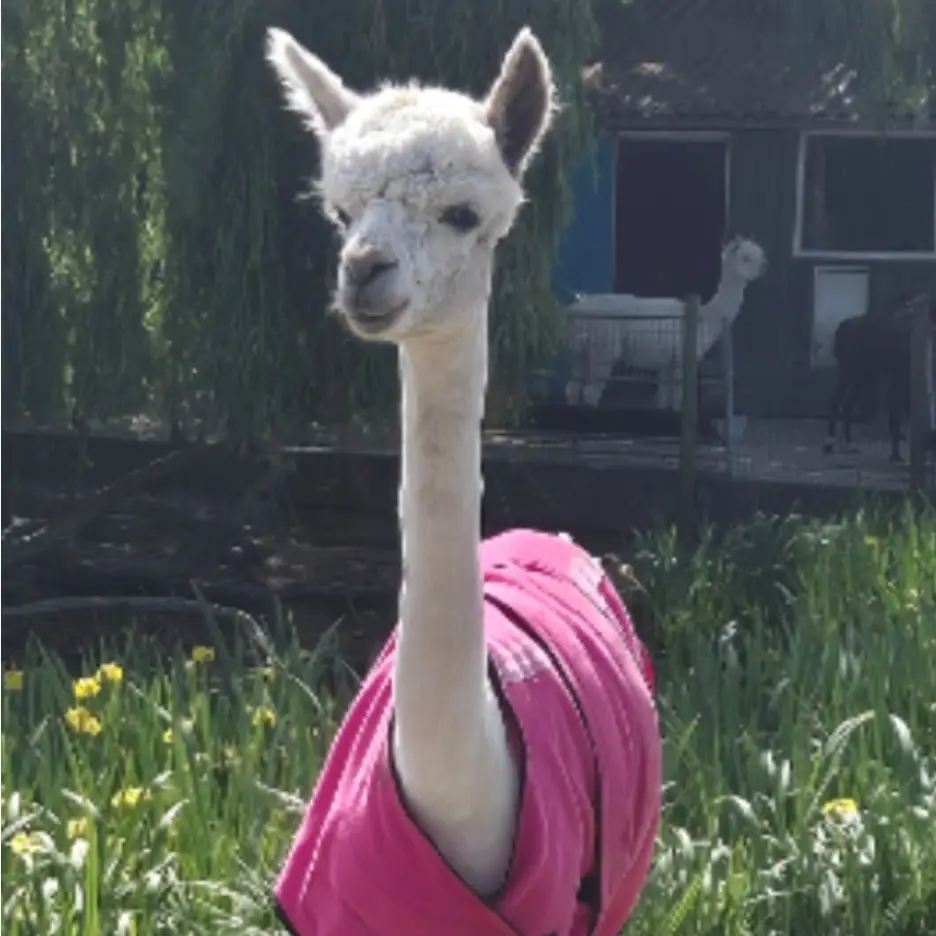
When the scale reads over 50 kg in mid-May 2025, it marks a huge milestone for the entire team: Zoë made it! She is mange-free, energetic, playful, and strong: “When we shorn her shortly after alongside the others, we put a candy-pink coat on her to protect against the chilly breeze. She walked around in it looking proud and jaunty.”
Next episode:
How do you care for alpacas? We are happy to help you with our health checkup (APK) for your alpacas!
Alpacas Zeelandia team
Alpacas Zeelandia team