Behind the Scenes
A high tea among the alpacas is a special experience. Taking them out to get a breath of fresh sea air can certainly be called exciting. But what do the animals do between events? What goes on around the farm yard? What challenges do the caretakers face? A series on daily occurrences and questions.
Jacoline Vlaander
2. Training
Following Donna’s agonizing death in December, the team was in shock. “Baffled and heartbroken,” Mara recalls. “We couldn’t understand it. What did we do wrong? Did we miss early signs? How do we learn to recognize them?”
Many supporters sympathized deeply. Within 24 hours, the crowdfunding campaign to cover the autopsy costs raised over €1,200. Expectations were high. What if the issue stemmed from their own hay, as the vet had speculated? “Even though we never doubted its quality, we immediately had multiple laboratory analyses carried out by Eurofins Agro in Wageningen. Nothing concerning came up. Still, just to be safe, we bought 50 bales of alternative hay. Because as long as you don’t know where to look, any alpaca could fall ill.”
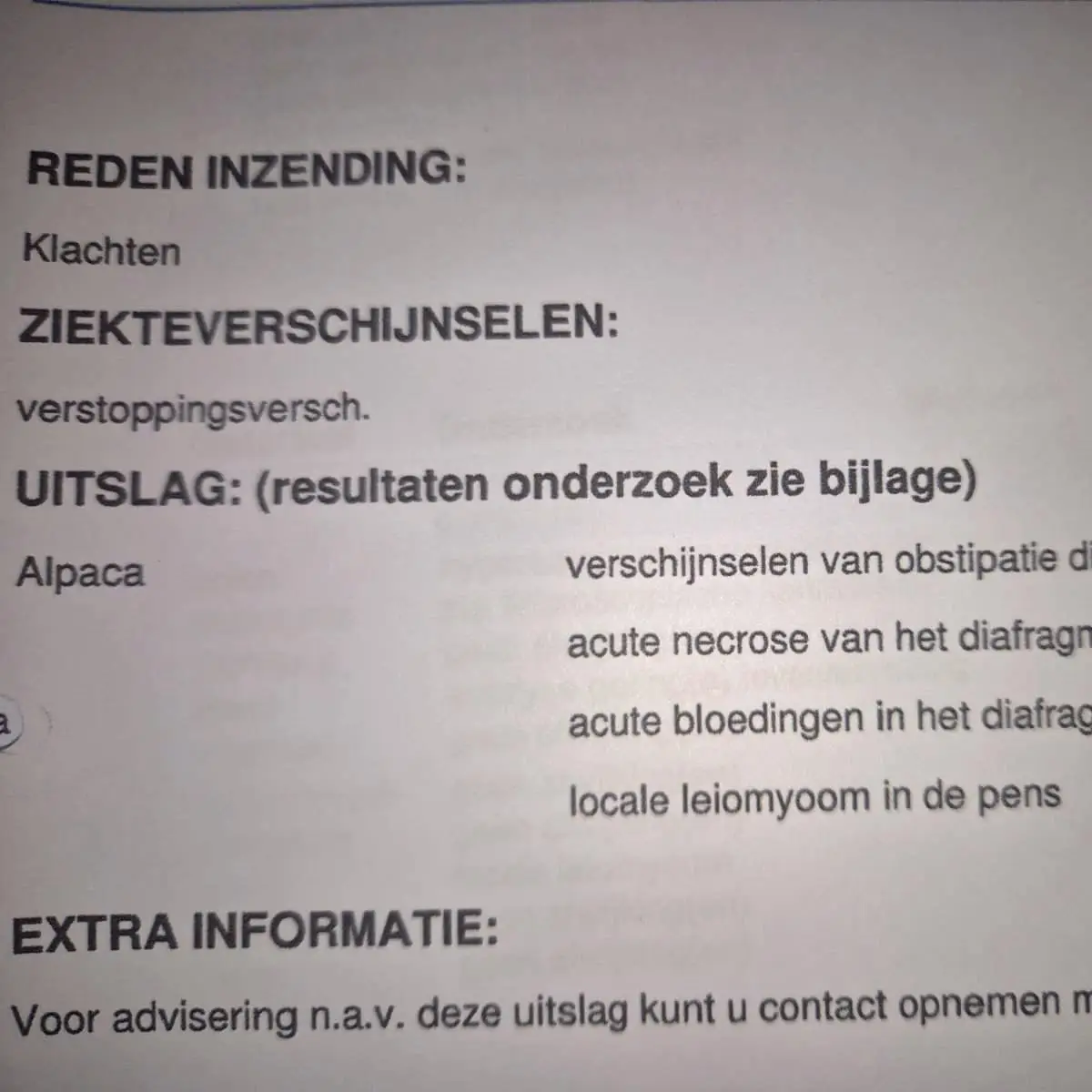
Six weeks later, the report arrived from the GD Animal Health service in Deventer. It turned out to be an anticlimax: “It offered no clear diagnosis. In technical medical terms, it simply described what was found inside Donna’s organs. We couldn’t draw any actionable conclusions from it. If one of her herd mates developed identical symptoms today, we still wouldn’t know how to respond.”
Consciously incompetent
Feeling “consciously incompetent” is deeply frustrating—especially when animal welfare is at stake. These are animals that bounce back and flourish after months of intensive care and rehabilitation, animals that look at you with total trust, greet you cheerfully, and endure every treatment without resistance: “We never want to betray that trust. The nagging uncertainty that you might be missing something eats away at you.”
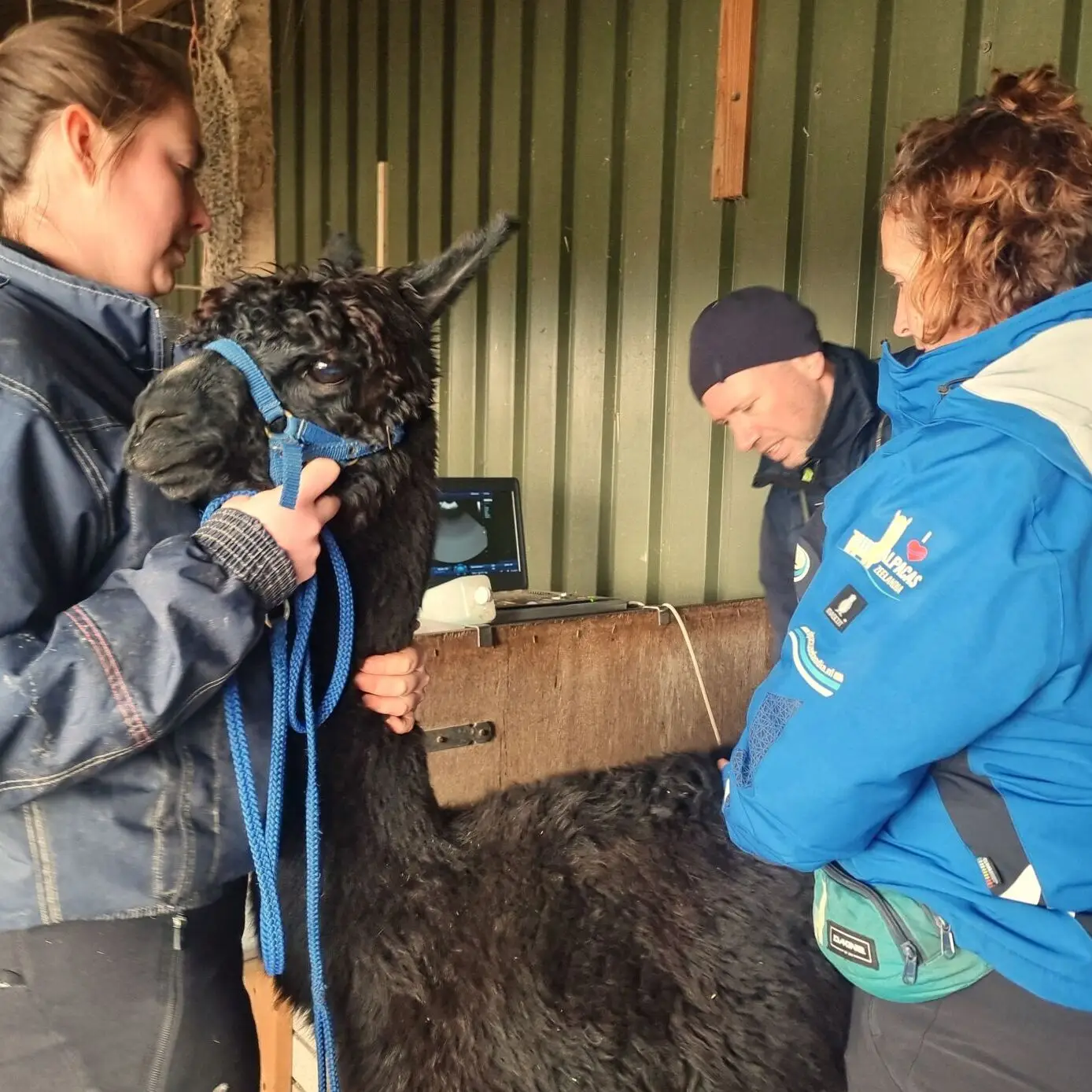
Seeking a proper medical interpretation of the symptoms that caused Donna’s death, Mara reached out to Dr. Thijs Flahou, a Belgian veterinarian specializing in alpacas and llamas. At the end of February, he visited Aagtekerke to deliver a customized training session for part of the team, combining theory with practical application.
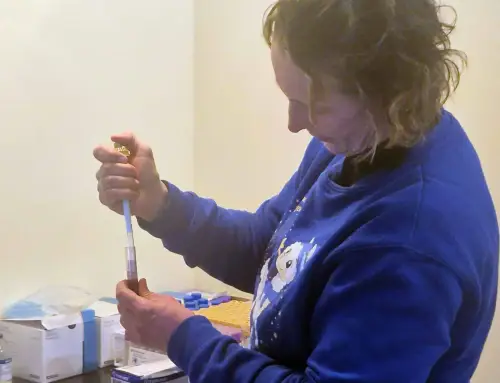
“Alpacas are prey animals and will mask illness for as long as possible,” he explained. “Inflammation doesn’t always present with a fever, and clinical (directly visible) symptoms alone are often insufficient to arrive at an accurate diagnosis. The moment you notice something subtle off with your animals and aren’t sure of the cause, it is wise to run blood work as quickly as possible. Blood values reveal subclinical (not yet visible) factors, allowing you to catch a disease process in its early stages.”
Just like with the autopsy report and hay testing, specialized knowledge is required to decode medical results: “It is reassuring that we can rely on Thijs to explain blood values, their real-world effects, and the necessary next steps,” Mara says.
Learning to listen
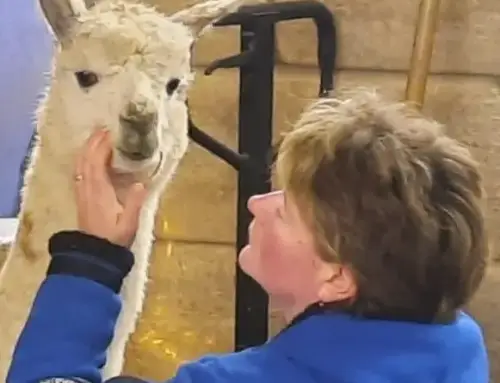
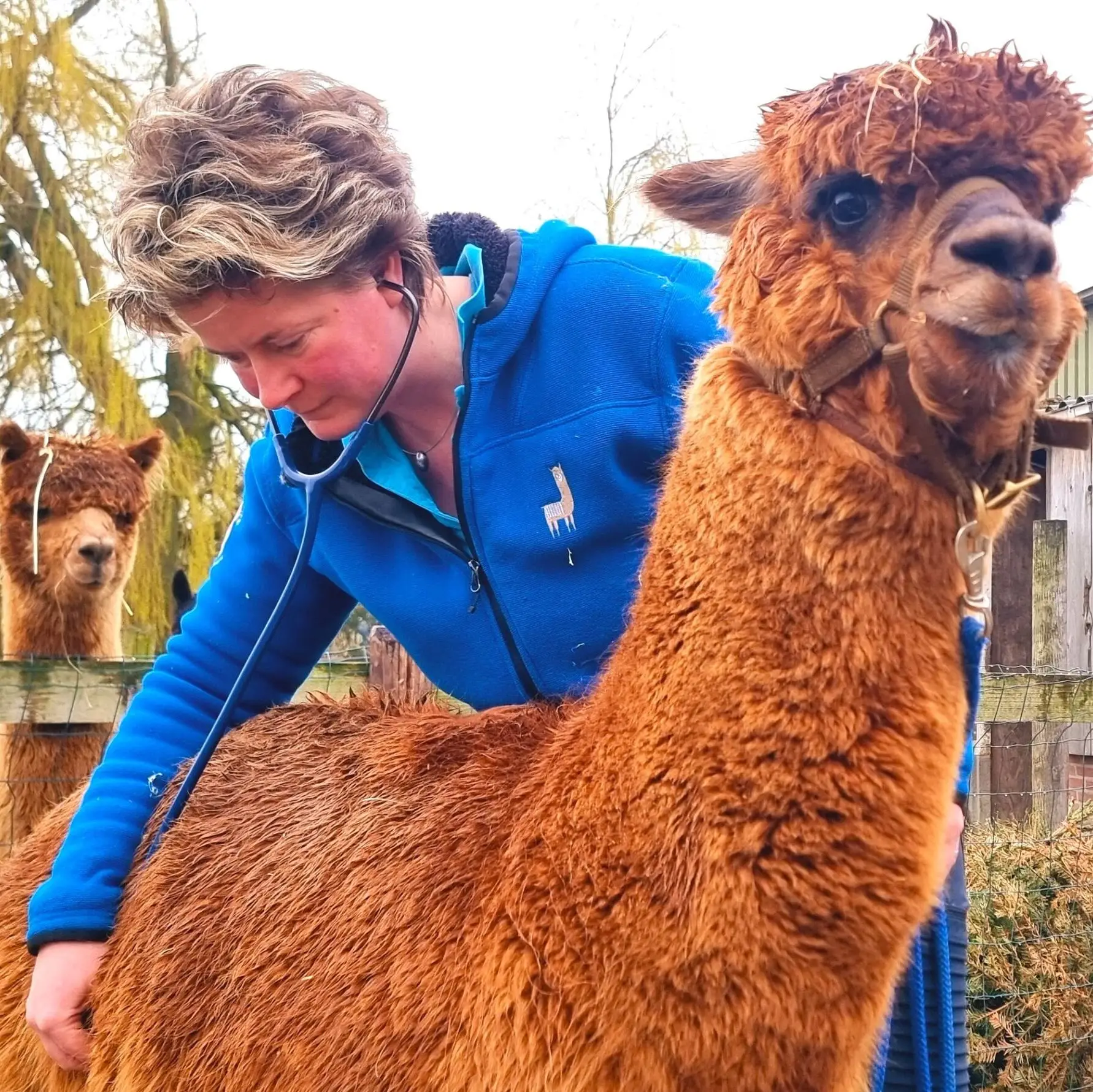
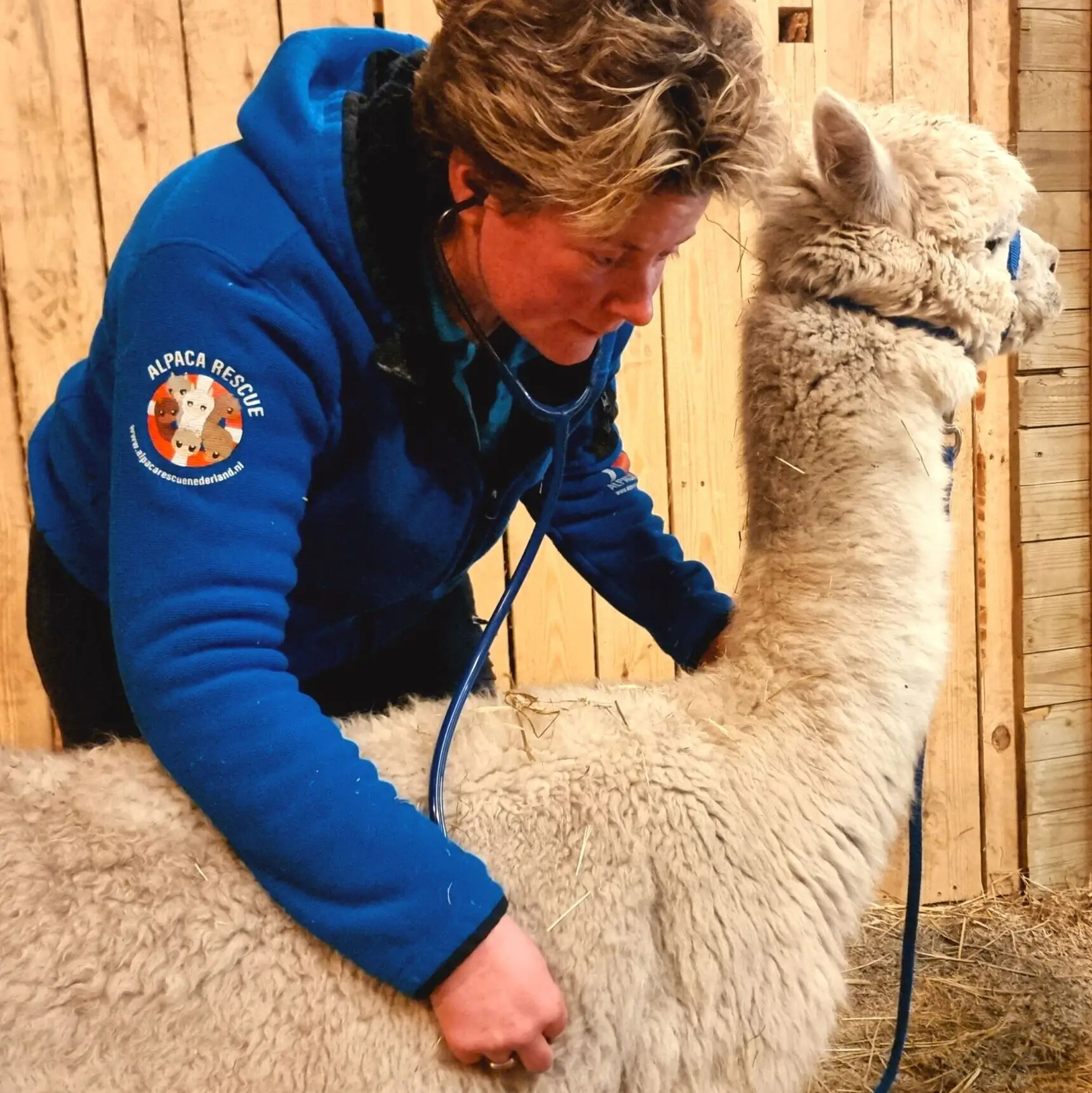
Furthermore, listening to the heart, lungs, stomach, and intestines is essential. To practice this, Mara, Renate, and Annika headed down to the barns with Thijs. Developing a vocabulary of body sounds requires practice—even when working with healthy, mild-mannered alpacas serving as gentle test subjects. You need to know where to listen, what to listen for, and roughly how it ought to sound. To pick up those sounds, you first have to learn how to listen. But what are you actually listening for? Inside these woolly creatures, everything rumbles and gurgles; even their dense fleece crackles deafeningly against the stethoscope.
Winston (2018) waited patiently as Mara felt along his broad chest: “His heart isn’t beating,” she concluded after a moment. Thijs chuckled: “He is indeed very relaxed, but trust me, it’s still working.” When listening to heavily pregnant Bloem (birth year unknown), who suffers from a dust allergy, they could clearly hear how raspy and labored her breathing was. Comparing Joke (2002) with Sofie (2023), it was striking how an older heart sounds fainter and more distant compared to a fast, young heart—where a slight murmur might even be detectable because the gap between the left and right ventricles hasn’t completely closed yet.
Donna’s diagnosis
Based on Donna’s autopsy report, Thijs suspects she developed an infection through a small wound, which traveled via the bloodstream to her diaphragm: “The rest was secondary damage. Blood work would have revealed that infection much earlier. A strong course of antibiotics might have saved her back then, but you can never know for certain.”
There is no simple checklist of variables for making life-or-death decisions—even when you possess deeper medical insight into those variables. For every animal, all symptoms must be evaluated in context with their environment, history, age, and life expectancy, always maintaining an open mind.
“Following this training session with Thijs, we are expanding our regular routines,” Mara states. “In addition to analyzing fecal samples, logging body temperatures, and tracking weight, we now also listen to heart, lungs, stomach, and intestines. Going forward, we will connect unusual behavior to blood testing far sooner. And who knows—maybe one day we’ll even learn to draw blood and perform tests ourselves.”
Because no animal deserves to die the way Donna did.
Next episode:
About Jona and Berserk Male Syndrome (BMS), and how to manage an alpaca (and yourself) when dealing with it.
Alpacas Zeelandia team
Alpacas Zeelandia team