Behind the Scenes
A high tea among the alpacas is a special experience. Taking them out to get a breath of fresh sea air can certainly be called exciting. But what do the animals do between events? What goes on around the farm yard? What challenges do the caretakers face? A series on daily occurrences and questions.
Jacoline Vlaander
3. Jona
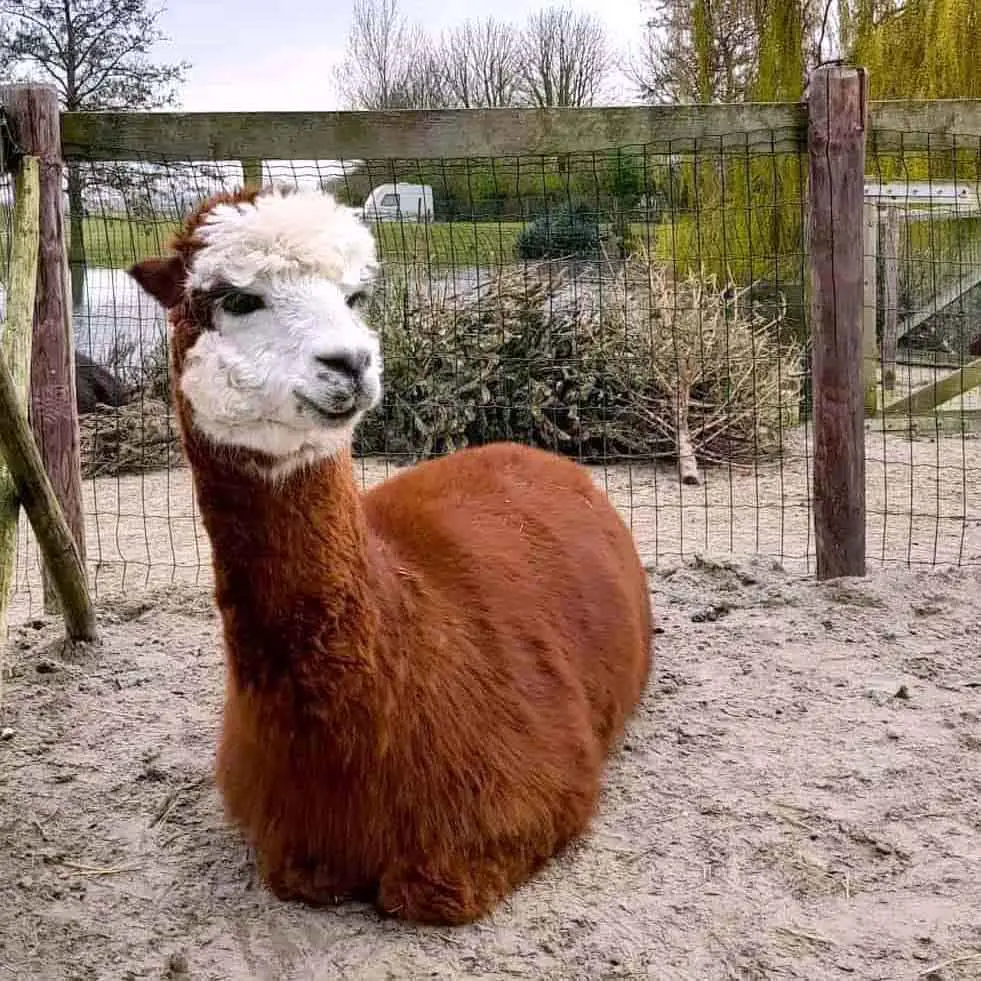
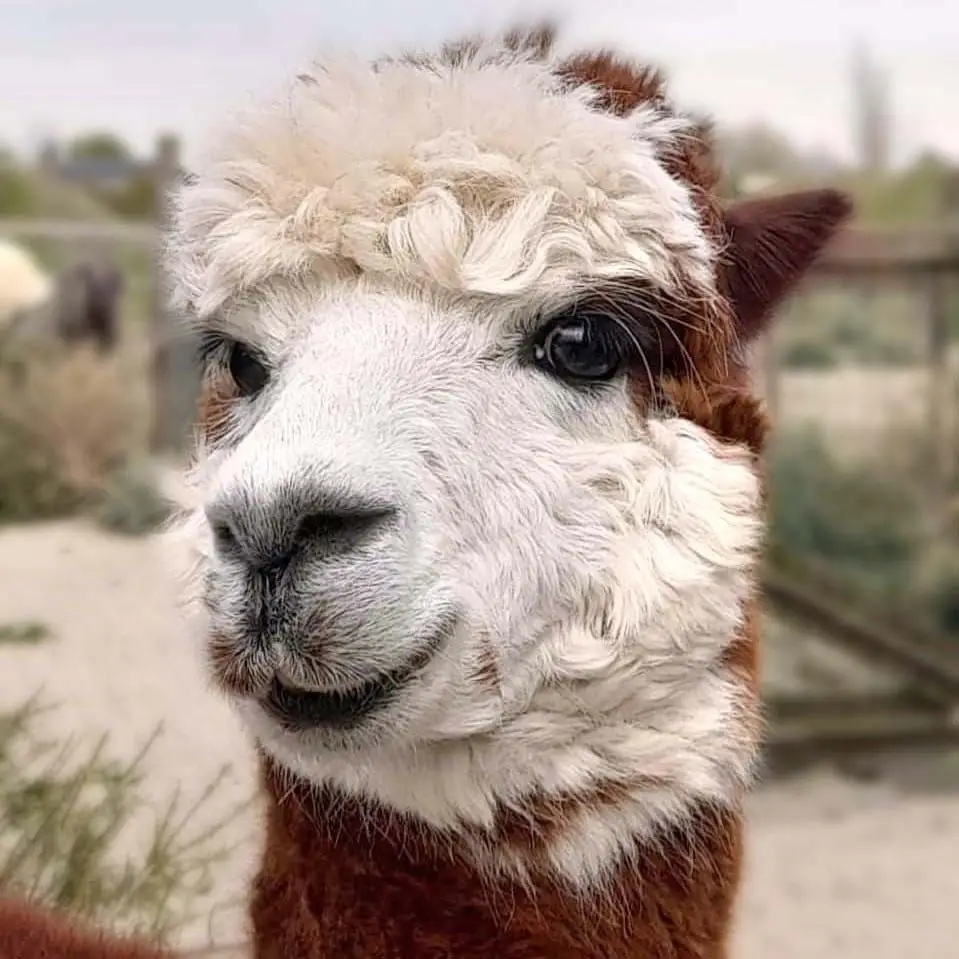
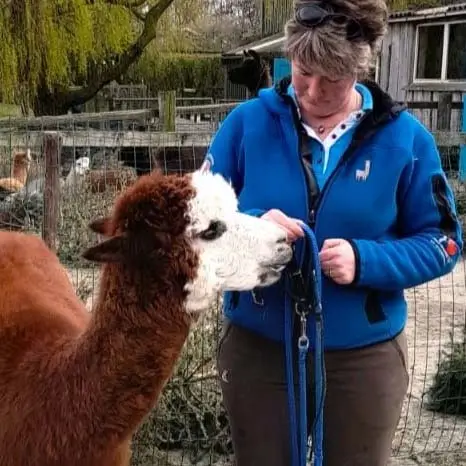
At the end of January, Jona (2018) arrives—a sturdy gelding, reddish-brown with white patches, restless and constantly alert. His attention is focused almost entirely on humans. While the herds snooze and chew the cud, he vigilantly tracks every movement in the pastures and around the farmyard. If you stand unsuspectingly at the paddock gate, Jona suddenly emerges from the barn. You can tell he is tense by his searching gaze and semi-erected tail. He rushes toward you in just a few strides, approaching far closer than most alpacas ever would.
“He has zero sense of personal space,” Mara says. “Even during a first meeting, he pushes past boundaries. And he continues to do so afterward. He is unpredictable: some people are allowed to pet him, while at others he jumps, growls, and tries to bite.”
Unknown history
His previous owners at Alpacawandeling Twente reached out because of this behavior: “Jona likely originates from a riding school near Apeldoorn,” Mara explains. “Due to a lack of space, he had to leave. Afterward, he ended up with a farmer, languishing among sheep. They really wanted to integrate him into their own herd, but Jona was pushy—perhaps even dangerous—and caused constant unrest among their alpacas.”
Mara and Jacco decided that Jona was welcome: “We integrated him into a dominant males’ group. These animals are calm and stable. They know how things work around here and correct each other. I practice with Jona regularly on the lead line so he learns to walk, turn, and stop on command. Because when I say ‘no’, he tries to push through anyway. He doesn’t like it when a human sets boundaries for him—something that clearly happened too rarely, or not in the right way.”
Imprinting gone wrong
Jona likely suffers from Berserk Male Syndrome (BMS)—a behavioral disorder that occurs when humans have excessively intensive contact with a cria during its first six months of life when imprinting takes place. The cria comes to view humans as fellow herd members. As it grows, its play behavior becomes increasingly rough and wild. A male can exhibit dominant, aggressive, and even dangerous behavior. “Yet it mostly comes down to setting boundaries,” Mara emphasizes. “Our bottle-fed crias grow up to be gentle and affectionate adults, but they know their place and respect our authority.”
The fact that alpacas with BMS are usually euthanized is heartbreaking: “They aren’t inherently vicious; it’s the result of improper conditioning. Furthermore, there are varying degrees of BMS. You can always try to re-educate them.” So when Jona bounds toward her like a Border Collie and tries to shove his head between her legs, she swings her leg over him: “Because if he rears up, he could flip me right off the floor. None of the others in our herds do this. Perhaps it’s something from his younger years, like children riding on his back.”
The best approach is to ignore negative behavior and, above all, remain calm. Positive behavior is rewarded with a gentle voice and an occasional alpaca treat.
Breaking the cycle
To support this intensive process, Jona receives a Bach flower remedy mix every morning and evening: “It helps him process and release impressions. I give him the drops on pellets in a small bowl that I hold at arm’s length. If he tries to push closer, he doesn’t get them. He learns quickly: coming back from the pasture, he always receives this treat in box II. Because he loves it, he naturally walks right over to it by the end of the afternoon.”
Over recent weeks, Jona appears to be settling down. He no longer stands uncomfortably close and growls less easily. He knows the daily routine, and predictability builds confidence: “He also senses it from the others, who are cheerful and relaxed. You should never isolate an alpaca displaying abnormal behavior—that guarantees they will never recover. They correct each other, especially within a balanced herd with a solid hierarchy.”
Occasionally, unpredictable reactions still occur: “Recently, Angela walked through the pasture with a dishwashing brush to clean the water troughs. Triggered by the brush, Jona galloped straight at her and bit her. Extending your arms seems to trigger something in him. He also reacts to open palms or raised arms—perhaps he was struck in the past.”
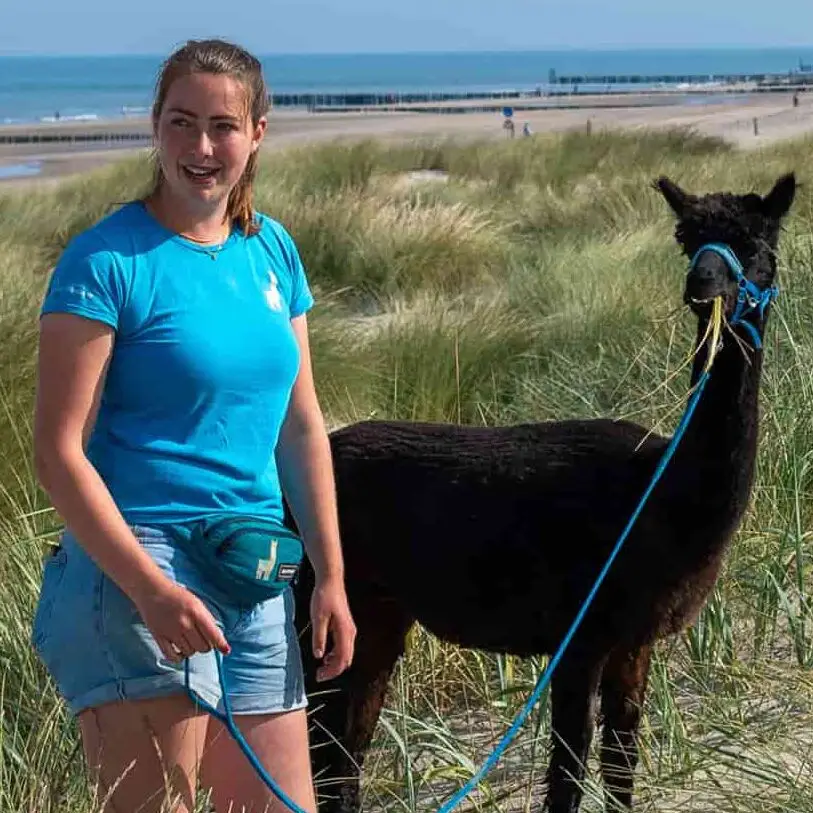
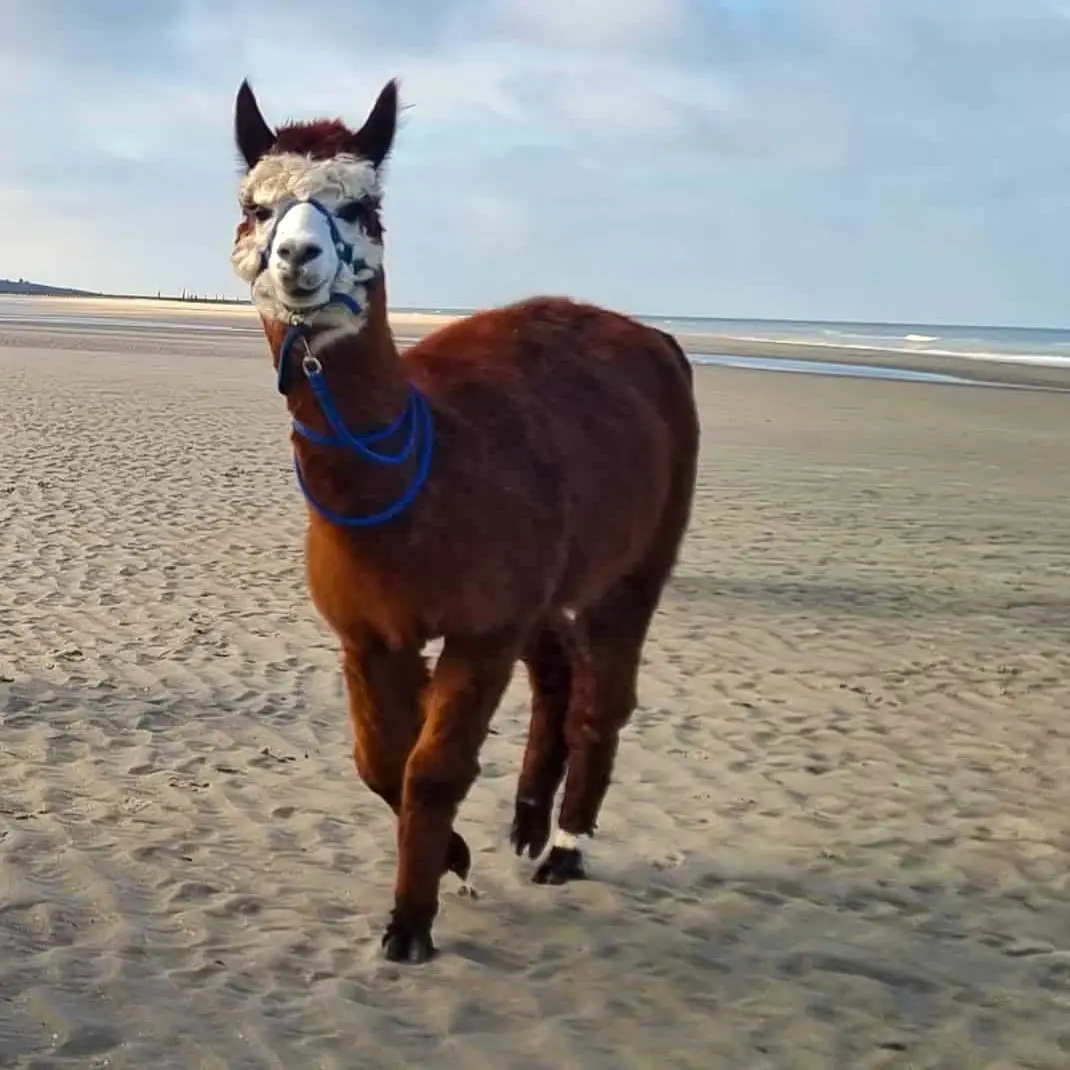
Yet when Mara is outside with him and asks, “Are you coming?”, Jona walks along effortlessly without even needing a lead line: “Into the trailer without any issue, free on the beach. You can see he truly wants to belong. He tries so hard to do things right.”
Next episode:
How Mara holds her ground when Jona attacks her.
Alpacas Zeelandia team
Alpacas Zeelandia team