Behind the Scenes
A high tea among the alpacas is a special experience. Taking them out to get a breath of fresh sea air can certainly be called exciting. But what do the animals do between events? What goes on around the farm yard? What challenges do the caretakers face? A series on daily occurrences and questions.
Jacoline Vlaander
14. Mange
In the spring, the Bluetongue virus began advancing into Zeeland as well. Between regular operations in May and June, Mara and Jacco took the precaution of having around 57 healthy, strong alpacas and llamas vaccinated. “We didn’t dare risk it with the weakened animals,” Mara explains. “Little was known at the time regarding results and side effects.” Over the following months, the herd was spared a major Bluetongue outbreak, with only mild symptoms observed in vaccinated animals, suggesting the preventive measures were fairly effective.
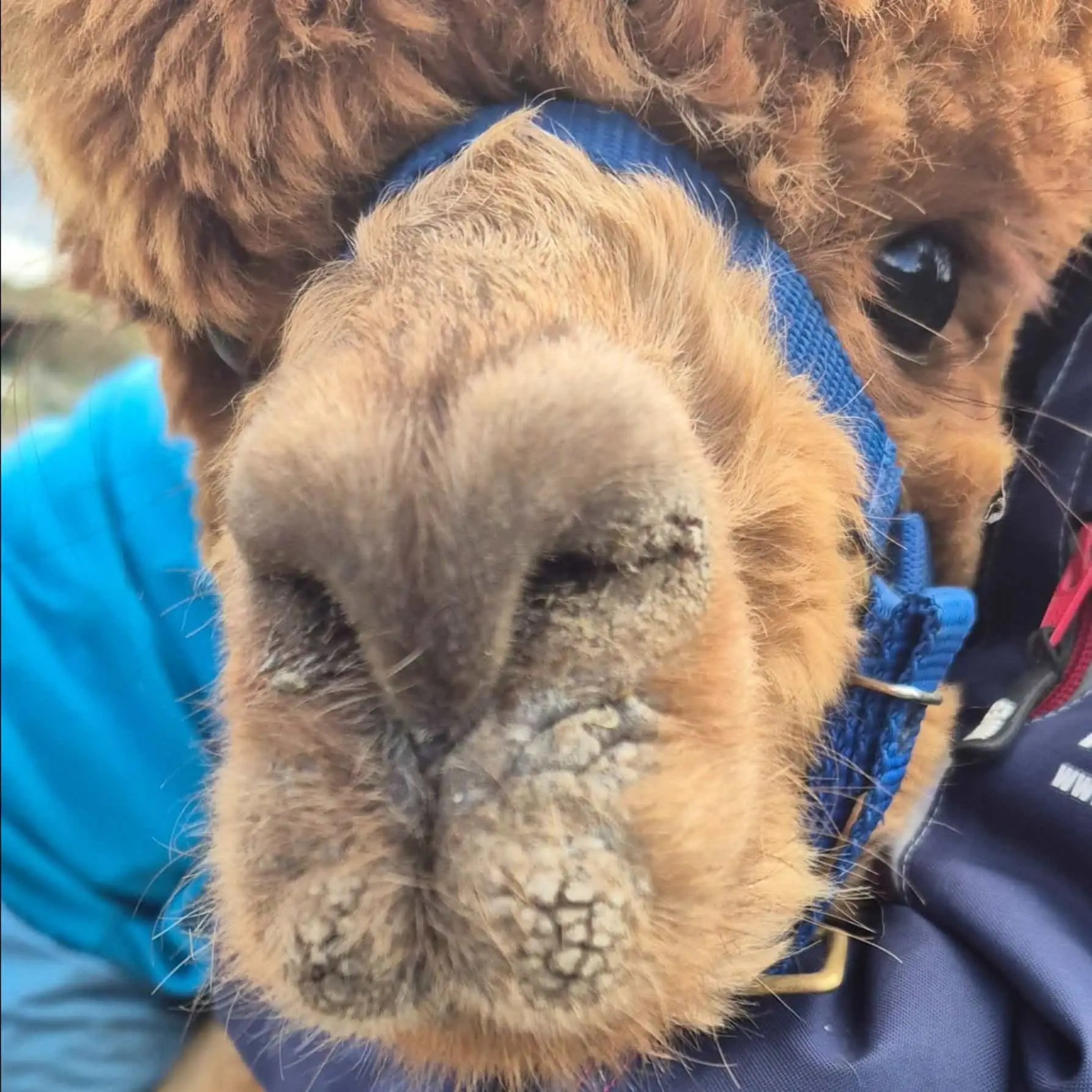
However, what no one could have anticipated followed next. A few weeks after the injections, many of the alpacas and llamas experienced a significant drop in immunity: “This left them vulnerable to other diseases and conditions. Many suddenly developed severe mange infections.”
Second shearing marathon
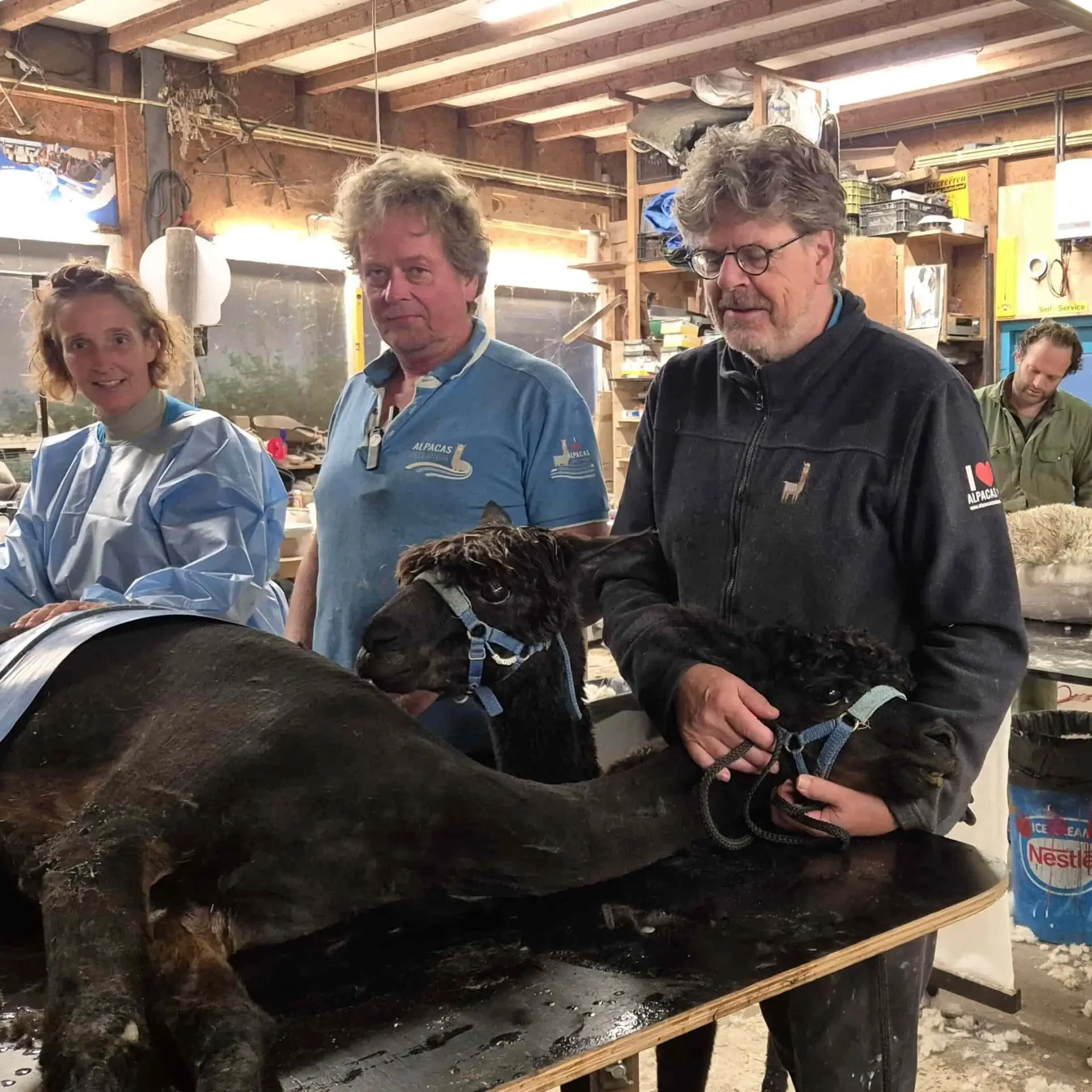
Inspecting and applying topical ointments to woolly animals is nearly impossible, while the ailing alpacas deteriorated visibly day by day. Suffering from itchy, inflamed patches, they scratched open wounds, lost their appetite, lost weight, and became exhausted and lethargic. Determined to break this downward spiral, Jacco and Mara organized a second shearing marathon at the end of September: “They all had to go—young crias and older mares alike. Only a few extremely elderly and fragile animals were allowed to keep their fleece.”
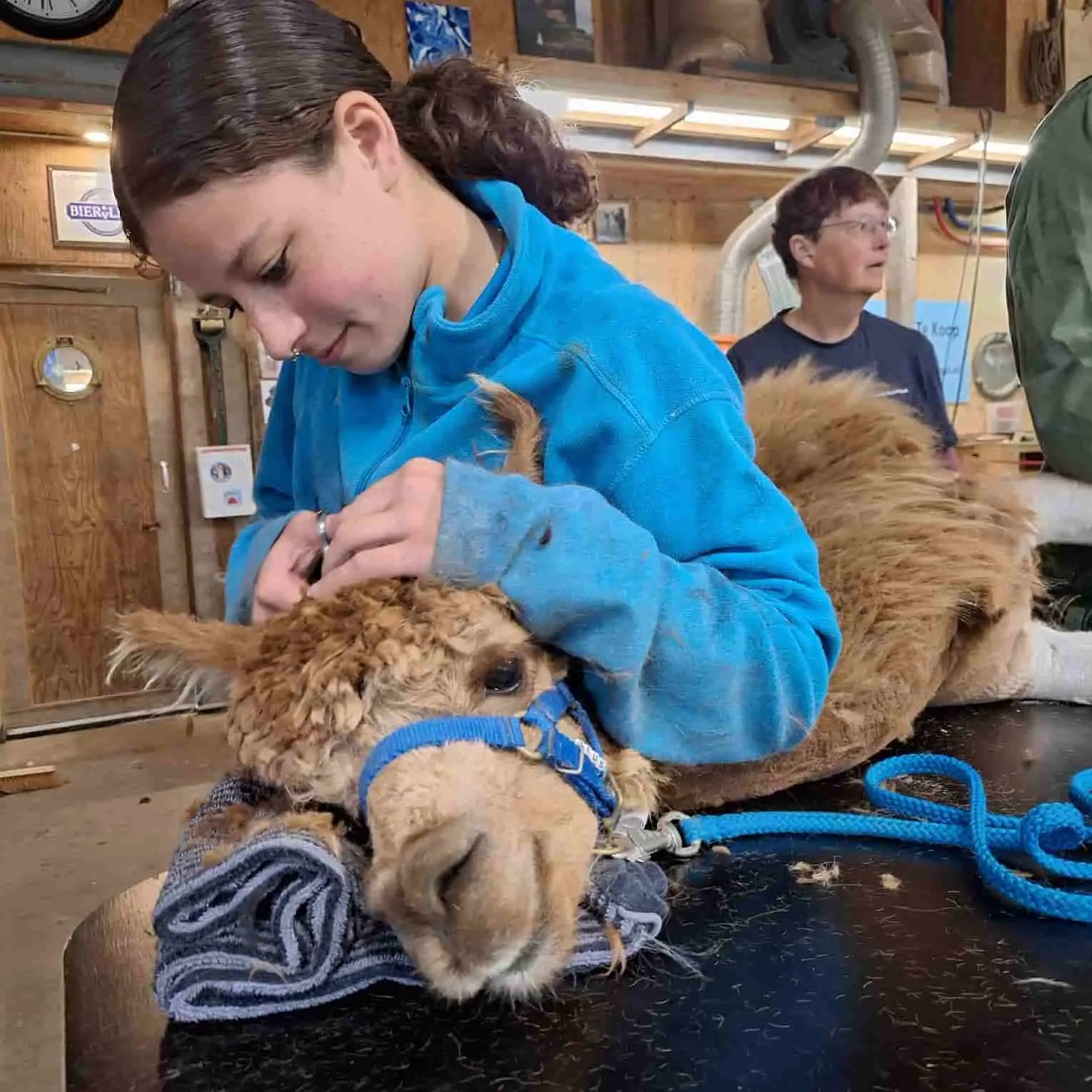
Elbert de Weerd from Nijbroek returned to assist, handling the shearing alongside Jacco. The rest of the team loaded and turned the animals on the tables, trimming nails, washing, applying ointments, and caring for them. Within half a week, over fifty bewildered alpacas parted with their warm summer wool.
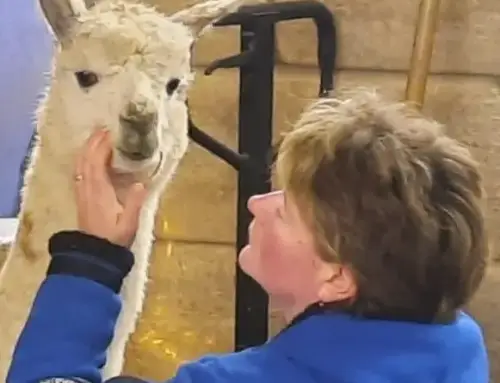
Once the extent of the mange across all animals was fully visible, a clear action plan took shape, Mara shares: “For the rest of the year, every single animal is placed on the shearing table once a week. This allows us to inspect, wash, apply ointment, and track individual progress carefully. Additionally, we work daily to rebuild their immunity through a balanced and varied mix of nutrition, supplements, and medication.”
Extra manpower
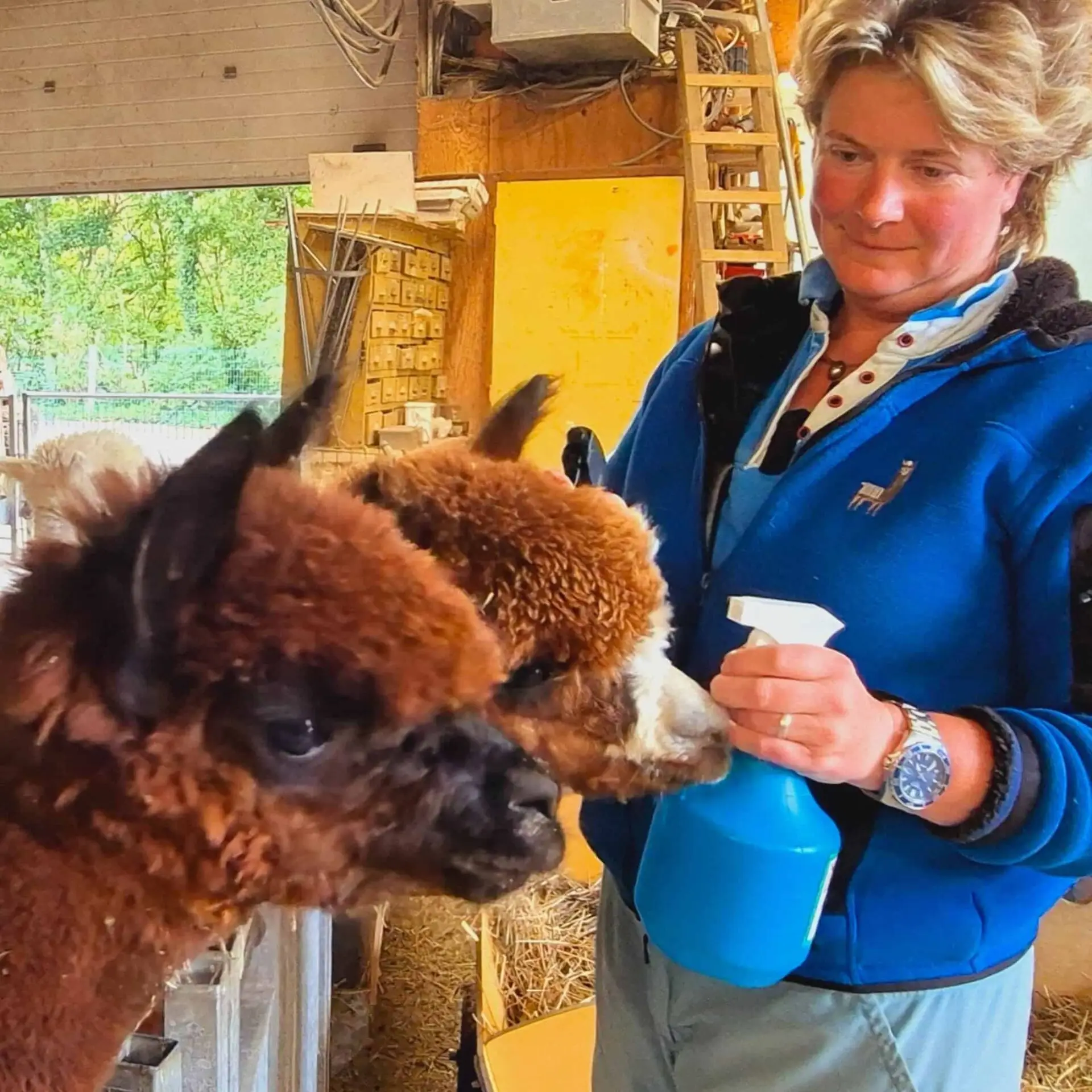
An appeal in the newsletter for extra manpower yielded swift results. For weeks, three days a week, Mara and Jacco worked in rotating five-person teams for over six hours a day administering intensive mange treatments: “It was an exhausting battle for everyone—a relentless push through September and October, especially since daily farm chores couldn’t stop.” Stall cleaning became even more rigorous this autumn: alongside daily mucking out, volunteers conducted a massive weekly disinfection drive covering floors, walls, ceilings, gates, bars, windows, frames, feed troughs, water bowls, halters, and leads.
Following interviews with Omroep Zeeland and Radio 1, support poured in from all corners: generous donations, tips, advice, and extra bookings for walks and high teas. Guests eagerly bought items from the shop, generously rounding up totals. From far and wide, stacks of used horse blankets arrived in Aagtekerke: “Because the shorn animals lacked enough wool to stay warm going into winter, each received a custom winter and rain coat. We washed these old horse blankets, cut them to size for crias and adults, and sewed them back together.”
Stichting Dierenlot
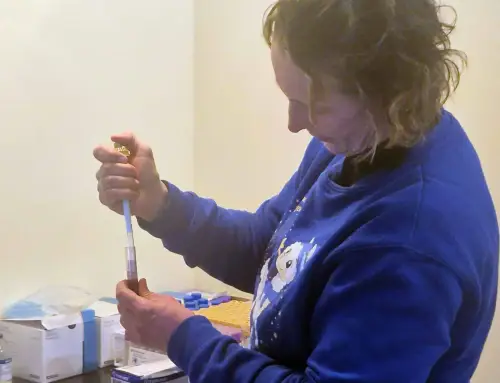
Parallel to these efforts, a World Animal Day campaign was launched via Stichting Dierenlot. Quickly organized initiatives, an online auction, a October 3rd Market stall in Leiden, and individual donations raised €8,963. Stichting Dierenlot matched a portion of the funds: “We used this to cover extra labor hours,” Mara notes, “as well as all the medical supplies needed for treatments—such as Sudocrem, Dectomax, Ivomec, and Bymite. These tubs, bottles, tubes, and cans empty at lightning speed.”
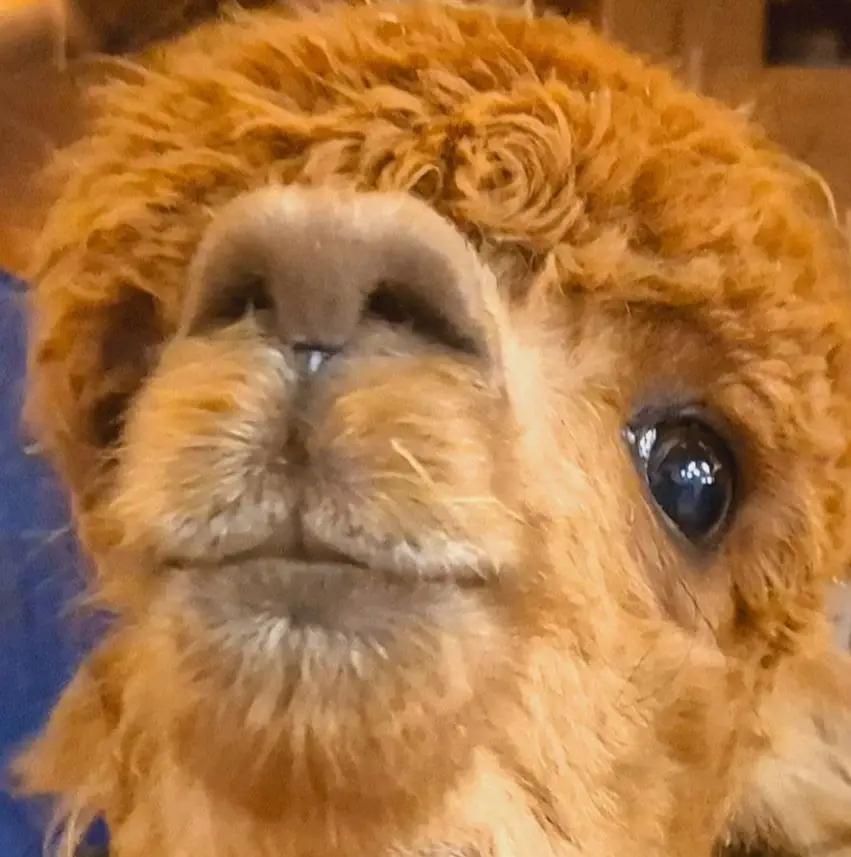
Fortunately, the hard work paid off. Gradual improvements became visible across virtually all alpacas and llamas. Inflamed patches healed, and damaged skin around noses, lips, ears, bellies, thighs, armpits, knees, legs, and joints calmed down while intense itching subsided. “During weekly weigh-ins, body weights stabilized, appetites returned, and mobility and spirits lifted. Their behavior serves as the best indicator of how they’re truly feeling.”
Systematic treatment
Since mid-November, the peak of the mange outbreak has passed. To ensure all alpacas become completely mange-free, the team will continue systematic weekly treatments through Christmas, bringing the end of this mammoth effort into view.
“Now that the animals spend less time on the shearing tables each turn, treatments take only two days a week instead of three. That gives us breathing room—space to relax, look ahead, and plan for the new year. Where we stand today fills us with gratitude and courage.”
Next episode:
What can you do with a blood analyzer machine?
Alpacas Zeelandia team
Alpacas Zeelandia team