Behind the Scenes
A high tea among the alpacas is a special experience. Taking them out to get a breath of fresh sea air can certainly be called exciting. But what do the animals do between events? What goes on around the farm yard? What challenges do the caretakers face? A series on daily occurrences and questions.
Jacoline Vlaander
5. Chaos
Days where absolutely everything goes wrong usually cast their shadow right at the crack of dawn. Take the time around Easter, for example, when Mara notices the pair of Indian Runner ducks is missing from the pond: “With spring fever in the air, they were probably curious about the pastures across the street.” She finds both little runners run over along the road.
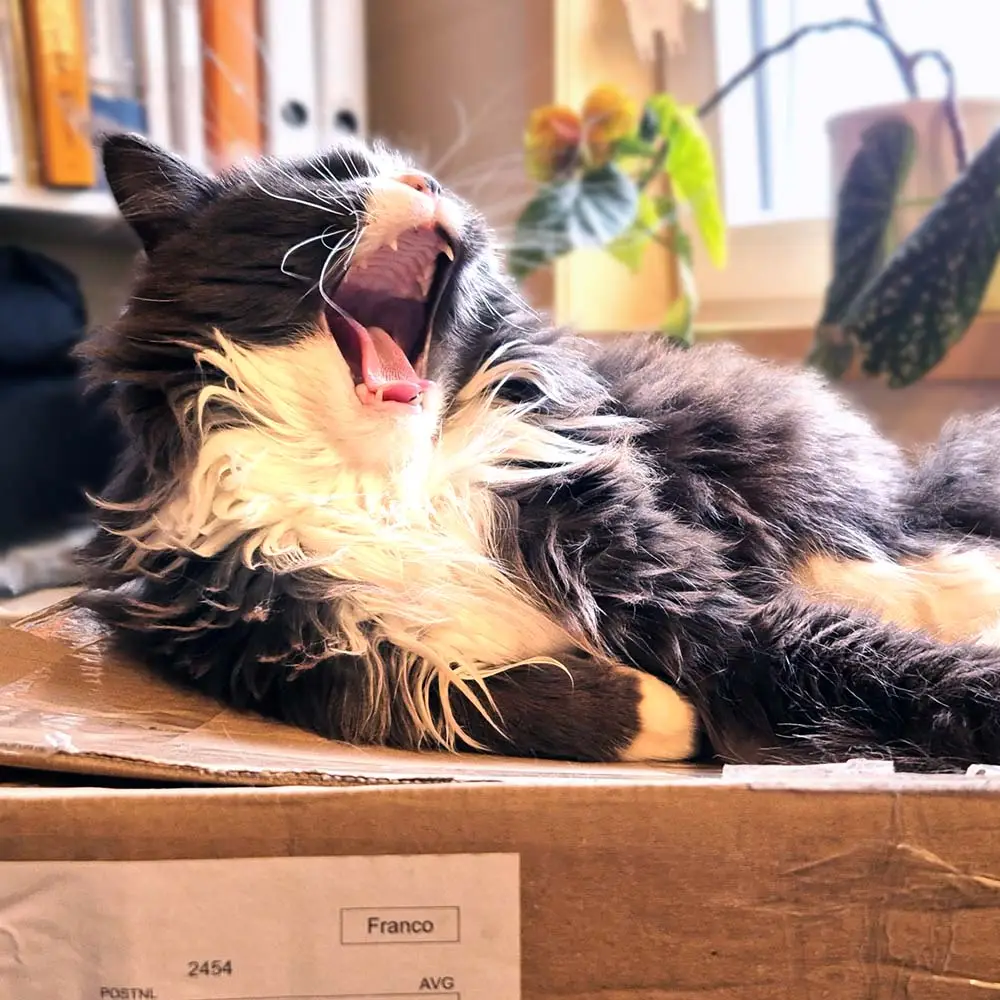
There is barely any time to mourn; all the animals need to be fed. After lunch, she has an appointment at the vet clinic in Oostkapelle with Roosje—one of the farm’s five cats—who has been sneezing and lethargic for a while despite being fully vaccinated. But where is Roosje? Not on a fence post, not in the barns, and not in the Alpacafé.
While she searches, the farm’s mobile phone in Mara’s back pocket rings constantly. People want to book spots for a high tea or a walk but are struggling to do so online. She guides them through the system over the phone, answers questions about details already listed on the website, and explains the general terms and cancellation policy—all while feeding the other four cats, boiling water, scooping milk powder into bottles for the crias, and occasionally covering the microphone with her hand to yell: “Róóósje!”
Picking at droppings
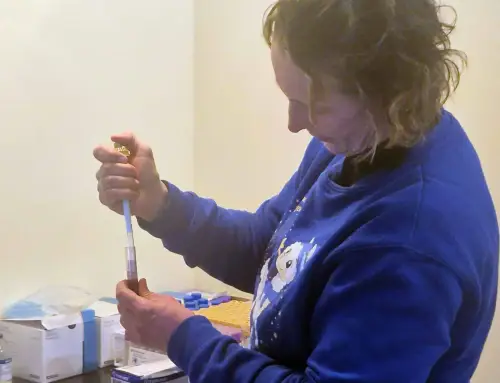
While feeding the animals, Annekarlijn notices that Cileno (2023), a young llama, is lying down and groaning. His breathing is accelerated, his heart rate is elevated, and his belly feels as taut as a drum—suggesting a colic-like impaction. To perform an immediate fecal test, she extracts some droppings from his rectum. Mara drops her barn chores and hunches over the microscope. She identifies Eimeria macusaniensis (E. mac), a single-celled parasite that damages the intestinal lining and inhibits nutrient absorption. Swift action is a matter of life and death.
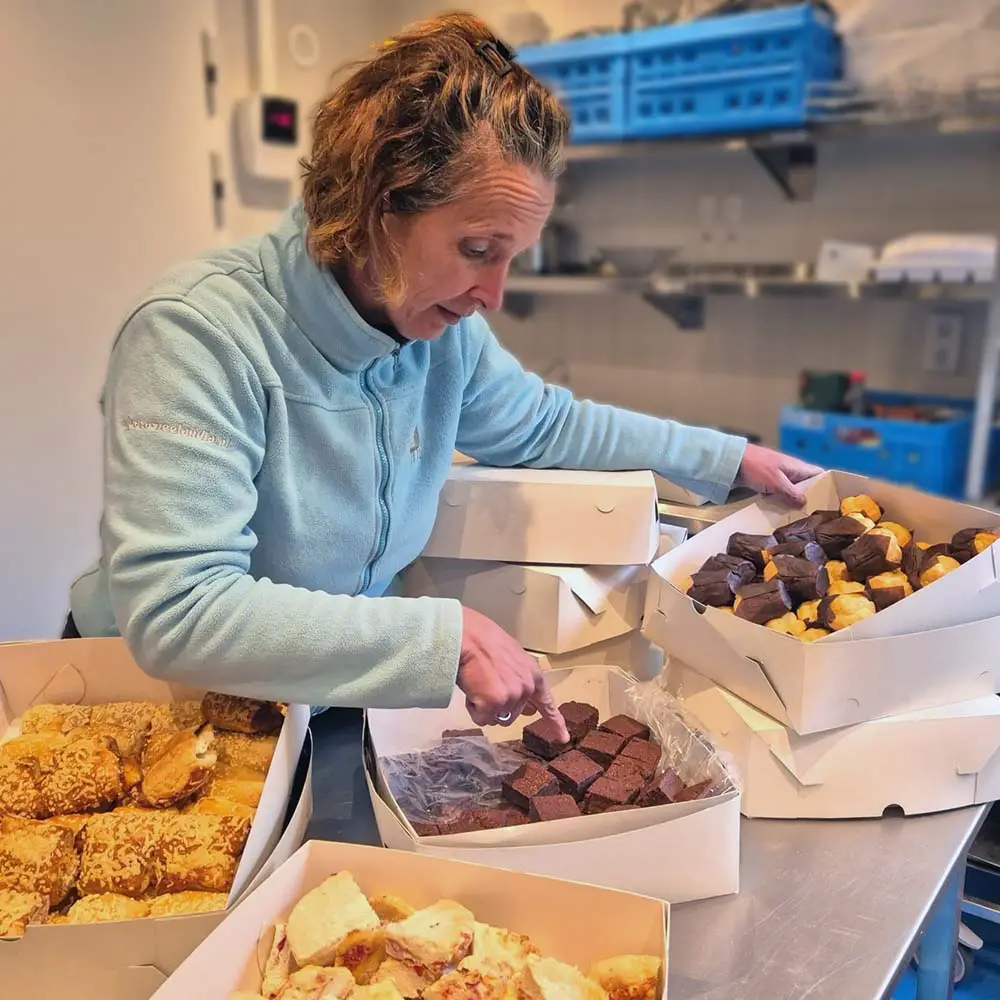
However, the online database isn’t up to date: “A volunteer logs all animal data in there,” Mara explains. “Dates of birth, arrival dates, weights, treatments, and medication courses. It took me a while to dig up the latest records from the paper administration.” Meanwhile, the baker delivers ten boxes of high tea pastries for the coming days, which seems like less than they ordered. Renate drops her barn work too; list of reservations in hand, she counts everything out: cream puffs, mini pizzas, petit fours, and brownies.
Using a drench gun (feeding syringe), Mara and Annekarlijn administer Tolracol to Cileno to treat the E. mac. He also receives electrolytes to restore his disrupted fluid balance. Afterward, he is allowed out to the pasture with his young buddies. The more he moves, the better his body will absorb the medication and digest his food.
Still nowhere to be found
After lunch, Roosje is still nowhere to be found. Not among the hay bales in the shed, not inside an open box of new alpaca plushies, and not among the Easter eggs on the wooden breakroom table. Mara does discover Willem (2005) and Sing (2006) from the older males’ herd happily wandering around the front yard: “Despite all the signs, campsite guests had left the gate open. I had to run downstairs quickly before the two gentlemen got the idea to feast on the neighbors’ flower beds.”
Arriving at the reception caravan, Mara finds fifteen enthusiastic people wearing coats and boots, eager for a beach walk. She has no record of their reservation. “I’ll be right with you,” she says, before guiding Willem and Sing back to their paddock. But before she can return to greet the group, a guest from one of the rental apartments tugs at her sleeve: “Right in the middle of a conference call, he heard a loud bang from the bathroom. When he dared to peek around the corner, he saw the shower cabin door had shattered. Glass splinters everywhere.”
She grabs the industrial vacuum cleaner from the shed. “I’ll be right with you,” she tells the group again, and hurries to the apartment. As she brainstorms how to hang a temporary shower curtain, she receives a call from the installation company: there is a fault report for the heat pump, and the property temporarily has no hot water. She barely has a second to process this before a laundry service employee drives into the yard with carts full of floral bedding and pink towels: “He didn’t need to unload those, but he had no idea where they had delivered our clean laundry.”
Late at night
Late that evening, Mara sits in the barn with the alpacas. Her to-do list for the next day has doubled in length: make a new vet appointment, meet the mechanic, call the laundry service, and catch up on all the chores that were left undone. Fortunately, the beach walkers had simply mixed up the dates and are looking forward to coming back soon, and Cileno is slowly recovering.
Deep breathing brings calm and relaxation. She thinks of the unfortunate Indian Runner ducks. Zayid (2010) rests his head on her leg with a sigh. Roosje purrs as she rubs affectionately against them.
Next episode:
Monthly fecal exams under the microscope: what lives and squirms inside alpaca poop?
Alpacas Zeelandia team
Alpacas Zeelandia team