Behind the Scenes
A high tea among the alpacas is a special experience. Taking them out to get a breath of fresh sea air can certainly be called exciting. But what do the animals do between events? What goes on around the farm yard? What challenges do the caretakers face? A series on daily occurrences and questions.
Jacoline Vlaander
12. Grief
The weeks of intensive care for llama Calinda’s cria, Camillio, took a heavy toll on the team this summer: “We oscillated constantly between hope and fear,” Mara says. “We were always on high alert: Where is he? Has he fallen? How is he lying down? Is he in pain? Are flies and maggots bothering him? Do we need to wash his rear and legs again? Is it time for his medication? When organizing work schedules and guest activities, I always made sure someone remained behind on the farm whenever we took visitors down to the sea.”
Despite their combined efforts and dedication, Camillio’s physical decline was unmistakable: “Complications kept piling up. It became impossible and unlivable—everyone understood that. Slowly, you come to terms with the inevitable. Still, deciding to put him to sleep was heartbreaking. He wanted to live so badly and endured every treatment with total trust. You know there is no alternative, that it’s for the best, and that it’s time to let him go—yet your heart resists it. Inside, you feel shattered. It hit all of us hard. We miss him deeply.”
Observations on animal grief
Science increasingly recognizes that animals grieve. Field observations demonstrate that, particularly among social species living in herds or packs, the death of a group member does not go unnoticed. A dolphin carrying a deceased calf for days; elephants gathering around a fallen herd member; giraffes keeping watch over a dead youngster day after day. However, shock, heightened vigilance, and grief are distinct emotional states—not every reaction constitutes mourning.
Scientific consensus defines animal grief through two key conditions:
The animals shared a distinct bond beyond basic instinctive survival drives (such as mating or foraging).
The behavior of the surviving animal undergoes a noticeable change following the death.
For instance, a female chimpanzee carrying her dead infant for weeks while continuing to eat, sleep, and mate normally would not meet the criteria for grief under these definitions. Conversely, a dolphin carrying her dead calf while refusing to eat and neglecting her own health clearly exhibits mourning behavior.
The mourning process
Some animals undergo a clearly observable grieving process. How they mourn and the long-term impact of the loss depend heavily on the species, circumstances, and individual personalities.
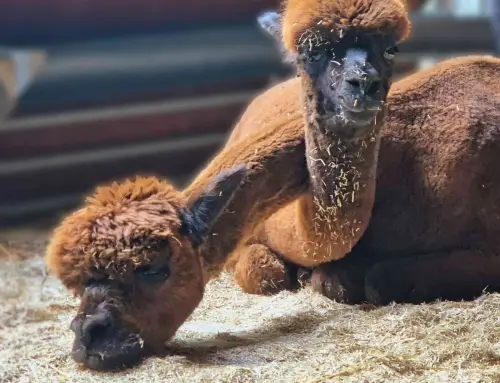
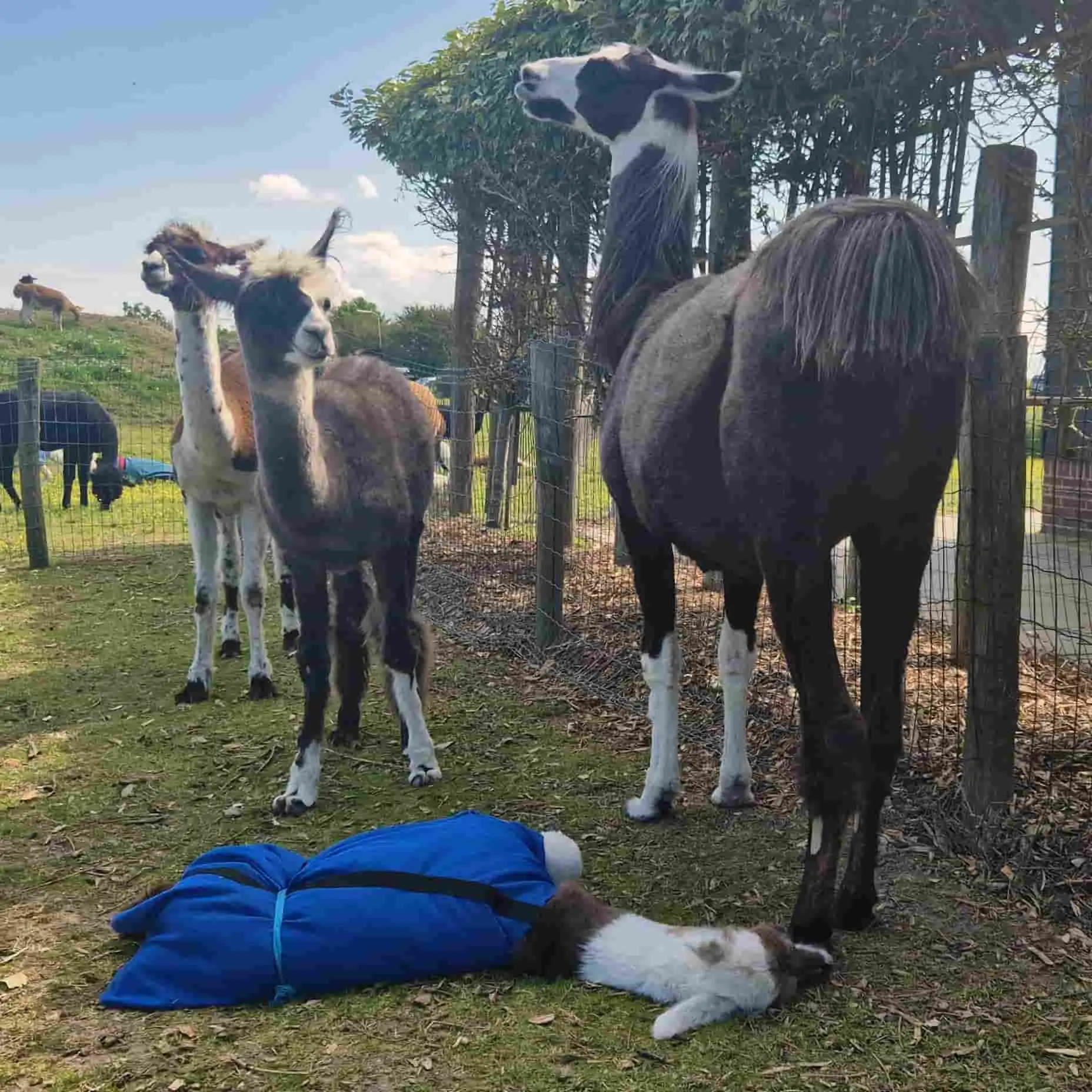
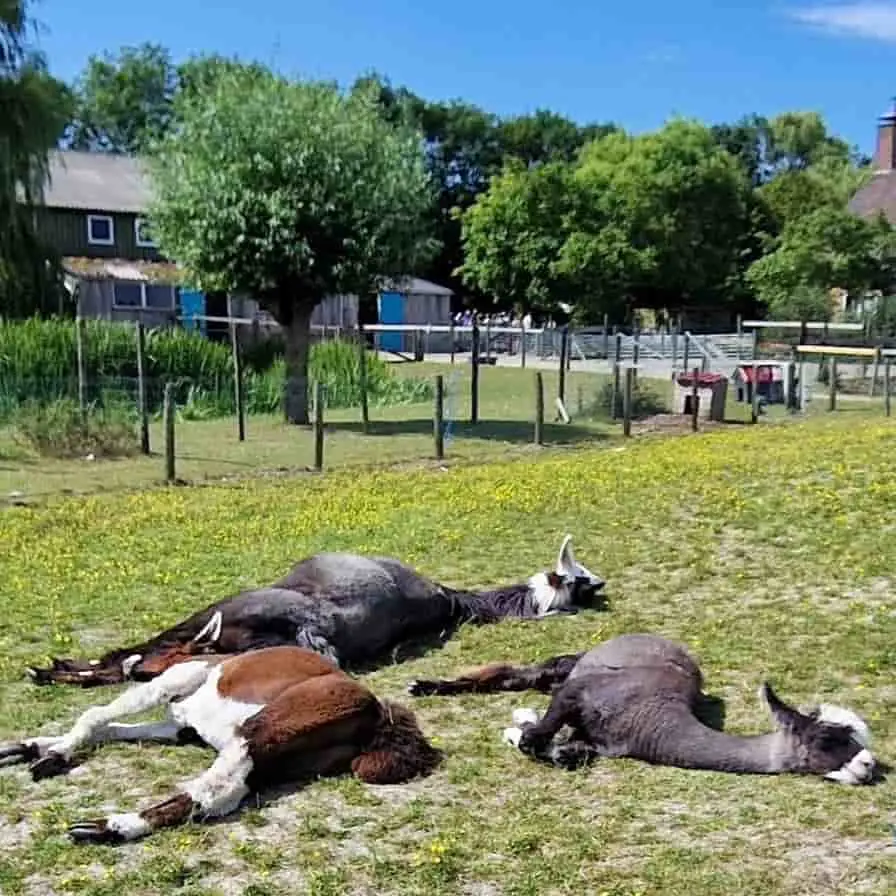
On that sunny afternoon in August, as Camillio was put to sleep, Calinda stayed close by, gently nibbling on the lower branches of the olive trees. Occasionally, she walked over, pressed her nose against his coat, and returned to browsing. The moment he took his last breath, she leaned over him, sniffed him one final time, and then walked over the hill with her one-year-old daughter Cavada and foster son Erjon to roll peacefully in the dry sand.
“It almost seemed as though she felt relief,” Mara reflects. “A massive weight had been lifted from her shoulders; she no longer had to constantly watch over her struggling cria. Perhaps she had already sensed that he wouldn’t live long. We don’t know what animals understand, but we certainly know they understand far more than we give them credit for.” It wasn’t until evening, when all the animals were brought inside, that Calinda panicked—galloping back and forth across the empty pasture alone. Inside the barn shed, she paced continuously: “Every time we walked in, she immediately checked to see if Camillio was walking behind us.”
Peak season
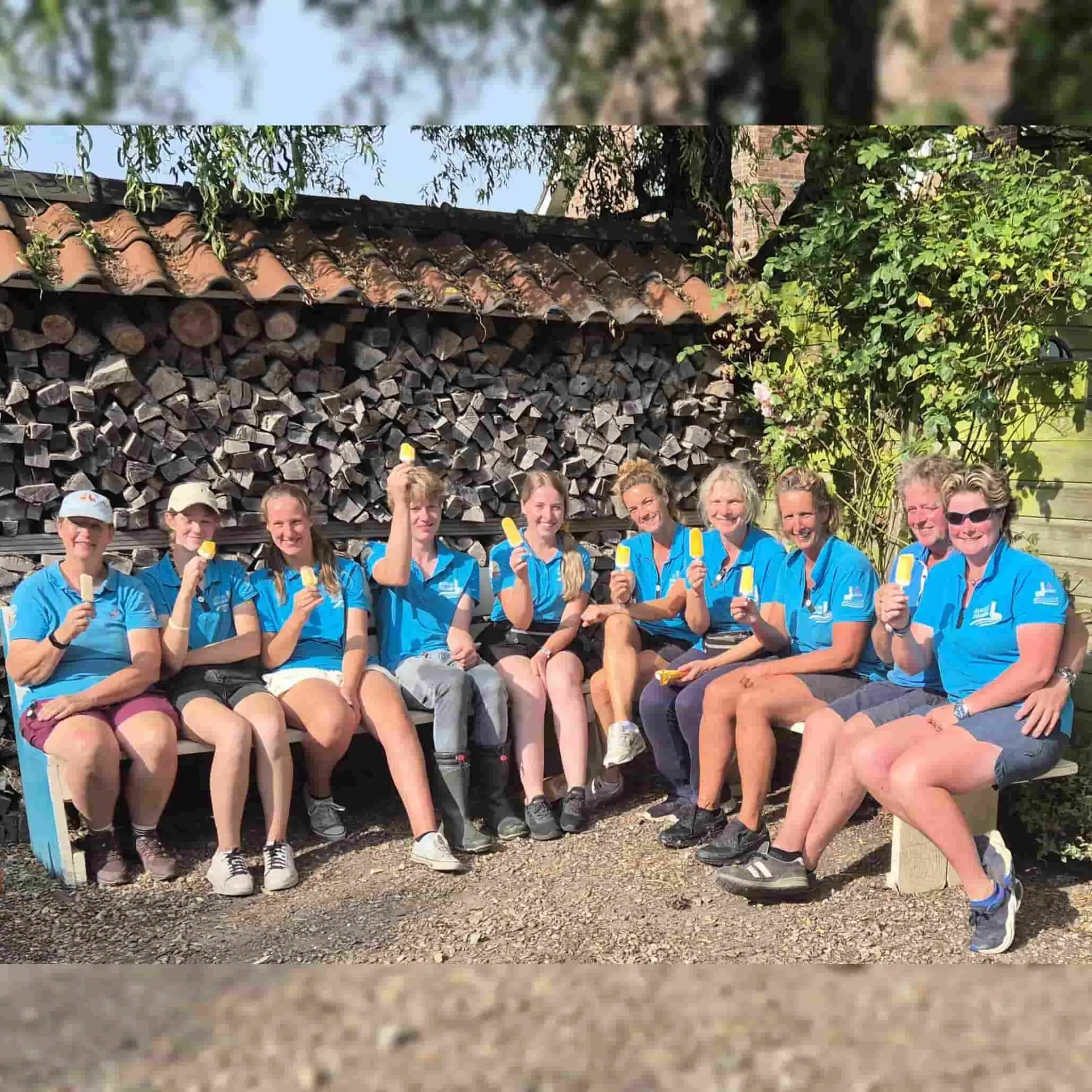
It is peak season: the campsite and accommodations are fully booked, and drop-in visitors arrive constantly. As part of the annual Dorpentocht Walcheren cycling event, Alpacas Zeelandia serves as an official stamp checkpoint. Nearly 2,000 cyclists pedal onto the yard. Staff and volunteers coordinate the crowds, serving coffee, tea, and lemonade, selling plushies and postcards, and handing out flyers. Working over five buckets of batter, Jacco spends the entire afternoon baking fresh waffles, dusted generously with powdered sugar for the eager guests.
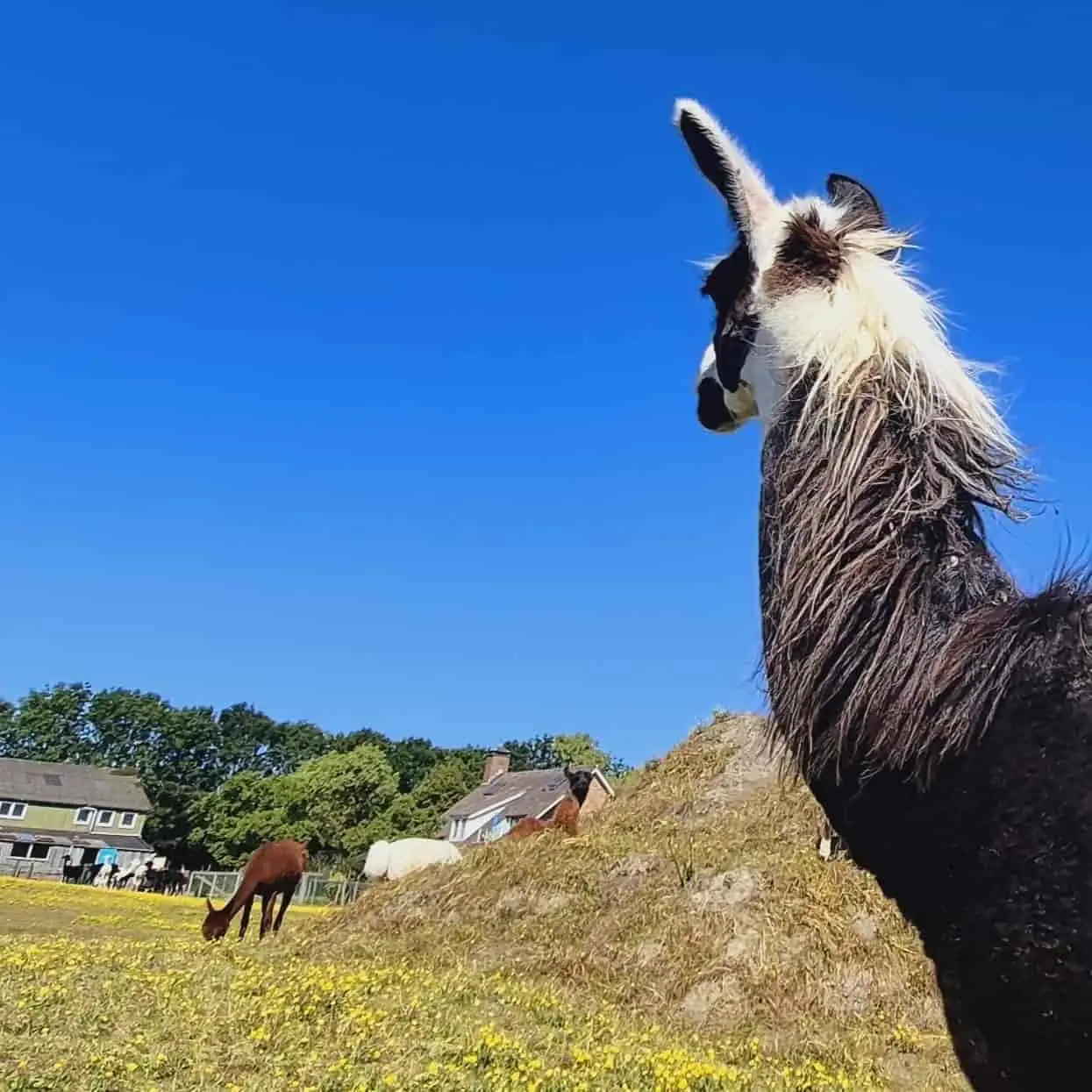
In the week following Camillio’s death, Calinda slowly settles down. Yet occasionally, while crossing the road to the pastures on the other side, she seems to suddenly remember him. As all the females—alpacas and llamas alike—crowd eagerly around the gate, Calinda stops dead in her tracks. She stretches out her neck and slowly turns her head over the surrounding herd—left, right, scanning anxiously across the pastures, hills, and farmyard with wide eyes and flared nostrils.
Next episode:
What is important for grieving animals?
Alpacas Zeelandia team
Alpacas Zeelandia team