Behind the Scenes
A high tea among the alpacas is a special experience. Taking them out to get a breath of fresh sea air can certainly be called exciting. But what do the animals do between events? What goes on around the farm yard? What challenges do the caretakers face? A series on daily occurrences and questions.
Jacoline Vlaander
9. Rollercoaster
Nobody notices it on that sunny Thursday afternoon. In the pasture across the road, the herds graze peacefully. But among them, standing beside llama Calinda, is a grey-and-white cria—slender and strong, looking around with curiosity. The placenta lies a short distance away in the grass.
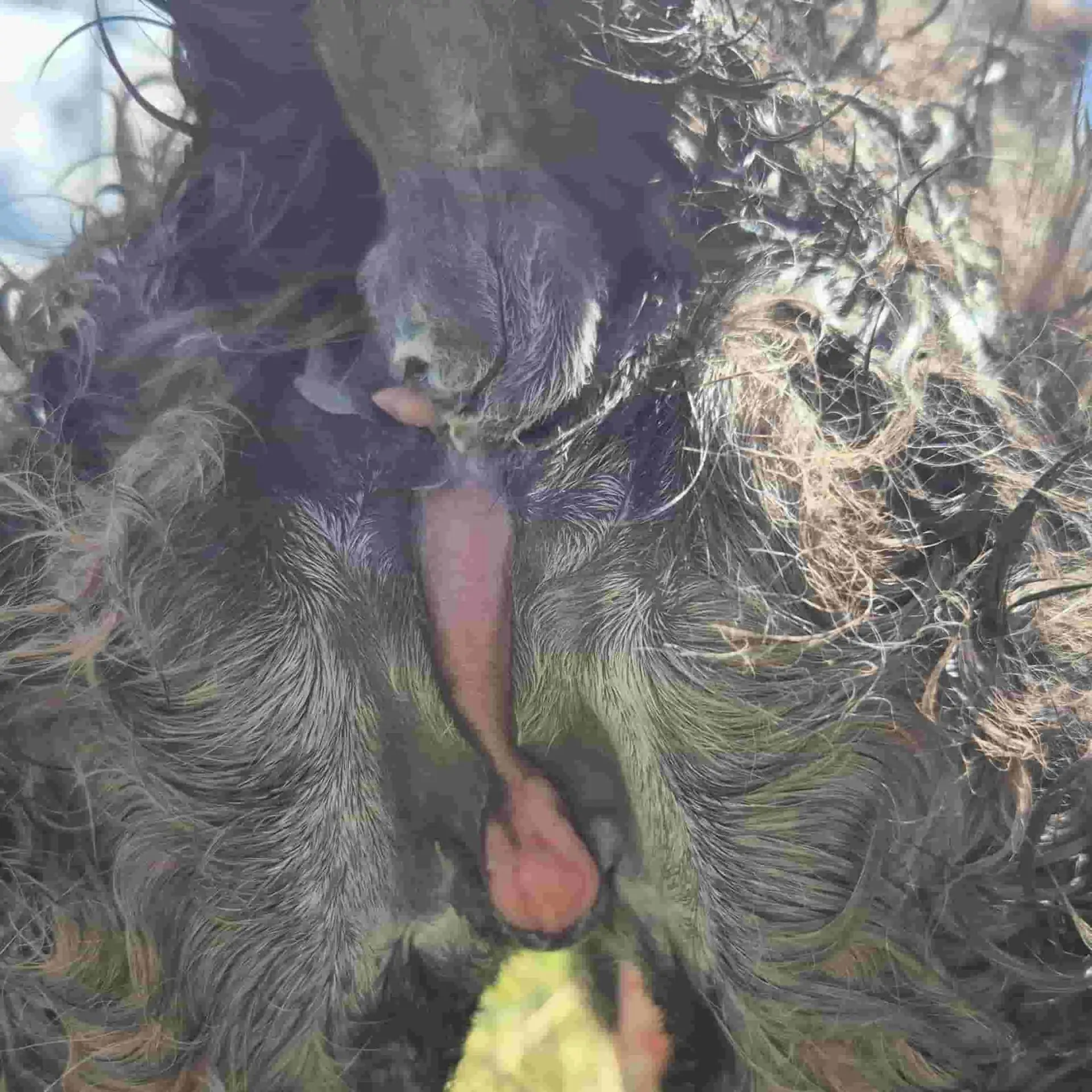
“A magnificent animal,” Mara says. “But I was shocked when I lifted the tail: no body openings, no clear anatomical sex characteristics. Just red, closed protrusions.” She sends a photo of the phenomenon to the vet, who immediately refers them to the Faculty of Veterinary Medicine at Ghent University. Permission is also granted by the NVWA (Dutch Food and Consumer Product Safety Authority) to cross the border with several llamas.
There is no time to lose. Mara mobilizes the team, and within an hour and a half, all alpacas and llamas are back inside their stalls on the farmyard. Medication and feeding rounds are completed extra early. Calinda, her one-year-old daughter Cavada, and the cria are loaded into the trailer together. Renate drives to Ghent with Mara.
Examination
Specialists and veterinary students await them, immediately falling in love with the unfortunate little one. The cria undergoes an ultrasound to verify whether the intestines, kidneys, and bladder are present and fully formed. Once the newborn has nursed a bit, those structures become clearly visible. Later that evening, further testing takes place, and the medical team drains the bladder.
Mara and Renate leave the animals in a stall provided with hay and water and drive back to Aagtekerke. During the night, the phone rings: the vet explains that it appears to be a congenital defect similar to spina bifida. However, the bladder and intestines sit far enough back to surgically create connections to new external openings. They can schedule the surgery for the following morning. Whether the cria will remain permanently incontinent afterward remains to be seen, as does the prognosis for the unclosed vertebrae.
Surgery
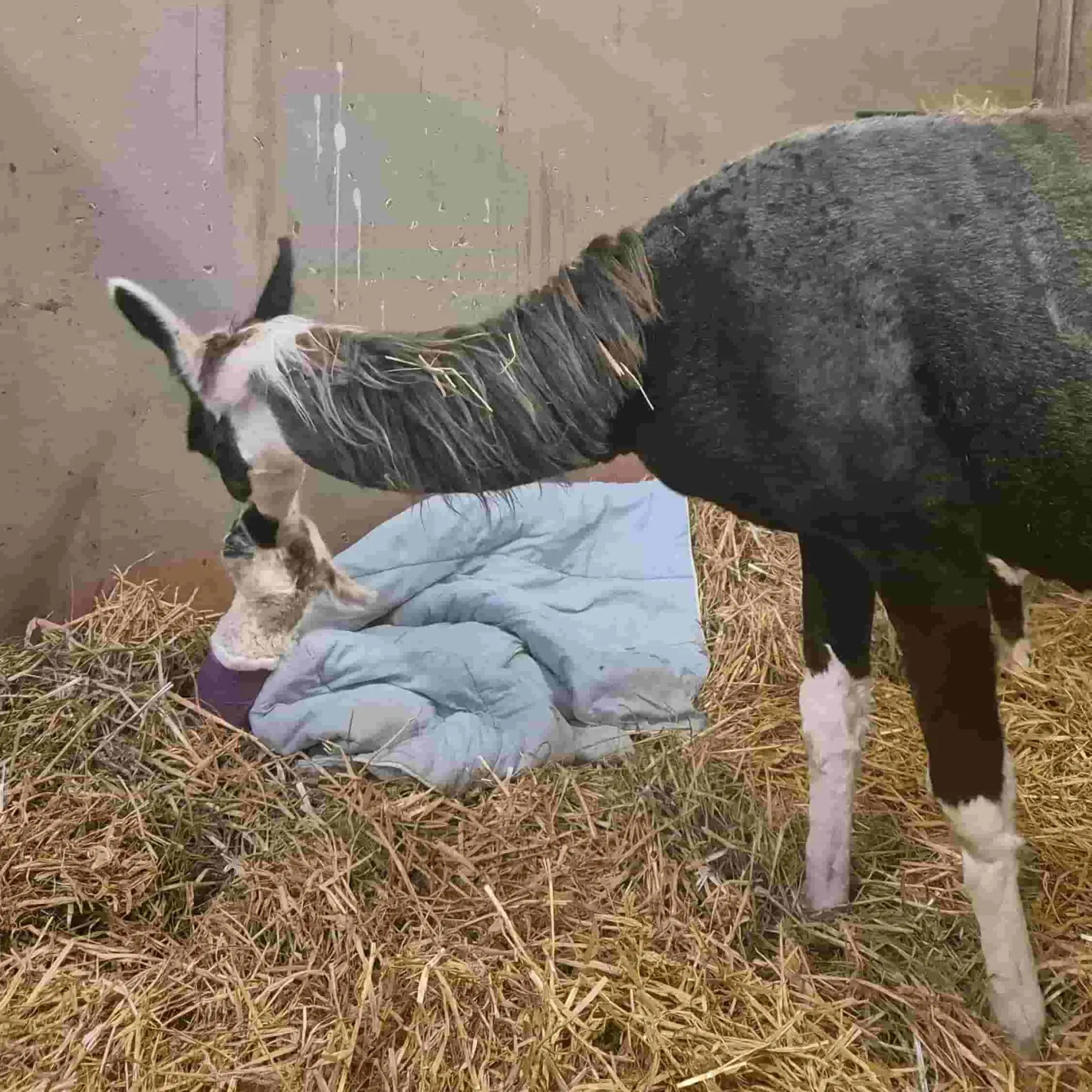
By 07:30 AM on Friday, Mara is back at the faculty in Ghent. The cria is put under anesthesia first for a CT scan and then moved to the operating table later that morning. During those hours, mother Calinda is beside herself with distress—snorting, growling, rearing in her box, and pacing incessantly along the walls. Sitting among the hay bales, Mara tries to soothe her using the Trust Technique. For a change of scenery, she walks both llamas around the facility grounds. When the cria recovers that afternoon and lies between them, calm temporarily returns: “Fortunately, she still recognized him despite the heavy smell of disinfectant.”
Mara wants to stay with the animals until defecation and urination occur naturally, but bowel movement is slow to start, and daily work back at the farm goes on. “The patient was awake and active, though. When the three of us went outside for a brief walk, he bounced around playfully.” Knowing this brings comfort to Calinda, Mara drives back to Aagtekerke, arriving at 10:00 PM to perform her final barn check before bed.
Breech delivery
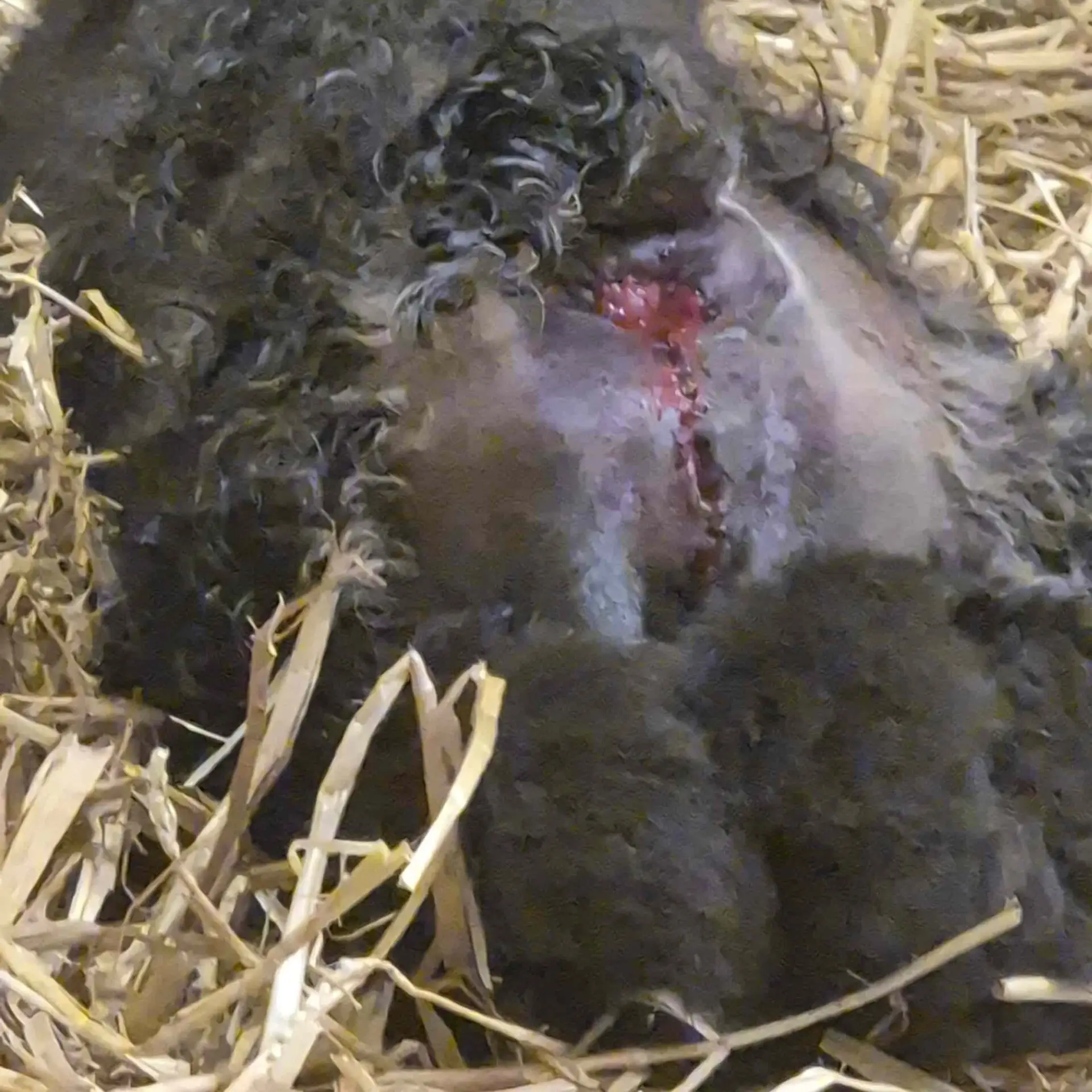
In the barn shed, rescue alpaca Dunya—birth year unknown and suspected to be pregnant—is lying in the exact same spot she occupied that morning. “And that is not where she usually lies.” Dunya looks visibly relieved as Mara leans over her. She scrambles up, turns her hindquarters toward Mara, and begins to strain: “So I hurried to grab gloves and lubricant. I felt a tiny tail and little hocks—a breech delivery. I called the vet immediately. Meanwhile, Dunya kept pushing and began to tear. I was able to grasp the feet and rump to assist. The vet arrived to stitch her up.”
The newborn cria—light brown with white markings and pale blue-grey eyes—is alive, but weak and limp. Despite receiving a jumpstart supplement for crias, it fails to rally sufficiently. Mara sets up a heat lamp and wraps the baby in blankets: “Perhaps it swallowed fluid, or went too long without oxygen.” Its legs remain weak and pale. Until dawn breaks, Mara remains seated in the flax bedding between the animals, listening to the shallow, rapid breathing that grows fainter by the minute—and to Dunya’s low, anxious hums.
Apathetic
There is virtually no time for grief. A few hours later, back in Ghent, the llama cria lies listlessly in the hay. Calinda is tense, kicking at him when he attempts to nurse. When Mara walks the three of them across the grounds, the little one’s legs buckle in the grass.
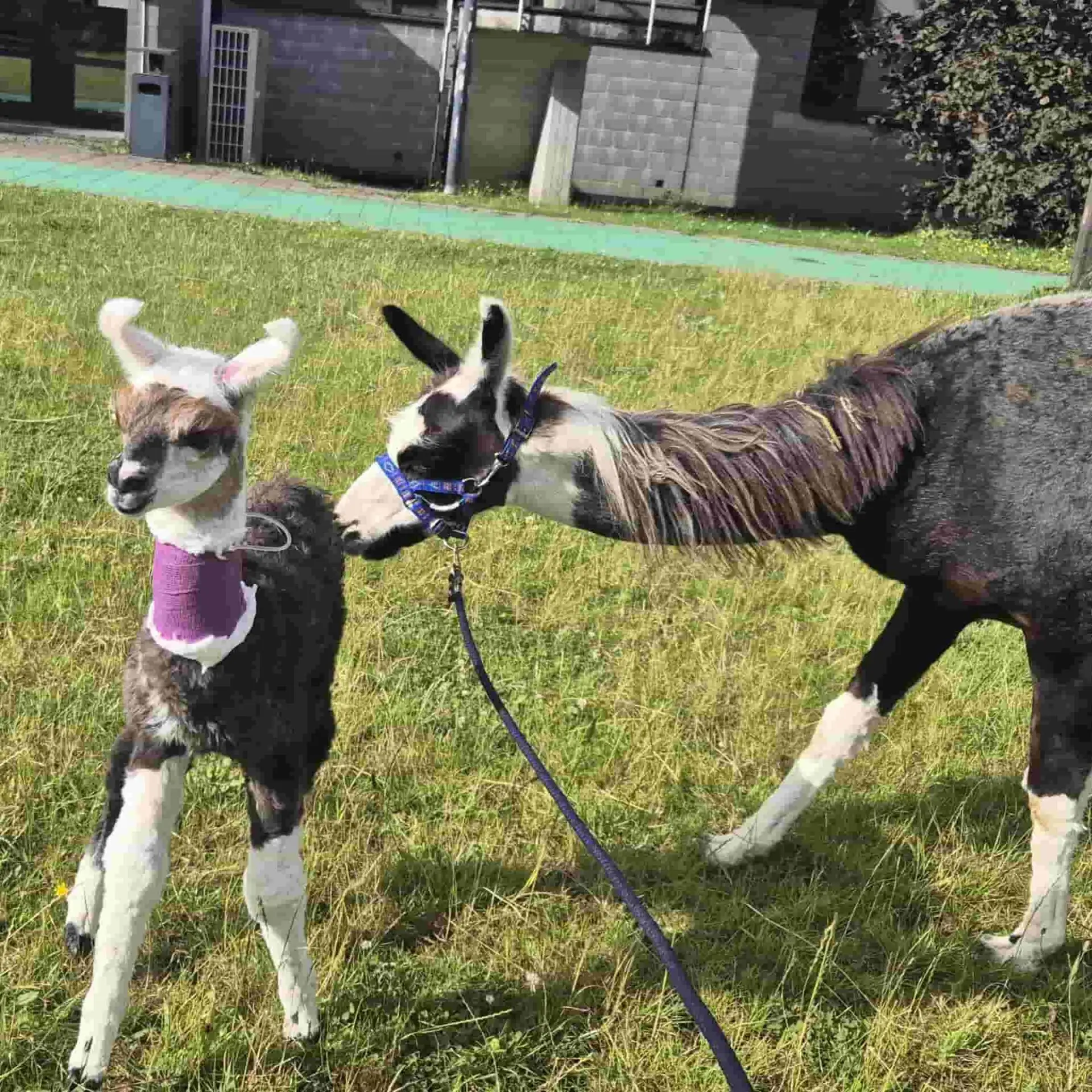
Walking provides essential movement and relaxation; it helps Calinda accept her cria, allows the course of antibiotics to take effect, and builds the little one’s muscle strength. The veterinary students enthusiastically promise to continue taking them on walks while Mara is away.
Next episode:
Calinda’s cria coming home
Alpacas Zeelandia team
Alpacas Zeelandia team